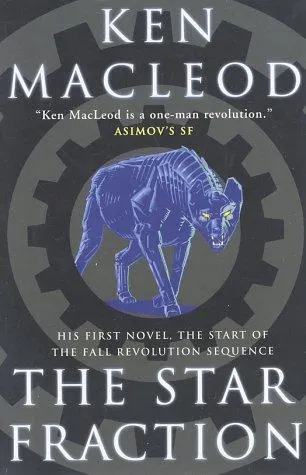
Books like The Star Fraction
Its charge lasts because the arguments become loyalties, jokes, tactical problems and dangerous mistakes inside a future that feels genuinely inhabited. These three novels likewise make political ideas inseparable from character and action.
If you liked The Star Fraction, you’ll love these
Not lookalikes — kindred books. Each one shares something essential with The Star Fraction, and we tell you exactly what.
Oscar Valparaiso is a political operator travelling through a near-future America whose institutions are failing in inventive ways. He approaches elections, scientific communities and social disorder with the same exhilarating ideological fluency Moh Kohn brings to soldiering.
Sterling turns demographics, patronage and technological change into the machinery of a ferociously witty thriller; nobody merely represents an idea, because everyone must organize people and make the idea work. Winner of the Arthur C. Clarke Award, Distraction is perhaps the finest alternative source for The Star Fraction’s particular pleasure: watching brilliant eccentrics improvise politics faster than their world can collapse.
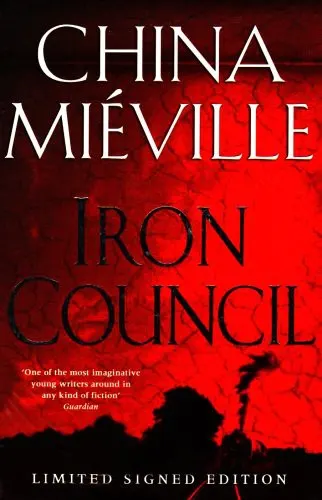
New Crobuzon is at war abroad and simmering with rebellion at home when a group of dissidents sets out after a vanished revolutionary. What follows is industrial fantasy written by someone who understands that revolutions generate schisms, legends, compromised leaders and arguments over who owns the past.
Miéville’s prose is more baroque than MacLeod’s, but he shares MacLeod’s refusal to treat radical politics as either decoration or moral shorthand. The Locus Award–winning Iron Council asks what solidarity costs once history begins turning people into symbols. Though part of the Bas-Lag sequence, its central story stands alone—and it is one of the rare speculative novels whose revolutionary imagination is as serious as its world-building.
Maya Andreyeva is a journalist whose senses are transmitted to—and edited by—a remote handler. Carter uses that intimate cyberpunk arrangement to make surveillance, professional complicity and political power felt inside the mind rather than displayed as futuristic scenery.
This is the colder, more psychologically harrowing recommendation: it shares The Star Fraction’s conviction that technology carries ideology in its design, and that historical struggles persist inside supposedly new systems. Published in 1996, Carter’s only novel slowly acquired a devoted cult reputation; its eventual return in the Tor Essentials line, championed by Jo Walton, confirmed what readers had been insisting for decades. It is a lost classic of political cyberpunk that deserves no longer to be lost.