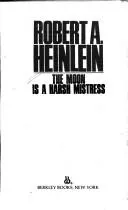
Books like The Moon Is a Harsh Mistress
A sealed habitat hums while programmers, workers, and argumentative idealists discover that a political system is only another machine—and that machines can be rebuilt.
If you liked The Moon Is a Harsh Mistress, you’ll love these
Not lookalikes — kindred books. Each one shares something essential with The Moon Is a Harsh Mistress, and we tell you exactly what.
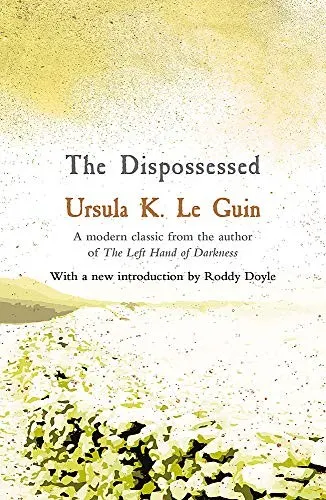
Le Guin matches Heinlein’s willingness to treat revolution as a problem of daily life rather than a heroic slogan. Physicist Shevek leaves the austere anarchist society that raised him for its wealthy capitalist rival, forcing both systems to face their contradictions.
Where Heinlein delights in designing a rebellion, Le Guin asks what happens when revolutionary principles harden into custom. Her anarchists argue, work, ration, compromise, and quietly acquire hierarchies they officially deny. Yet the novel never reduces politics to a verdict: its intellectual generosity makes freedom feel difficult, necessary, and alive. Winner of both the Hugo and Nebula, The Dispossessed is one of science fiction’s indispensable political novels—and the rare classic vigorous enough to argue back when you reread it.
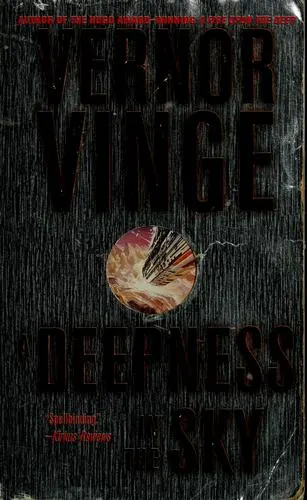
For the exhilarating competence of Mannie, Mike, and the lunar conspirators, turn to Vinge’s enormous, ingenious novel about rival expeditions reaching an alien world. Its traders, programmers, translators, and saboteurs fight with information, technical improvisation, patience, and a precise understanding of how organizations fail.
Vinge’s great subject is the political power hidden inside technology: who controls the interfaces, who defines reality, and how intelligent people preserve freedom inside a system built to manipulate them. The plot operates like an immense machine whose components gradually reveal their purpose, while the characters give its struggle real moral weight. This Hugo winner is widely regarded as one of Vinge’s masterpieces; few novels offer a richer feast for readers who want their revolutions engineered rather than merely proclaimed.
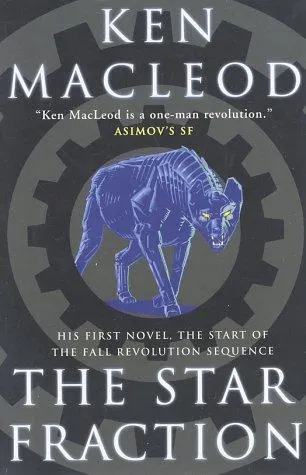
MacLeod takes Heinlein’s intoxicating mixture of political theory, weaponry, jokes, factional maneuvering, and dangerous computing, then throws it into a fractured near-future Britain where every ideology seems to have acquired its own border checkpoint. A mercenary and a young programmer become entangled with an artificial intelligence whose political significance may exceed anyone’s plans.
The pleasure lies in the speed and density of the argument. Marxists, libertarians, nationalists, soldiers, and machines all have ideas sharp enough to wound one another; nobody exists merely to lose a debate. MacLeod’s Arthur C. Clarke Award–shortlisted debut became a cult favorite because it has both the brain of a political thought experiment and the pulse of a thriller. It feels less like an imitation of Heinlein than a brilliant, unruly descendant determined to continue the family argument.