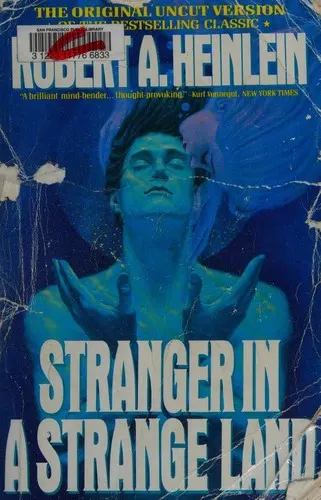
Books like Stranger in a Strange Land
The reader who falls hard for Stranger in a Strange Land enjoys science fiction as intellectual provocation: irreverent, argumentative, suspicious of respectable institutions, and willing to reinvent love, faith, and society from first principles.
If you liked Stranger in a Strange Land, you’ll love these
Not lookalikes — kindred books. Each one shares something essential with Stranger in a Strange Land, and we tell you exactly what.
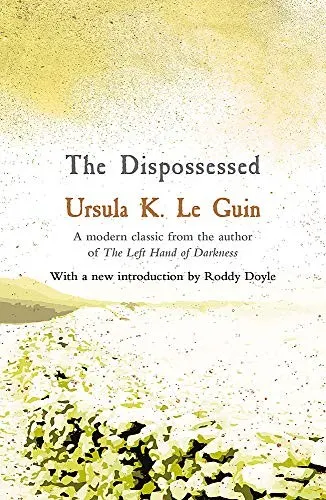
Like Heinlein, Le Guin builds an entire novel around a brilliant outsider whose very existence exposes the assumptions of everyone around him. Physicist Shevek leaves an anarchist moon for its wealthy capitalist neighbor, carrying a discovery that could transform civilization. Neither society survives his scrutiny—and neither is reduced to a slogan.
This is the rarer, more rigorous cousin of Heinlein’s social thought experiment: a novel of fierce conversations, unconventional relationships, political betrayals, and the stubborn question of how freedom can remain free once it becomes an institution. Winner of the Hugo, Nebula, and Locus awards, it has become a touchstone of political science fiction because it does not merely describe another way to live; it makes that life feel difficult, intimate, compromised, and possible.
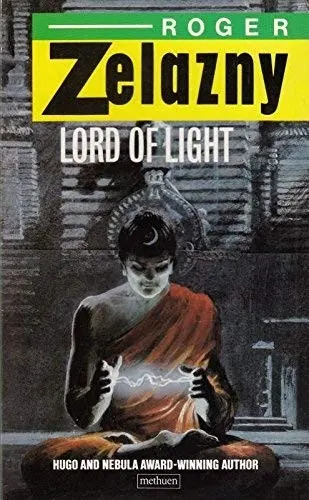
If Stranger in a Strange Land delighted you by turning religion into something at once sincere, theatrical, liberating, and dangerous, Lord of Light is indispensable. On a colonized planet, technologically enhanced rulers have assumed the identities of Hindu gods. Against them stands the elusive Sam, who adopts the language of Buddhism as both spiritual challenge and revolutionary weapon.
Zelazny writes with swagger, wit, and mythic radiance; theological debate can become political sabotage, and a joke can suddenly open onto metaphysics. Yet beneath the dazzling conceit lies Heinlein’s favorite kind of troublemaker: a charismatic man using ideas to break humanity out of a system it has mistaken for the natural order. This Hugo-winning classic remains one of science fiction’s most audacious treatments of invented divinity—and few novels make rebellion sound so seductive.
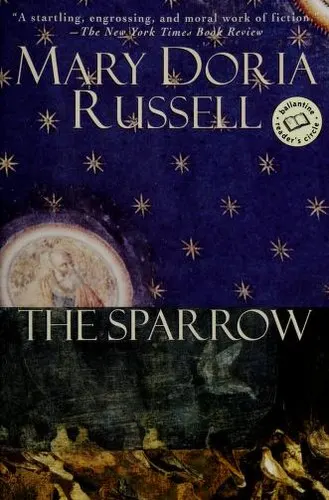
The Sparrow begins with an irresistible first-contact proposition: after music is detected from another world, a Jesuit-sponsored expedition sets out to meet its makers. Its central figure, Emilio Sandoz, is a gifted linguist and priest whose intelligence, humor, friendships, and faith give the mission its emotional center.
Where Heinlein imagines the spiritual upheaval caused by a human raised among aliens, Russell asks what happens when humans carry their deepest convictions into an alien culture they do not yet understand. The result is warmer, more psychologically searching, and ultimately more harrowing than Heinlein—but it shares his fascination with language, communal love, religious authority, and the perilous confidence that one has finally learned to “grok” another people. Winner of the Arthur C. Clarke Award and cherished by readers far beyond science-fiction circles, it is the kind of novel that leaves its theological argument reverberating long after the story ends.