
Books like Starship Troopers
Service, examined. These novels share Heinlein’s fascination with discipline, civic obligation, political systems, and the making of soldiers—while testing those ideas from sharply different angles.
If you liked Starship Troopers, you’ll love these
Not lookalikes — kindred books. Each one shares something essential with Starship Troopers, and we tell you exactly what.

The essential companion to Starship Troopers. Haldeman, a Vietnam veteran, begins with recruits undergoing lethal training before sending them into an interstellar war distorted by relativity. His soldiers are capable professionals; his combat is lucid, physical, and frightening. But where Heinlein asks how service can create citizens, Haldeman asks what prolonged service does to a person whose society keeps changing without him.
Winner of the Hugo, Nebula, and Locus awards, The Forever War is not a simple rebuttal to Heinlein but a formidable argument conducted on the same ground. Reading only one side means missing half of military science fiction’s greatest conversation.
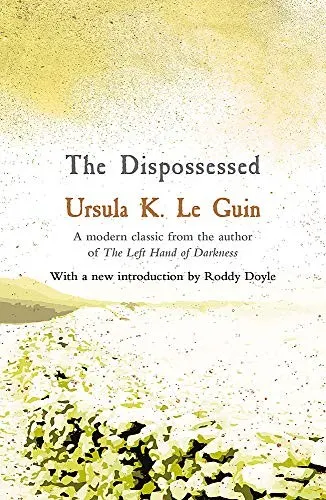
If what gripped you was Heinlein’s willingness to turn a novel into a serious debate about citizenship, freedom, property, and responsibility, read this. Physicist Shevek leaves the austere anarchist moon that formed him for its wealthy capitalist neighbor, discovering that both societies’ ideals look different from inside their institutions.
Le Guin gives political theory the pressure and intimacy of lived experience: work assignments, sexual customs, ambition, scarcity, public opinion. Like Heinlein, she respects readers enough to make ideas carry dramatic weight; unlike him, she distrusts every system’s claim to have solved human nature. This Hugo- and Nebula-winning classic is one of science fiction’s rare political novels that people continue arguing with decades later.
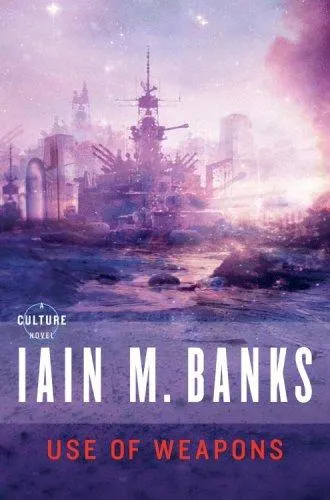
Banks’s mercenary protagonist, Cheradenine Zakalwe, has the battlefield intelligence, endurance, and professional focus that make Heinlein’s Mobile Infantry so compelling. He is employed by the Culture—a seemingly utopian civilization that nevertheless needs specialists willing to enter violent, morally compromised conflicts on its behalf. The result is a bracing examination of whether clean political ends can ever justify dirty instruments.
Banks delivers ingenious campaigns and formidable competence, but the novel’s real weapon is its structure: two interlocking narratives force you to reconsider what military excellence means and what it costs. Widely regarded as one of the Culture series’ high points, it offers the exhilaration of watching a master soldier work—and then refuses to let that exhilaration remain morally comfortable.