Author
Books like Olaf Stapledon
7 books we recommend to Olaf Stapledon readers, drawn from Last and First Men, Star Maker and Sirius — each with the reason why.
If you loved Last and First Men
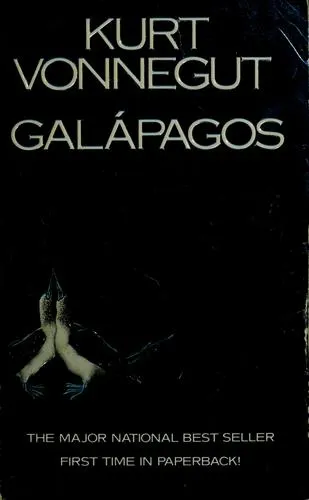
Galápagos approaches Stapledon’s most unsettling proposition—that intelligence may be neither evolution’s goal nor its greatest success—with savage comedy. A ghostly narrator looks back from a million years in the future on a group of people gathered for a troubled nature cruise in 1986, interpreting their behavior with the cruel clarity of deep time.
Vonnegut replaces Stapledon’s prophetic solemnity with jokes, abrupt judgments, and tenderness for creatures burdened by oversized brains. Yet beneath the comic voice lies the same exhilarating refusal to flatter humanity: evolution is contingent, moral progress is uncertain, and the traits we prize may be traps. Few novels make species-level speculation feel so funny, sad, and personally accusatory.
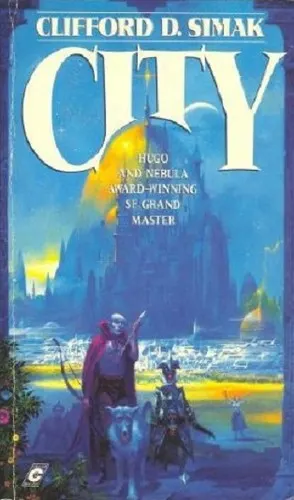
City is presented as a body of ancient legends told by dogs, whose scholars dispute whether the creature called Man ever really existed. That framing instantly removes humanity from the center of its own future and gives the book its haunting emotional distance: our ambitions become half-remembered folklore, while other forms of intelligence inherit the ethical questions we failed to settle.
Simak’s scale is immense, but his manner is pastoral and gentle rather than oracular. Robots, animals, families, and abandoned places carry the weight of historical transformation, producing an elegy for humanity without assuming humanity deserves to endure. This quietly influential classic won the International Fantasy Award and remains beloved for its rare combination of cosmic perspective and humane sorrow. Its final effect is not apocalypse but a profound, almost tender estrangement from our own species.
If you loved Star Maker
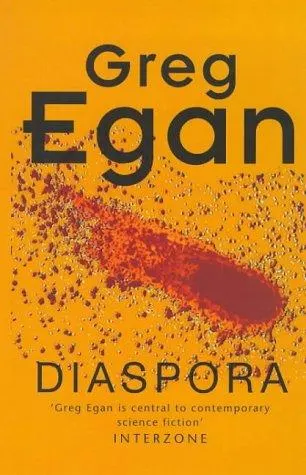
Diaspora begins with the creation of Yatima, a conscious digital being born inside a virtual polis. Egan treats posthuman existence with extraordinary rigor: identity, embodiment, mathematics and perception are not decorative concepts but the very substance of life.
What follows has the intellectual acceleration Star Maker readers crave—the sense that every enlargement of knowledge reveals a still greater arena of existence. Yet Egan earns his cosmic sublime through exacting scientific thought rather than Stapledon’s prophetic prose. A touchstone of modern hard science fiction, Diaspora is one of the few novels bold enough to ask what intelligence might become when neither the human body nor familiar reality sets its limits.
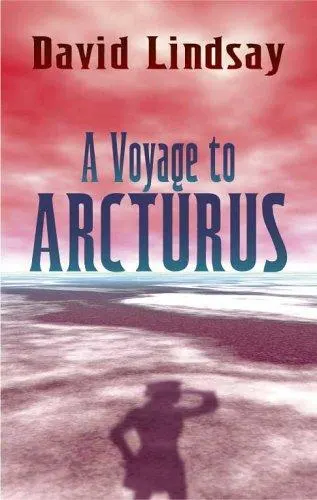
Maskull travels to the planet Tormance, where changing landscapes and strange new sensory organs expose him to rival visions of pleasure, duty, love, will and truth. The result is less a conventional planetary adventure than a metaphysical trial conducted through astonishing physical invention.
Like Star Maker, Lindsay’s novel takes spiritual speculation completely seriously: its worlds exist to challenge the reader’s deepest assumptions, not merely to supply exotic scenery. But where Stapledon is serene and panoramic, Lindsay is feverish, violent and intensely embodied. This once-neglected 1920 novel became a revered cult classic and profoundly influenced C. S. Lewis; its uncompromising strangeness still makes most philosophical science fiction look timid.
If you loved Sirius
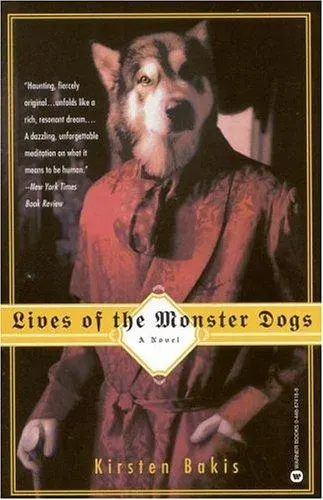
When a troop of artificially created, elaborately dressed dogs appears in New York, the spectacle quickly gives way to something sadder and stranger: beings shaped by human ambitions but denied an uncomplicated place among humans.
Bakis shares Stapledon’s fascination with the inner consequences of uplift. Her dogs inherit language, etiquette, religion and historical memory, yet none of these gifts answers the essential question of what they are. Told through memoirs, letters and other documents, the novel gives their civilization the texture of something genuinely lived and already vanishing. A New York Times Notable Book and winner of the Bram Stoker Award for a first novel, it has endured as a singular cult favorite. No other novel comes so close to Sirius’s mixture of audacity, dignity and grief.
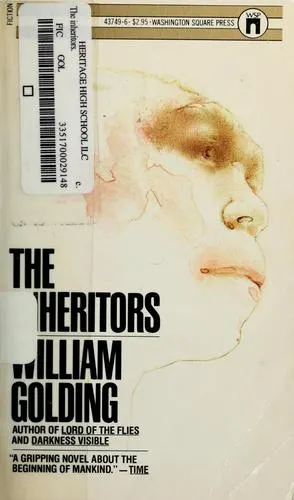
Golding places the reader inside minds whose perceptions are immediate, bodily and communal: smells possess shape, thoughts pass through gesture, and the natural world is not scenery but continuous presence. The achievement resembles Stapledon’s best imaginative leap—not making another species think like us, but altering prose itself until a different mode of being becomes credible.
The small wandering family at the novel’s center is rendered with immense tenderness and no sentimentality. Their limitations are inseparable from forms of attention and fellowship that more sophisticated minds may lack. Golding regarded The Inheritors as his favorite of his own novels, and its radical perspective remains startling. Readers moved by Sirius’s isolation will recognize the same terrible question beneath it: what if evolutionary success and moral worth have almost nothing to do with each other?
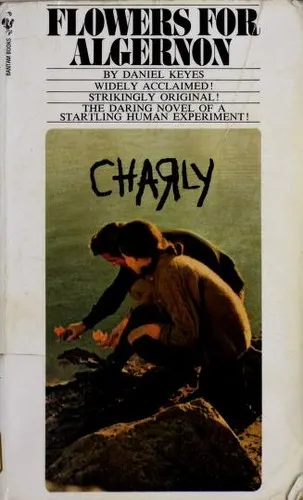
Charlie Gordon begins by writing progress reports because he longs to become intelligent enough to join the human world around him. Keyes lets the reports change with Charlie, making grammar, rhythm and perception register the transformation more powerfully than any outside narrator could.
Like Sirius, this is not simply a warning about scientific ambition. It asks whether greater intelligence brings freedom or only a sharper knowledge of humiliation, desire and exclusion. Charlie’s hunger for companionship makes every intellectual advance emotionally consequential, and Keyes never reduces him to a case study. The original story won a Hugo and the expanded novel a Nebula, but its lasting devotion comes from something prizes cannot explain: generations of readers have felt personally bereaved by it. To love Sirius and miss Charlie Gordon would be to leave its deepest emotional counterpart unread.