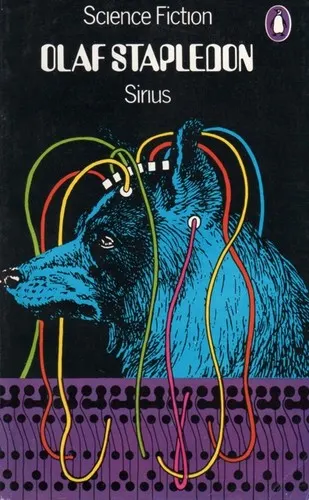
Books like Sirius
A cry crosses the dark Welsh hills, carrying a loneliness no merely human vocabulary can contain. These novels likewise treat intelligence as both a marvel and a wound, while taking nonhuman consciousness completely seriously.
If you liked Sirius, you’ll love these
Not lookalikes — kindred books. Each one shares something essential with Sirius, and we tell you exactly what.
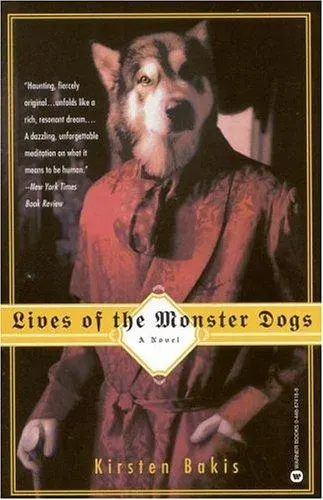
When a troop of artificially created, elaborately dressed dogs appears in New York, the spectacle quickly gives way to something sadder and stranger: beings shaped by human ambitions but denied an uncomplicated place among humans.
Bakis shares Stapledon’s fascination with the inner consequences of uplift. Her dogs inherit language, etiquette, religion and historical memory, yet none of these gifts answers the essential question of what they are. Told through memoirs, letters and other documents, the novel gives their civilization the texture of something genuinely lived and already vanishing. A New York Times Notable Book and winner of the Bram Stoker Award for a first novel, it has endured as a singular cult favorite. No other novel comes so close to Sirius’s mixture of audacity, dignity and grief.
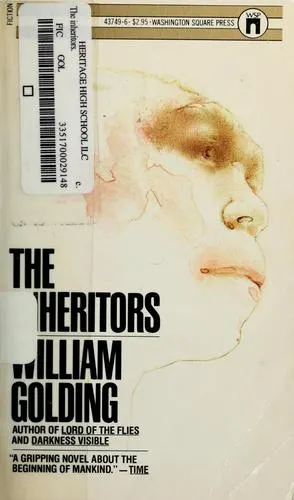
Golding places the reader inside minds whose perceptions are immediate, bodily and communal: smells possess shape, thoughts pass through gesture, and the natural world is not scenery but continuous presence. The achievement resembles Stapledon’s best imaginative leap—not making another species think like us, but altering prose itself until a different mode of being becomes credible.
The small wandering family at the novel’s center is rendered with immense tenderness and no sentimentality. Their limitations are inseparable from forms of attention and fellowship that more sophisticated minds may lack. Golding regarded The Inheritors as his favorite of his own novels, and its radical perspective remains startling. Readers moved by Sirius’s isolation will recognize the same terrible question beneath it: what if evolutionary success and moral worth have almost nothing to do with each other?
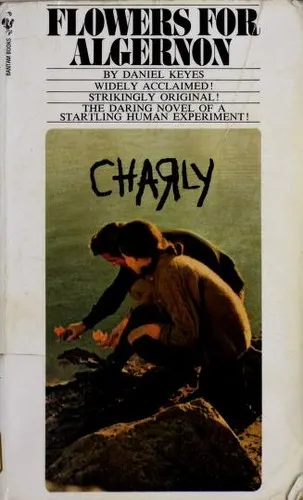
Charlie Gordon begins by writing progress reports because he longs to become intelligent enough to join the human world around him. Keyes lets the reports change with Charlie, making grammar, rhythm and perception register the transformation more powerfully than any outside narrator could.
Like Sirius, this is not simply a warning about scientific ambition. It asks whether greater intelligence brings freedom or only a sharper knowledge of humiliation, desire and exclusion. Charlie’s hunger for companionship makes every intellectual advance emotionally consequential, and Keyes never reduces him to a case study. The original story won a Hugo and the expanded novel a Nebula, but its lasting devotion comes from something prizes cannot explain: generations of readers have felt personally bereaved by it. To love Sirius and miss Charlie Gordon would be to leave its deepest emotional counterpart unread.