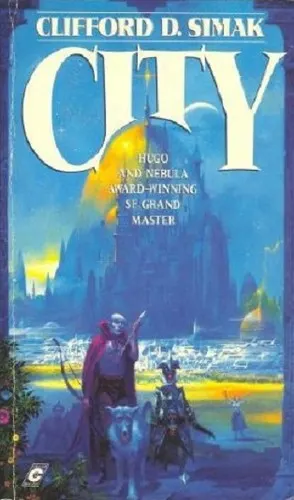
Books like City
Quiet roads, empty houses, old loyalties and immense spans of time: these books preserve that tender sense of a world passing away while something strange and perhaps kinder waits beyond it.
If you liked City, you’ll love these
Not lookalikes — kindred books. Each one shares something essential with City, and we tell you exactly what.
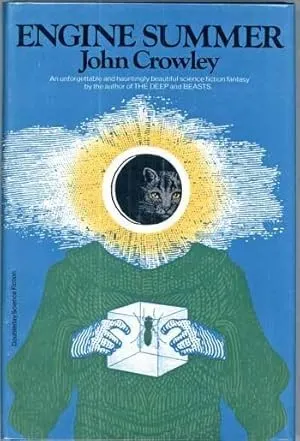
In a far future where our civilization survives only as misunderstood fragments, a young man called Rush That Speaks recounts his life among the Truthful Speakers. Like City, the novel turns history into folklore: ordinary objects become mysteries, stories alter in transmission, and the reader understands losses that the characters cannot.
Crowley’s pastoral world is intimate yet unfathomably old, and his crystalline prose makes impermanence feel beautiful rather than merely bleak. A cult classic and a World Fantasy Award nominee, Engine Summer inspires unusual devotion because its final effect is less like finishing a plot than remembering a vanished life. Readers who cherish City’s wistful distance and nested storytelling should not miss it.
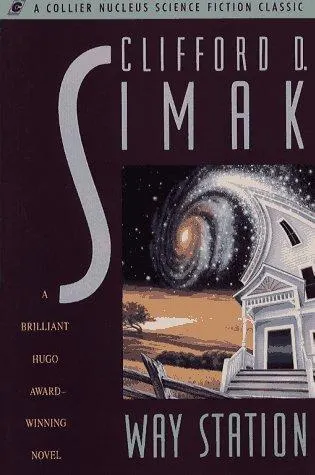
Enoch Wallace lives alone in rural Wisconsin, outwardly unchanged since the Civil War, tending a secret transit station for travelers from other worlds. That premise lets Simak bring the cosmic directly into the farmhouse: alien marvels sit beside coffee, woodsmoke and quiet human decency.
The 1964 Hugo winner distills many of City’s deepest virtues into one beautifully controlled story—solitude without misanthropy, distrust of human violence without contempt for humanity, and faith that hospitality may be a civilization’s highest achievement. Enoch is among Simak’s most memorable creations, a lonely custodian whose patience carries moral weight. If City made you wish science fiction were more often gentle without becoming sentimental, Way Station is essential.
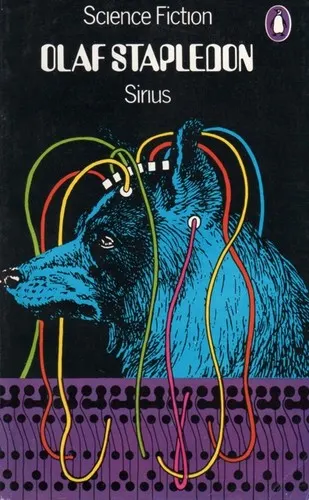
Sirius is a dog deliberately given human-level intelligence and raised alongside Plaxy, the scientist’s daughter. The important kinship with City is not simply the presence of an intelligent dog; it is the way both novels use a nonhuman mind to expose the arbitrary boundaries around personhood, loyalty and belonging.
Stapledon gives Sirius appetites, senses and instincts that remain genuinely canine even as he wrestles with language, religion, music and human society. The Welsh landscape anchors the philosophical speculation in fields, weather and affection, much as Simak’s grand future remains rooted in hearth and home. Stapledon’s cosmic novels influenced generations of science-fiction writers, but this more intimate work contains some of his most piercing writing. It is searching, tender and ultimately difficult to forget.