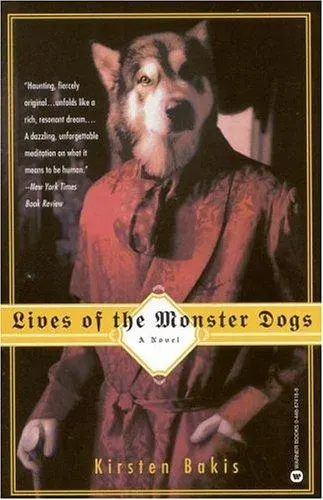
Books like Lives of the Monster Dogs
Into Manhattan walk upright dogs in Prussian uniforms, bearing antique courtesy, surgical scars, and the grief of a vanished world. These three novels share Bakis’s rarer achievement: they make an extravagant impossibility feel intimate, intellectually serious, and painfully alive.
If you liked Lives of the Monster Dogs, you’ll love these
Not lookalikes — kindred books. Each one shares something essential with Lives of the Monster Dogs, and we tell you exactly what.
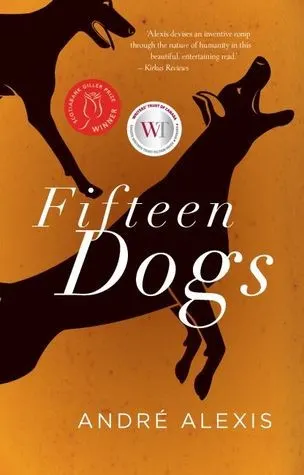
Two gods grant human intelligence to fifteen dogs in a Toronto veterinary clinic, beginning a fable about whether consciousness is a gift or a catastrophe. That resemblance to Bakis’s premise matters less than what Alexis does with it: he considers language, loyalty, hierarchy, beauty, and the terrible difficulty of remaining an animal once you can imagine being something else.
Alexis writes with classical economy, where Bakis is lush and archival; every scene feels cleanly cut and morally charged. Winner of both the Giller Prize and the Rogers Writers’ Trust Fiction Prize, Fifteen Dogs has become beloved because its philosophical ingenuity never muffles its emotional force. It is the essential companion to Lives of the Monster Dogs: shorter, starker, and just as haunting.
Tawada treats a writing polar bear not as a joke to be explained but as a consciousness to be entered. Her bear moves through fame, performance, exile, and the unstable border between human and animal life; the impossible becomes ordinary while ordinary human behavior grows increasingly strange.
A reader who loved Cleo’s attempt to understand the monster dogs will recognize Tawada’s fascination with who gets to speak for a nonhuman being—and what translation, celebrity, and affection distort. Susan Bernofsky’s lucid English translation won the inaugural Warwick Prize for Women in Translation. The novel’s dreamlike intelligence and quiet sadness linger like memories from a life you could not possibly have lived.
Bakis makes her fantasy persuasive through diaries, histories, testimony, and other documentary traces. Alasdair Gray turns that same archival impulse into a dazzling contest: a supposedly recovered memoir arrives surrounded by editorial claims, illustrations, annotations, and voices that refuse to agree about what happened or who owns the story.
The kinship goes deeper than Gothic science. Both novels ask whether a created being can escape the identity imposed by its maker, and whether the person assembling the evidence is preserving a life or appropriating it. Gray’s book is bawdier, more combative, and savagely funny; its typographical play and unreliable scholarship make reading feel like handling a beautiful fraudulent artifact. Winner of the Whitbread Novel Award and the Guardian Fiction Prize, Poor Things is one of the rare metafictions whose formal tricks intensify rather than cool its passion.