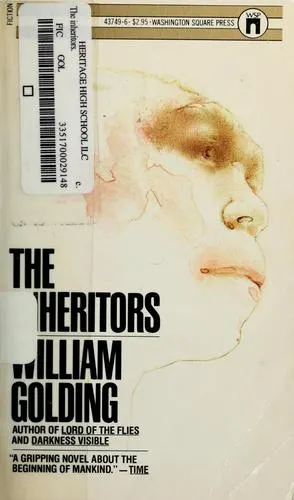
Books like The Inheritors
The miracle of The Inheritors is that its grammar becomes anthropology: Golding builds a world from what his Neanderthals can perceive, leaving the reader to recognize the catastrophe they cannot name.
If you liked The Inheritors, you’ll love these
Not lookalikes — kindred books. Each one shares something essential with The Inheritors, and we tell you exactly what.
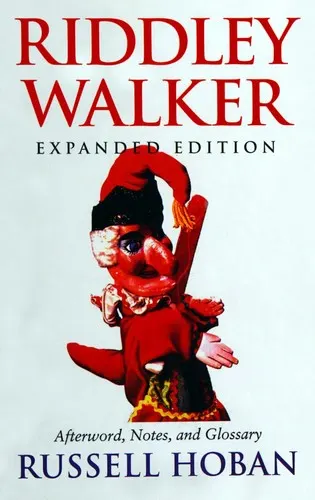
Hoban’s cult masterpiece offers the closest equivalent to Golding’s feat of imaginative immersion. Its young narrator inhabits a post-catastrophe England whose broken language preserves scraps of forgotten knowledge as jokes, legends and sacred formulas. Reading it is an act of excavation: every mangled word may contain a clue to the civilization Riddley cannot comprehend.
Like The Inheritors, it makes limited understanding feel not primitive but intensely alive. Its invented dialect soon becomes startlingly expressive, while the story’s violence and dark comedy expose how human beings turn fear into myth and myth into power. Few novels alter the reader’s consciousness so completely; missing it would mean missing one of fiction’s great demonstrations that language can create an entire mind.
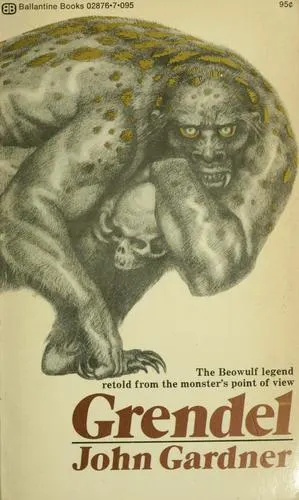
Gardner enters the consciousness of the monster from Beowulf and discovers not a simple victim but a furious, lonely intelligence: comic, vain, philosophical and painfully susceptible to beauty. Watching human beings from the margins, Grendel is appalled by their brutality yet fascinated by their ability to transform brutality into heroic song.
That tension should strike directly at a reader of Golding. Both novels ask whether art, ritual and abstract thought ennoble humanity or merely give violence better stories to tell about itself. But where The Inheritors is sensory and tender, Grendel is verbally dazzling and mordantly funny. Long established as a modern classic, it does the rarest thing a retelling can do: after Gardner, the old poem’s monster can never become faceless again.
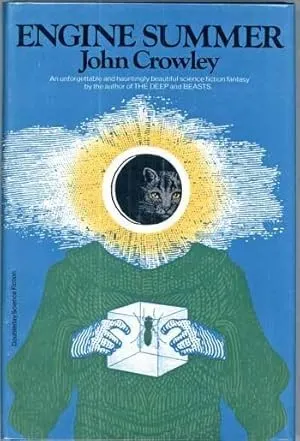
Rush That Speaks grows up in a small community devoted to ‘truthful speaking,’ then sets out after the girl he loves. He narrates with serene confidence, but the reader gradually senses histories and meanings beyond the limits of his understanding. That gap produces the same ache as Lok’s perspective in The Inheritors: innocence is preserved on the page even as we perceive the vastness of what has been lost.
Crowley’s prose is lucid rather than linguistically fractured, full of weather, gardens, customs and half-understood remnants. The result is less brutal than Golding but equally haunting—a pastoral whose beauty deepens its sadness. Though quieter than Crowley’s celebrated Little, Big, Engine Summer has inspired unusually devoted readers because its final emotional resonance seems to expand long after the book is closed.