Author
Books like Kate Atkinson
10 books we recommend to Kate Atkinson readers, drawn from Life After Life, A God in Ruins, Behind the Scenes at the Museum and Transcription — each with the reason why.
If you loved Life After Life
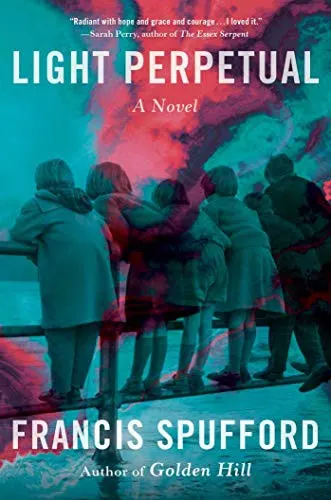
A German rocket strikes a London shop in 1944, killing five children; Spufford then imagines the decades they might have had. Like Atkinson, he turns wartime catastrophe into an act of audacious narrative restoration—not denying death, but making us feel the immense specificity of what death steals.
Booker-longlisted, Light Perpetual is superb on ordinary existence: work, marriage, music, failure, sex, faith, and the gradual remaking of London. Its imagined lives acquire such weight that they cease to feel hypothetical. If Ursula Todd’s many chances moved you, Spufford’s tenderness toward unlived time will be devastating.
Jenny Erpenbeck begins with a baby’s death, then quietly asks what alteration might have allowed her to survive. From that hinge, one woman’s possible lives unfold through the convulsions of twentieth-century Europe.
Winner of the Independent Foreign Fiction Prize in Susan Bernofsky’s translation, this is the sterner, more distilled counterpart to Life After Life. Erpenbeck repeatedly changes the scale of vision—from a household object or private grief to the machinery of history—showing how accident, politics, and love collaborate in making a self. Its recurring lives do not feel like a puzzle; they accumulate into a haunting argument about everything required for any person to reach the next day.
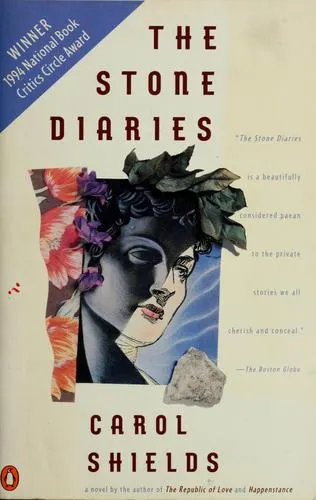
Daisy Goodwill receives only one life, but Carol Shields makes that life as unstable and many-sided as Ursula Todd’s. Told through shifting viewpoints, documents, photographs, omissions, and contradictions, Daisy’s apparent biography keeps revealing the distance between a woman’s inner existence and the story others tell about her.
Shields brings Atkinson’s dry comedy and alertness to domestic detail to bear on an entire century. The result—winner of both the Pulitzer Prize and Canada’s Governor General’s Award—makes an outwardly ordinary life feel mysterious, crowded, and irrecoverable. Few novels are better at showing that the unnoticed moments are not peripheral to a life: they are the life.
If you loved A God in Ruins
Alfred Day, once a tail gunner in an RAF bomber, is now working as an extra in a film about a prisoner-of-war camp. The job draws him back toward his crew, his brutal childhood and the strange intimacy of men who expected to die together.
Winner of the Costa Book of the Year, Day shares Atkinson’s refusal to turn wartime airmen into either icons or case studies. Kennedy renders terror through bodily sensation, gallows humour and fractured memory, while preserving Alfred’s awkward capacity for love. It is darker and more concentrated than A God in Ruins, but equally alert to the obscenity of destroying young lives and then calling the survivors fortunate.
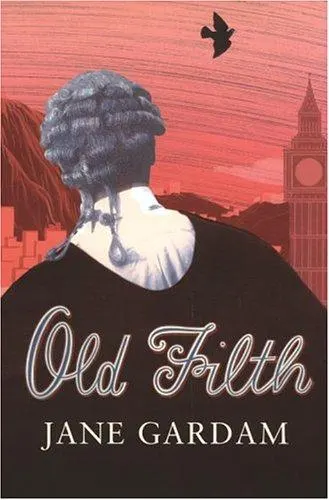
Sir Edward Feathers—nicknamed FILTH, for “Failed in London, Try Hong Kong”—appears at first to be a finished type: an elderly, emotionally sealed former judge, polished by the British Empire. Gardam then opens that façade, moving through his life until reserve itself becomes a source of pathos.
Like Teddy Todd, Feathers is decent, damaged and easily underestimated; both men belong to a generation trained to conceal nearly everything that formed it. Gardam’s crisp wit prevents the novel from becoming solemn, while her nonlinear revelations repeatedly alter the emotional weight of what seemed incidental. So beloved that it grew into a trilogy, Old Filth is one of those rare novels whose protagonist feels more mysterious—and more fully human—the better you know him.
If you loved Behind the Scenes at the Museum
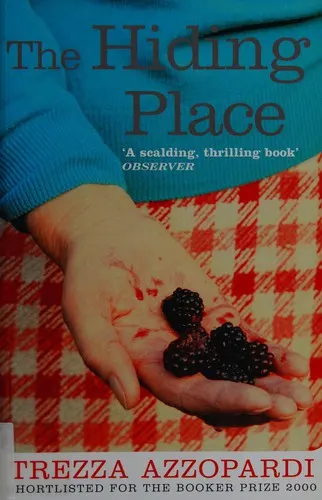
Dolores Gauci narrates her childhood in a Maltese-Welsh family crowded into Cardiff’s Tiger Bay, where poverty, gambling and parental desperation shape the children’s world. Like Ruby Lennox, Dolores observes adult calamity with a child’s partial understanding; what she cannot interpret becomes more haunting than anything she states outright.
Azzopardi also shares Atkinson’s gift for making a family home feel both densely inhabited and full of dangerous blank spaces. Her Booker-shortlisted debut is darker and more compressed than Behind the Scenes at the Museum, but its lyrical precision and fierce attention to overlooked daughters make it an essential companion.
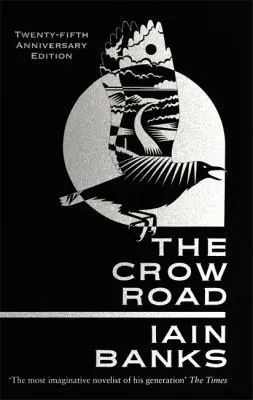
“It was the day my grandmother exploded.” Banks’s famous opening announces the same exhilarating pact Atkinson offers: death will be serious, but solemnity is optional. Prentice McHoan returns to his exuberant Scottish family carrying questions about love, belief and an uncle who vanished, and the novel moves through generations with apparently casual abundance.
What looks like comic sprawl gradually reveals formidable design. Banks gives eccentric relatives their full ridiculousness without reducing them to jokes, and he understands that family mysteries matter because affection survives them. One of his best-loved non-science-fiction novels, The Crow Road delivers that rare Atkinsonian pleasure: discovering that the funniest details were also clues to the deepest wounds.
If you loved Transcription
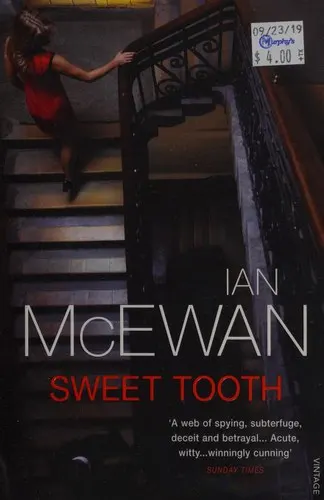
Serena Frome, a young MI5 recruit in the 1970s, is assigned to cultivate a novelist whose work the service hopes to support covertly. But the real kinship with Transcription lies in McEwan’s dry comedy of institutional vanity: intelligence officers misread people, literary taste becomes operational equipment, and an apparently minor employee finds herself caught between obedience and authorship.
This is one of McEwan’s most playful novels, alert to the seductions of storytelling and to the danger of believing the version of yourself that your employers have written. Its poised retrospective voice and formal sleight of hand make it irresistible to anyone who loved Atkinson’s mixture of ruefulness, secrecy, and narrative trapdoors.
In wartime London, Stella Rodney is told that her lover may be passing information to the enemy—and that the man investigating him expects a private price for his silence. Bowen turns that stark predicament into a hypnotic study of intimacy under surveillance, where every conversation seems to contain a second, inaudible conversation beneath it.
Long regarded as one of Bowen’s defining achievements, The Heat of the Day has the moral ambiguity Atkinson handles so well: national duty and personal appetite become impossible to separate, while secrecy alters even ordinary rooms and gestures. It is denser and more haunted than Transcription, but equally brilliant on the ways institutions invade private life.
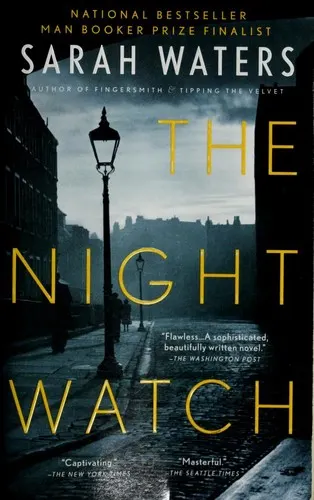
The Night Watch begins in 1947 and moves backward through the war, gradually uncovering how its characters acquired their silences, scars, and entanglements. That reverse movement gives Waters’s novel the revelatory pleasure of Atkinson at her best: details that first seem incidental gather emotional force as the hidden architecture comes into view.
Shortlisted for both the Booker and the Orange Prize, it is an exquisitely controlled novel about women whose essential wartime lives cannot be accommodated by peacetime respectability. Waters combines meticulous construction with deep tenderness, making the withheld past feel not like a puzzle to solve but a lost world the reader urgently wants restored.