Author
Books like James Joyce
9 books we recommend to James Joyce readers, drawn from Ulysses, Finnegans Wake and A Portrait of the Artist as a Young Man — each with the reason why.
If you loved Ulysses
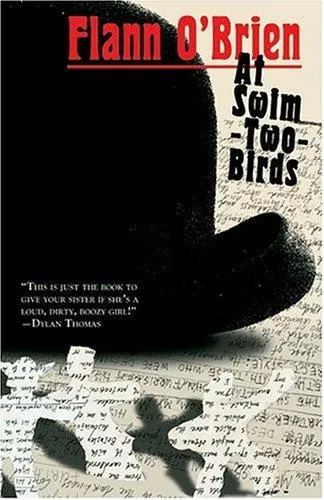
Begin here for the irreverence. O’Brien’s student narrator is writing a novel whose characters rebel against their own author, while Irish legend, cowboy fiction, pub talk, mock scholarship, and atrocious verse jostle for control. Like Ulysses, it treats literary tradition not as a monument but as material for parody, argument, and play.
Its structural tricks would mean little without O’Brien’s superb comic ear: pompous formulas collide with slang, and every voice exposes its speaker. Neglected on publication in 1939, it became a fiercely loved cult masterpiece, championed by writers including Graham Greene and Anthony Burgess. Anyone delighted by Joyce’s ability to make erudition hilarious should not miss the other great comic explosion of Irish modernism.
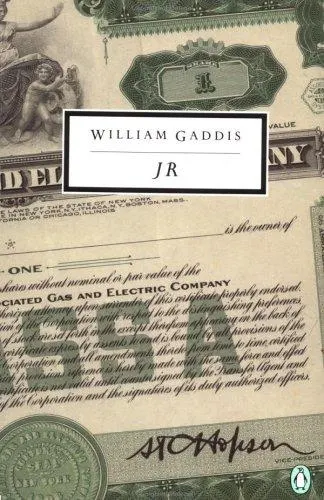
If Ulysses taught you to hear a civilization through its noise, J R is the American capitalist babel you want next. Gaddis builds the novel largely from overlapping, frequently unattributed speech: telephone calls, classroom chatter, executive evasions, sales pitches, domestic quarrels. An eleven-year-old schoolboy begins assembling a financial empire, and language itself becomes the machinery—people interrupt, mishear, bluff, and keep talking because silence might expose them.
The apparent chaos is composed with astonishing precision. Running jokes and verbal fragments recur hundreds of pages later; comedy gathers into fury and, unexpectedly, tenderness. Winner of the 1976 National Book Award, J R inspires the kind of devoted rereading Ulysses does. It is difficult in the rewarding sense: once your ear adjusts, you discover that Gaddis has made the whole system audible.
Perec offers the encyclopedic pleasure of Ulysses in a radically different architecture. He removes the façade from a Paris apartment building and moves through its rooms according to an elaborate chess-based pattern, uncovering unfinished projects, eccentric collections, private obsessions, jokes, puzzles, and miniature histories. An inventory of objects may suddenly open into an adventure story or a quietly devastating life.
The constraints never feel like sterile cleverness; they create inexhaustible abundance. Perec shares Joyce’s conviction that ordinary things—menus, furniture, advertisements, names—can bear immense imaginative weight, and that comedy and grief belong in the same sentence. Awarded the Prix Médicis and widely regarded as Perec’s masterpiece, this is a novel readers spend years exploring. To skip it is to miss one of the few books that genuinely rivals Ulysses as a world built from words.
If you loved Finnegans Wake
Ríos turns a single London night into a multilingual carnival of lovers, masks, literary ghosts, marginal notes, and puns that breed further puns. Richard Alan Francis’s English translation preserves the glorious instability: English keeps being invaded by Spanish, French, Latin, names, quotations, and dirty jokes.
A landmark of late-twentieth-century Spanish experimental fiction, Larva is perhaps the closest thing to Finnegans Wake in sheer verbal festivity without becoming an imitation. Its difficulty is mischievous rather than forbidding; reading it feels like joining an enormous private joke whose punch line keeps changing. Anyone who loves Joyce’s Babelian comedy should experience Ríos’s astonishing continuation of it.
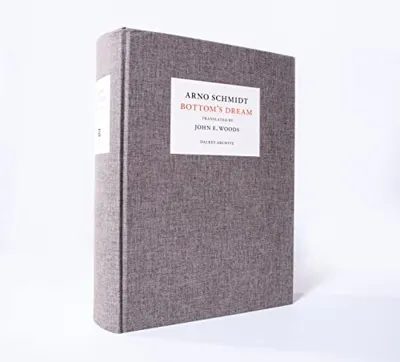
A married pair of translators visit the formidable Daniel Pagenstecher to discuss Edgar Allan Poe—and conversation expands into a colossal investigation of literature, sex, translation, memory, and the unconscious. Schmidt distributes the action across multiple columns, with interruptions and typographical mutations turning every page into both narrative and annotated mind-map.
Published in German in 1970 and long considered nearly untranslatable, this million-word monument finally appeared in John E. Woods’s heroic English version in 2016. Schmidt learned from Joyce that language can be plot, psychology, and scenery simultaneously, yet his obsessive analytical comedy is entirely his own. For a Wake reader, Bottom’s Dream is not merely another difficult masterpiece; it is a vast neighboring continent.
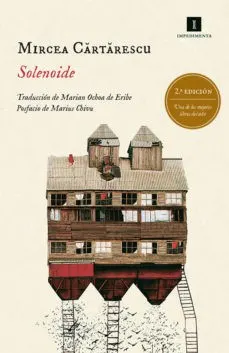
Here the kinship lies less in punning than in dream architecture. An unsuccessful Romanian writer records his life as a Bucharest schoolteacher, but ordinary rooms, childhood terrors, insects, manuscripts, and impossible machines gradually connect into a private cosmology. Images recur with altered meanings until the novel seems to be dreaming itself into existence.
Sean Cotter’s translation won the 2024 Dublin Literary Award, deserved recognition for a novel that has inspired unusually fervent admiration. Cărtărescu combines encyclopedic ambition with bodily fear, wonder, and yearning; the metaphysical immensity never loses its emotional pressure. Readers who return to Finnegans Wake for its sense that consciousness contains whole worlds will find Solenoid both overwhelming and hauntingly intimate.
If you loved A Portrait of the Artist as a Young Man
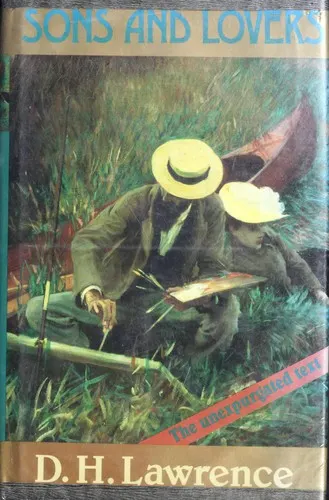
Lawrence offers an extraordinary counterpoint to Joyce’s portrait of artistic formation. Where Stephen tries to think his way free of family, faith, and inherited loyalties, Lawrence shows those forces lodged in the body—in attraction and recoil, tenderness, embarrassment, anger, and need.
From its opening account of a strained marriage in a Nottinghamshire mining community, the novel makes family intimacy feel both sustaining and dangerously possessive. Lawrence’s prose is less architecturally dazzling than Joyce’s, but it has an almost unnerving sensitivity to physical and emotional currents. Long established as one of the defining English novels of the twentieth century, Sons and Lovers is indispensable if Portrait left you fascinated by the painful question of what an artist must accept, betray, or outgrow in order to become himself.
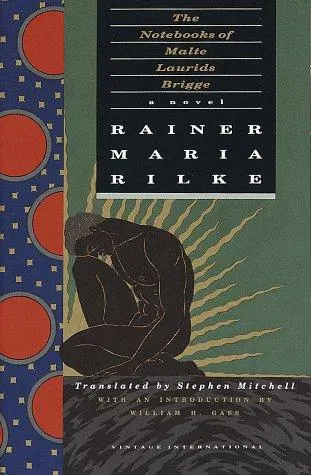
Rilke’s only novel begins with a young writer alone in Paris, discovering that learning to write means first learning to see. Hospitals, crowded streets, anonymous faces, childhood rooms, fear, illness, and memory arrive as charged fragments rather than conventional plot. Every perception seems capable of altering the perceiver.
A reader who loves Joyce’s ability to fuse style with consciousness will recognize the excitement here: Malte does not merely describe experience; his sentences register a mind being remade by it. Published in 1910, the book became a landmark of early modernist prose, and its notebook form still feels startlingly intimate. It is one of the essential novels about the artist before mastery—when heightened perception is not yet a gift so much as an exposure to everything.
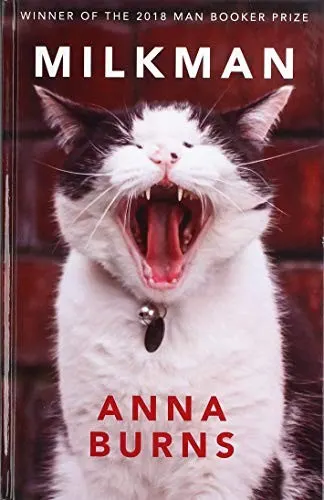
Milkman shares Portrait’s acute understanding that a community controls people through language: through labels, gossip, euphemism, ritual phrases, and stories repeated until they become social facts. Its unnamed young narrator, who likes to read while walking, lives amid a chorus determined to interpret her before she can interpret herself.
Burns turns that pressure into a voice of astonishing comic precision—wary, recursive, evasive, and brilliantly alert to every dangerous implication. The long sentences do not imitate Joyce, but they create the same exhilaration of watching a consciousness invent verbal room in which to resist church, politics, family, and collective certainty. Winner of both the 2018 Booker Prize and the National Book Critics Circle Award for fiction, Milkman is a rare formally daring novel whose difficulty is inseparable from its pleasure: its voice becomes the freedom its narrator is struggling to claim.