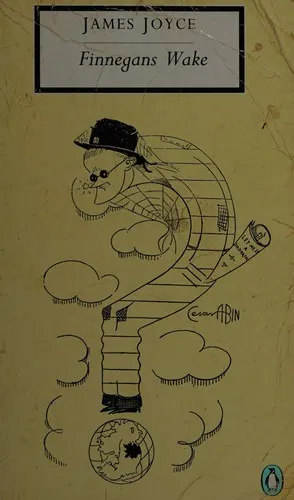
Books like Finnegans Wake
Finnegans Wake never resolves into a book one has simply finished: its jokes ripen, its echoes multiply, and passages once opaque suddenly flare into sense years later. These three novels offer that same rare pleasure of inexhaustibility, each through a different kind of literary audacity.
If you liked Finnegans Wake, you’ll love these
Not lookalikes — kindred books. Each one shares something essential with Finnegans Wake, and we tell you exactly what.
Ríos turns a single London night into a multilingual carnival of lovers, masks, literary ghosts, marginal notes, and puns that breed further puns. Richard Alan Francis’s English translation preserves the glorious instability: English keeps being invaded by Spanish, French, Latin, names, quotations, and dirty jokes.
A landmark of late-twentieth-century Spanish experimental fiction, Larva is perhaps the closest thing to Finnegans Wake in sheer verbal festivity without becoming an imitation. Its difficulty is mischievous rather than forbidding; reading it feels like joining an enormous private joke whose punch line keeps changing. Anyone who loves Joyce’s Babelian comedy should experience Ríos’s astonishing continuation of it.
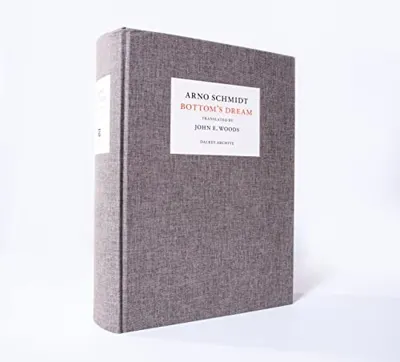
A married pair of translators visit the formidable Daniel Pagenstecher to discuss Edgar Allan Poe—and conversation expands into a colossal investigation of literature, sex, translation, memory, and the unconscious. Schmidt distributes the action across multiple columns, with interruptions and typographical mutations turning every page into both narrative and annotated mind-map.
Published in German in 1970 and long considered nearly untranslatable, this million-word monument finally appeared in John E. Woods’s heroic English version in 2016. Schmidt learned from Joyce that language can be plot, psychology, and scenery simultaneously, yet his obsessive analytical comedy is entirely his own. For a Wake reader, Bottom’s Dream is not merely another difficult masterpiece; it is a vast neighboring continent.
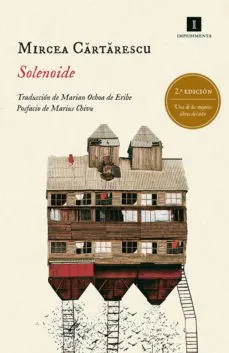
Here the kinship lies less in punning than in dream architecture. An unsuccessful Romanian writer records his life as a Bucharest schoolteacher, but ordinary rooms, childhood terrors, insects, manuscripts, and impossible machines gradually connect into a private cosmology. Images recur with altered meanings until the novel seems to be dreaming itself into existence.
Sean Cotter’s translation won the 2024 Dublin Literary Award, deserved recognition for a novel that has inspired unusually fervent admiration. Cărtărescu combines encyclopedic ambition with bodily fear, wonder, and yearning; the metaphysical immensity never loses its emotional pressure. Readers who return to Finnegans Wake for its sense that consciousness contains whole worlds will find Solenoid both overwhelming and hauntingly intimate.