
Books like Bottom's Dream
Bottom’s Dream does not merely ask to be read: it makes the reader inhabit a page where puns think, annotations argue, and several minds seem to operate at once.
If you liked Bottom's Dream, you’ll love these
Not lookalikes — kindred books. Each one shares something essential with Bottom's Dream, and we tell you exactly what.
The closest thing to Schmidt’s linguistic intoxication may be this cult masterpiece of Spanish experimental fiction, magnificently translated by Suzanne Jill Levine. During a London masquerade, identities and languages intermingle—but the real action occurs inside words, which split into multilingual jokes, literary echoes, false etymologies, and fresh verbal mutations.
Ríos shares Schmidt’s conviction that punning is not ornament but a mode of knowledge. Notes proliferate, voices interrupt one another, and every sentence invites rereading from several directions. Yet Larva has its own seductive atmosphere: nocturnal, erotic, carnivalesque, and mischievously cosmopolitan. Readers willing to learn its language become fiercely devoted to it; for anyone who loved being joyfully overmatched by Bottom’s Dream, missing Larva would mean missing one of its few true companions.
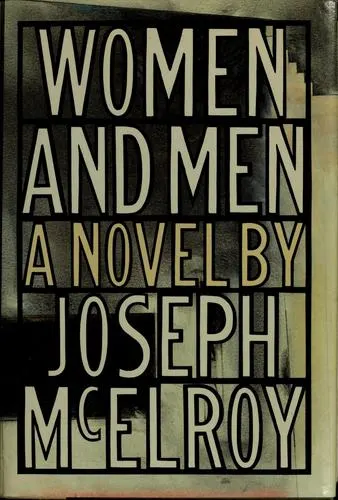
McElroy’s immense 1987 novel offers a different kind of maximalism: less lexically prankish than Schmidt, but comparably determined to represent thought before it has been tidied into narrative. Around two New Yorkers who have not quite met, the book assembles memories, technologies, families, conspiracies, fantasies, and vast systems of cause and coincidence.
Its long, recursive sentences continually revise the relations among things. What first looks like digression becomes a model of consciousness discovering hidden structures, much as Schmidt’s columns turn commentary, recollection, and textual analysis into simultaneous experience. Long scarce and sustained by an unusually passionate readership, Women and Men has earned its reputation as one of the great neglected American postwar novels. Its difficulty is not a barrier placed before its vision; it is the instrument that makes the vision possible.
Here is a novel for the reader who admired the dangerous intimacy of Schmidt’s erudition: the sense that scholarship, wordplay, desire, resentment, and self-deception can occupy the same sentence. Gass’s narrator, a historian writing the introduction to his major work, instead begins excavating his own compromised consciousness—and secretly digging beneath his house.
Gass spent decades making the book’s prose materially expressive. Typography, lists, songs, emblems, jokes, and torrential rhetorical performances do not illustrate the narrator’s mind; they constitute it. The result is morally harsher than Bottom’s Dream and often deliberately repellent, but its verbal control is extraordinary. Winner of the American Book Award and regarded by many admirers as Gass’s defining achievement, The Tunnel is one of the rare monumental novels whose every excess is part of its argument. Anyone drawn to Schmidt’s fusion of philology and psychic exposure should confront it.