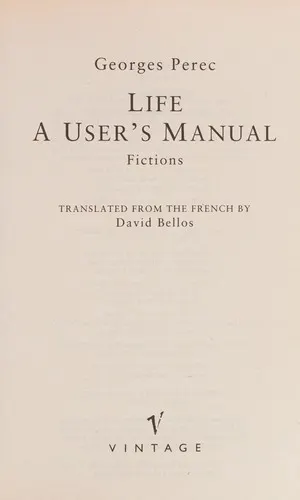
Books like Life: A User's Manual
The whole and the pieces. Perec turns inventories, constraints, rooms, anecdotes, and tiny objects into an inexhaustible human world. These three novels likewise make formal ingenuity feel not sterile but generous: each unusual structure creates more ways for lives and stories to touch.
If you liked Life: A User's Manual, you’ll love these
Not lookalikes — kindred books. Each one shares something essential with Life: A User's Manual, and we tell you exactly what.
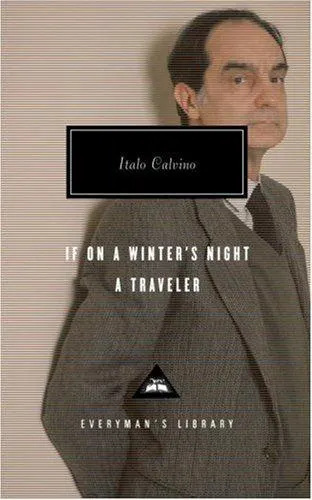
Calvino shares Perec’s rare ability to make elaborate construction feel like play. The novel repeatedly begins to tell stories, interrupts them, and draws you—the person holding the book—into the machinery. Its shifting genres are not mere virtuoso parody; together they become an inquiry into why beginnings exert such power and why readers keep wanting the world to resolve into narrative.
Like Life: A User’s Manual, it is both a puzzle and a celebration of appetite: for plots, voices, books, and other people’s imagined lives. A landmark of postmodern fiction, it has retained unusually devoted readers because the cleverness never extinguishes delight. Perec makes an apartment block contain a universe; Calvino finds one in the act of opening a novel.
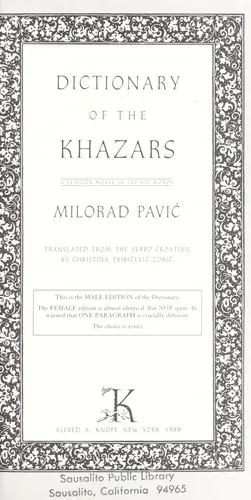
This cult classic presents itself as a lexicon assembled from three competing traditions. Entries echo, contradict, and illuminate one another; names recur in altered forms; minor details become hinges. You can read from beginning to end or follow cross-references, gradually constructing a history that never settles into a single authoritative shape.
The kinship with Perec lies in the pleasure of active assembly. Both books treat reading as searching a cabinet of curiosities, where an apparently incidental object or anecdote may connect distant lives. Yet Pavić’s atmosphere is dreamier and more occult: his architecture feels less like a Parisian building than a library glimpsed during sleep. Few novels make their physical organization so integral to their imaginative spell.
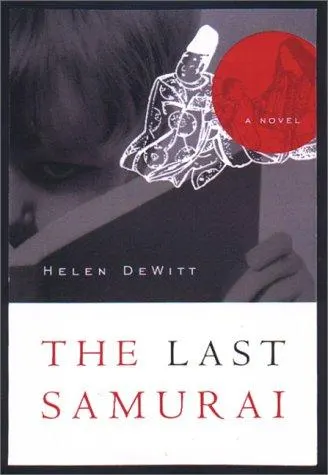
DeWitt’s novel offers a different—and deeply humane—version of Perec’s encyclopedic impulse. Its world teems with languages, mathematics, classical texts, films, typographical games, and systems of learning, all animated by a mother and son whose ferocious intelligence is also a practical problem: how do you educate an extraordinary mind, and how do you live among people who do not share your obsessions?
The book’s erudition is funny, impatient, and emotionally consequential rather than ornamental. Lists and recurring patterns become ways of showing desire, loneliness, embarrassment, and love. Once difficult to find, The Last Samurai survived through passionate word of mouth before its celebrated reissue confirmed its status as a modern cult classic. Readers who cherish the tenderness beneath Perec’s combinatorial brilliance may find DeWitt’s novel indispensable.