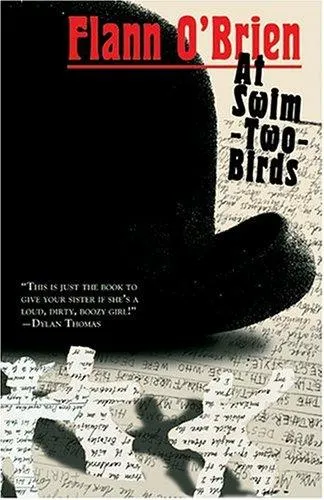
Books like At Swim-Two-Birds
These three books resemble contraptions assembled on a pub table: trapdoors open inside trapdoors, solemn machinery starts heckling itself, and the people on the page make a grab for the pen.
If you liked At Swim-Two-Birds, you’ll love these
Not lookalikes — kindred books. Each one shares something essential with At Swim-Two-Birds, and we tell you exactly what.
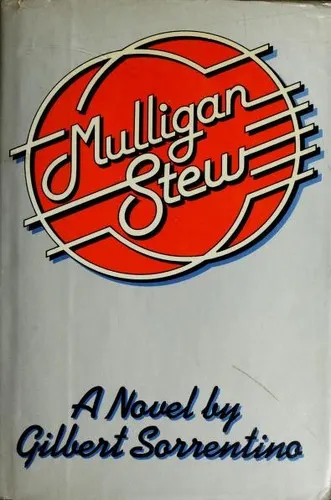
The closest thing to a spiritual sequel without being an imitation. A struggling novelist assembles a dreadful manuscript from borrowed characters, literary clichés and second-hand ambitions; the book then lets letters, notes, rejection slips, lists and mutinous voices pull his creation apart.
Sorrentino shares O’Nolan’s deepest comic instinct: fiction is funniest when authors lose control of it. The title openly salutes At Swim-Two-Birds, but this 1979 cult landmark of American postmodernism has its own savage energy, skewering pretension while luxuriating in verbal invention. It is the rare homage audacious enough to become a companion masterpiece.
Here is the great unruly ancestor of O’Nolan’s novel. Tristram attempts to tell his life story, but explanations breed digressions, digressions demand diagrams, and the act of narration repeatedly overwhelms the life supposedly being narrated.
Sterne turns delays, blank space, typography and argumentative asides into comedy. The voice is intimate, shameless and wonderfully incapable of proceeding in a straight line. Published in the eighteenth century yet still formally mischievous enough to embarrass many experimental novels, Tristram Shandy reveals that the novel has always contained the means of sabotaging itself.
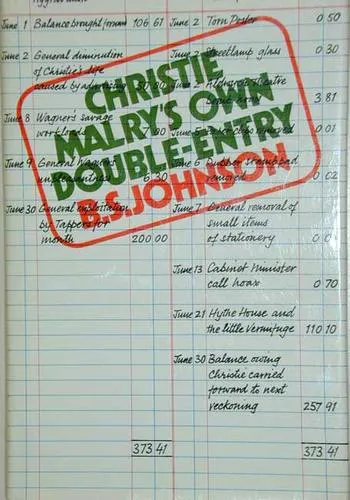
Christie Malry is a clerk who decides to apply double-entry bookkeeping to existence: every insult or inconvenience becomes a debit owed by society, and every act of recompense a credit. The beautifully ridiculous logic is pursued with the straightest possible face.
Johnson’s short, caustic novel has O’Nolan’s gift for making an absurd premise feel more rigorous than ordinary reality. Chapters shrink, narration bares its machinery, and the conventions of social realism are treated as negotiable rather than sacred. A cult classic of British experimental fiction, it delivers more formal insolence and black laughter in roughly 180 pages than most novels manage at twice the length.