Author
Books like Iris Murdoch
9 books we recommend to Iris Murdoch readers, drawn from The Sea, the Sea, The Black Prince, The Bell and The Green Knight — each with the reason why.
If you loved The Sea, the Sea
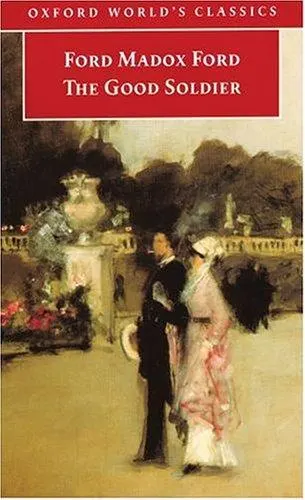
If Charles Arrowby’s memoir fascinated you because every confident sentence quietly exposes him, meet John Dowell. He begins with two affluent couples and an insistence that theirs is “the saddest story,” then circles compulsively through the past, revising judgments and betraying blind spots he cannot recognize.
Ford’s 1915 masterpiece helped establish the unreliable narrator as one of the modern novel’s great instruments. Like Murdoch, he makes self-deception both horribly funny and morally consequential: the drama lies not only in what happened, but in the evasive shape a mind gives it. Few novels reward rereading so completely.
Murdoch’s deepest subject is often the violence hidden inside apparently loving attention. The Door pursues that idea through the relationship between a successful writer and Emerence, the formidable housekeeper she hires. Affection, dependence, pride and power become so entangled that every kindness carries a possible trespass.
Szabó writes with the pressure of confession: from the opening, the narrator knows she has failed Emerence, yet understanding the failure proves far harder than admitting it. Long revered in Hungary, this masterpiece found an equally devoted international readership through Len Rix’s translation. Its final moral force is overwhelming—not because it offers an easy verdict, but because it makes intimacy itself feel like a test few of us would pass.
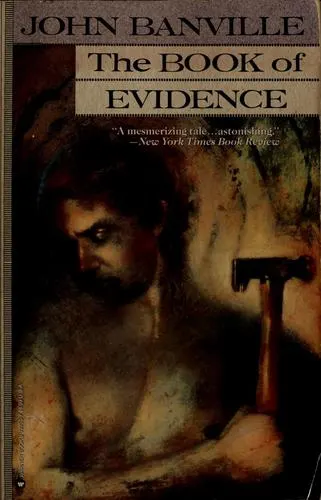
Freddie Montgomery, composing his account after a crime, possesses Arrowby’s most dangerous gift: he can make monstrous vanity sound cultivated, amusing and almost reasonable. His sensibility is exquisitely tuned to paintings, rooms, weather and language—and disastrously untuned to the reality of other people.
Banville’s Booker-shortlisted novel is darker and more concentrated than Murdoch’s, but it offers the same queasy pleasure of being seduced by prose you know you should distrust. Its sentences glitter while the narrator’s aesthetic refinements become a form of moral camouflage. To miss it is to miss one of fiction’s most brilliantly sustained collisions between beauty and culpability.
If you loved The Black Prince
A 999-line poem by the fictional John Shade arrives wrapped in the commentary of his neighbor Charles Kinbote, who is ostensibly explaining the poem but gradually commandeers it. The resulting book is at once literary puzzle, outrageous comedy, and portrait of a mind using art to shelter itself from reality.
Anyone delighted by The Black Prince’s editorial frames, rival accounts, and unstable ownership of the story will find Pale Fire irresistible. Nabokov makes interpretation itself into dramatic action: every footnote is evidence, evasion, and attempted theft. Few twentieth-century novels have inspired such devoted rereading, because the book changes shape according to where you place your trust. To miss it is to miss one of fiction’s most dazzling demonstrations that a narrator can reveal himself most completely while talking about someone else.
If you loved The Bell
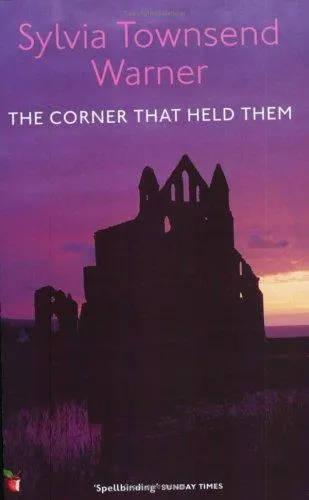
Warner treats a fourteenth-century convent not as picturesque history but as a living, quarrelsome institution. No single heroine controls the book; attention passes among nuns, servants, clergy, visitors, buildings, debts, illnesses, and private obsessions. Like Imber Court, the community acquires a personality of its own, sustained as much by compromise and happenstance as by faith.
What will especially delight a Murdoch reader is Warner’s dry, unsparing mercy. She sees self-deception clearly but never reduces anyone to a joke or a moral example. Her refusal of tidy spiritual conclusions gives the novel its strange authority: human muddle is not an interruption of communal life but its substance. Long neglected and now widely reclaimed as one of Warner’s masterpieces, it is the rare historical novel that feels radically free of historical-novel machinery.
Wilmet Forsyth is prosperous, married, attractive, and faintly dissatisfied. She channels her restless attention into an Anglo-Catholic parish and into other people’s lives, interpreting glances and attachments with supreme confidence—and imperfect accuracy.
Pym’s scale is more domestic than Murdoch’s, but her comedy has the same sharp moral purpose. Every social blunder exposes a failure of attention; every apparently minor infatuation tests the difference between loving someone and merely casting them in one’s private drama. The church supplies incense, ritual, gossip, and genuine consolation without becoming either a sanctuary from desire or an object of easy satire. Pym’s devoted readership prizes precisely this combination of exquisite comic timing and quiet ethical force. The novel looks light enough to float away, then leaves Wilmet’s awakening lodged in the mind.
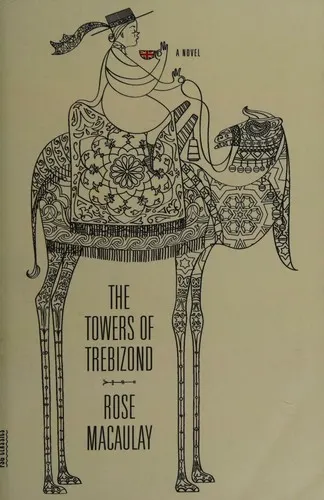
This begins as one of the funniest journeys in English fiction: Laurie travels through Turkey with her formidable Aunt Dot, an Anglican clergyman, and a camel, amid schemes for religious and social improvement. Macaulay’s sentences sparkle with learned jokes, absurd encounters, and the comedy of English people carrying their convictions abroad.
Beneath that brilliance lies a conflict very close to the heart of The Bell. Laurie wants religious truth but also wants a life incompatible with it; faith is neither dismissed nor made comfortably available. Macaulay understands that conscience can be sincere, evasive, painful, and faintly ridiculous all at once. The resulting tonal range—from high comedy to spiritual desolation—is extraordinary. Winner of the James Tait Black Memorial Prize, The Towers of Trebizond has endured because its wit does not protect either its heroine or its reader from the cost of divided desire.
If you loved The Green Knight
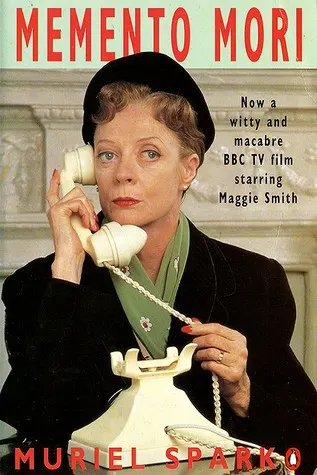
An anonymous caller telephones a group of elderly Londoners with the message, “Remember you must die.” What follows is not a conventional mystery so much as a pitilessly funny revelation of character: each recipient hears the warning differently, according to pride, fear, faith, resentment, or self-knowledge.
Spark shares Murdoch’s delight in assembling a large cast and then applying a mysterious moral pressure that exposes every hidden attachment. But her method is sharper and faster: where Murdoch swirls, Spark cuts. Widely regarded as one of Spark’s great novels, Memento Mori turns mortality into high comedy without cheapening it. Its supernatural possibility, social malice, and startling flashes of compassion make it an irresistible companion to The Green Knight.
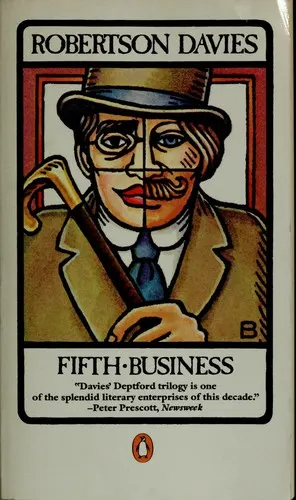
A schoolboy throws a snowball at his friend; it misses, strikes a pregnant woman, and becomes the first link in a lifelong chain of guilt, wonder, rivalry, sainthood, and performance. From that deceptively simple beginning, Robertson Davies constructs a novel in which accident acquires the force of myth without ever ceasing to be accident.
Like The Green Knight, Fifth Business asks whether people discover their appointed roles or invent them—and whether apparent goodness can be separated from vanity, obsession, and the hunger for significance. Davies brings saints, magicians, scholars, and respectable hypocrites together with enormous storytelling confidence. The novel became a modern Canadian classic and inspired unusually devoted readers because its philosophical design never burdens its wit or narrative drive. It is the rare book that makes metaphysical speculation feel like a splendidly told secret.