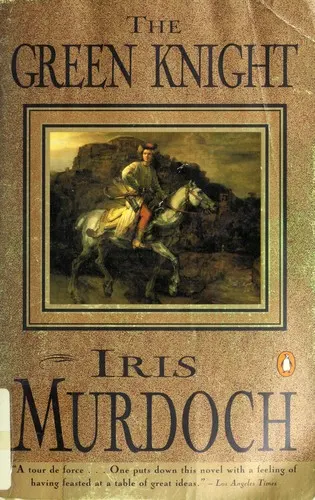
Books like The Green Knight
The Green Knight captivates readers who relish moral seriousness disguised as social comedy: crowded households, wayward desire, self-deceiving intellectuals, and uncanny events that may be providence, manipulation, or chance.
If you liked The Green Knight, you’ll love these
Not lookalikes — kindred books. Each one shares something essential with The Green Knight, and we tell you exactly what.
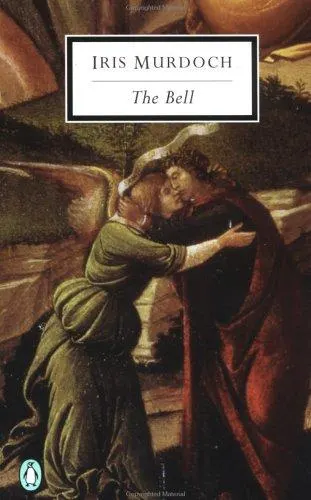
Murdoch’s earlier, more concentrated masterpiece places an ill-assorted group beside a lay religious community, where ideals of purity immediately collide with desire, vanity, secrecy, and the stubborn independence of other people. At its center is a legendary bell—an object as symbolically charged as Peter Mir’s strange intervention in The Green Knight, yet never reducible to a tidy meaning.
Often ranked among Murdoch’s finest novels, The Bell has her rare combination of intellectual gravity and almost mischievous narrative momentum. Its characters keep trying to arrange life into morally satisfying patterns, while life keeps escaping them. Anyone moved by The Green Knight’s uneasy traffic between goodness, power, love, and delusion should not miss this tauter, radiant demonstration of the same genius.
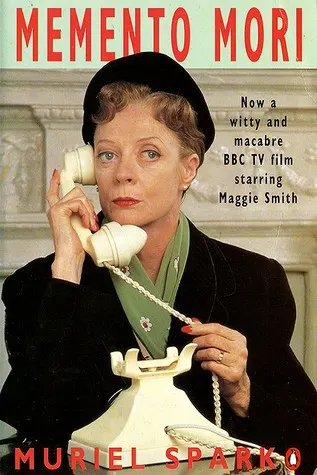
An anonymous caller telephones a group of elderly Londoners with the message, “Remember you must die.” What follows is not a conventional mystery so much as a pitilessly funny revelation of character: each recipient hears the warning differently, according to pride, fear, faith, resentment, or self-knowledge.
Spark shares Murdoch’s delight in assembling a large cast and then applying a mysterious moral pressure that exposes every hidden attachment. But her method is sharper and faster: where Murdoch swirls, Spark cuts. Widely regarded as one of Spark’s great novels, Memento Mori turns mortality into high comedy without cheapening it. Its supernatural possibility, social malice, and startling flashes of compassion make it an irresistible companion to The Green Knight.
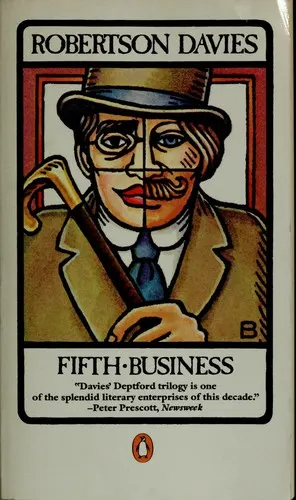
A schoolboy throws a snowball at his friend; it misses, strikes a pregnant woman, and becomes the first link in a lifelong chain of guilt, wonder, rivalry, sainthood, and performance. From that deceptively simple beginning, Robertson Davies constructs a novel in which accident acquires the force of myth without ever ceasing to be accident.
Like The Green Knight, Fifth Business asks whether people discover their appointed roles or invent them—and whether apparent goodness can be separated from vanity, obsession, and the hunger for significance. Davies brings saints, magicians, scholars, and respectable hypocrites together with enormous storytelling confidence. The novel became a modern Canadian classic and inspired unusually devoted readers because its philosophical design never burdens its wit or narrative drive. It is the rare book that makes metaphysical speculation feel like a splendidly told secret.