Author
Books like George Eliot
12 books we recommend to George Eliot readers, drawn from Middlemarch, Silas Marner, The Mill on the Floss and Adam Bede — each with the reason why.
If you loved Middlemarch
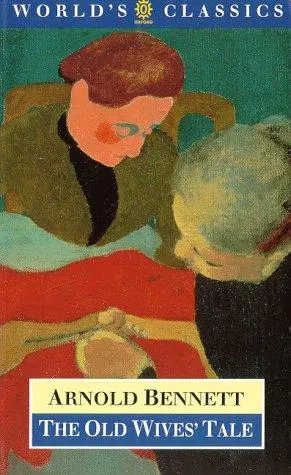
Bennett lavishes epic attention on lives that convention might call ordinary. Beginning with two sisters in a Midlands draper’s shop, he follows their sharply divergent temperaments with the patience, humor, and omniscient tenderness Eliot gives the inhabitants of Middlemarch.
What makes this enduringly admired novel extraordinary is its treatment of time: youthful certainty gradually becomes experience, habit, disappointment, and endurance. Bennett can expose vanity in one sentence and make it moving in the next. If you loved Eliot’s conviction that no private life is small when seen clearly, this is one of the richest English novels still waiting for you.

At the center of Richardson’s great Australian trilogy is a marriage observed with almost frightening acuity. Richard Mahony is intelligent, restless, and perpetually convinced that fulfillment lies elsewhere; Mary, practical and devoted, must build a life around his hunger for something larger. Like Lydgate and Rosamond, they become most compelling where love, temperament, money, and self-deception collide.
Long regarded as a masterpiece of Australian literature, the novel has Middlemarch’s rare double vision: it understands aspiration from within while seeing the damage aspiration can do. Richardson never reduces either spouse to culprit or victim. The result is an immense, intimate tragedy of character—the kind of book that alters how you read a marriage.
Mr Biswas wants what Dorothea and Lydgate want in different forms: a life he can recognize as his own. Born into dependence and absorbed into his wife’s enormous Trinidadian family, he pursues dignity through work, words, possessions, and above all the dream of a house.
Naipaul’s most beloved novel is fiercely comic about pretension but exact about the humiliations beneath it. Its crowded households form a social organism as vivid as Eliot’s town, with every quarrel shaped by kinship, money, status, and old grievance. Yet its deepest achievement is to show how a seemingly modest ambition can contain an entire moral world. Mr Biswas is ridiculous, exasperating, and unforgettable—and by the end, the scale of his struggle feels heroic.
If you loved Silas Marner
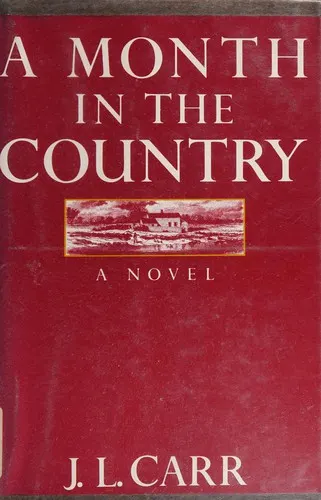
Like Silas Marner, this brief, beautifully proportioned novel understands restoration as something almost imperceptible. A damaged veteran arrives in a Yorkshire village to uncover a medieval painting; through patient work, small kindnesses, and the rhythms of communal life, the world slowly becomes habitable again.
Carr shares Eliot’s gift for making modest labor morally luminous. The novel is funny, restrained, and shadowed by the knowledge that happiness may be recognized only afterward. Shortlisted for the Booker Prize and winner of the Guardian Fiction Prize, it has become a classic of quiet English fiction: a small book with an astonishing emotional afterlife.
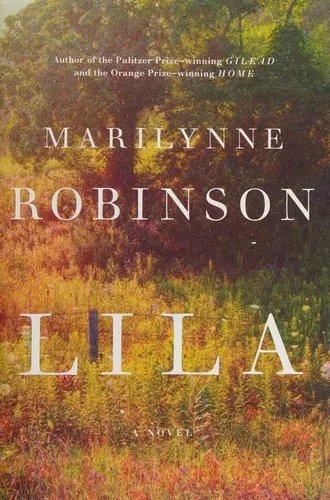
Lila has spent her life at the edge of society, suspicious of comfort and wary of every kindness. When she enters the orbit of an elderly minister in an Iowa town, Robinson examines what it costs such a person to trust—not only another human being, but the possibility that she possesses an inviolable worth.
A reader who loves Eliot’s compassionate scrutiny of poverty, exclusion, and reluctant attachment will recognize a kindred moral intelligence here. Robinson gives washing, gardening, and rough hands the same dignity Eliot gives Silas’s weaving. Winner of the National Book Critics Circle Award, Lila is austere, tender, and intellectually fearless: a profound novel about grace that never makes grace easy.

Ogawa’s novel begins with a housekeeper assigned to a mathematician whose memory lasts only eighty minutes. Each encounter must therefore begin again, and the fragile household they form depends upon repeated acts of attention: notes pinned to clothing, carefully prepared meals, numbers discovered in shoes and birthdays.
Its kinship with Silas Marner lies in its exact emotional scale. Both books show how a closed life can be enlarged through daily care, and both transform seemingly cold abstractions—gold, weaving, mathematics—into languages of intimacy. Ogawa’s lucid, delicate prose refuses melodrama; the result is one of those rare beloved novels whose gentleness reveals, rather than softens, the pain beneath it.
If you loved The Mill on the Floss
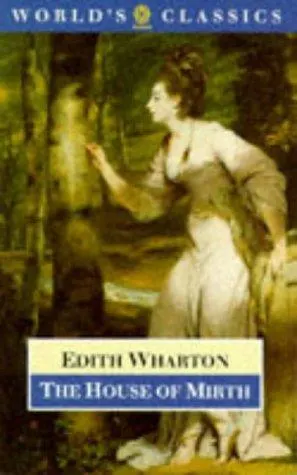
Lily Bart is kin to Maggie Tulliver not because their circumstances are alike, but because both women possess more vitality, perception, and longing than their worlds can comfortably accommodate. Wharton sees exactly how money, manners, gender, and reputation convert ordinary choices into moral traps.
Like Eliot, she refuses to make her heroine either a spotless victim or the author of her own troubles. Lily’s pride, generosity, evasions, and hunger for beauty are inseparable—and Wharton’s poised irony only sharpens the anguish. One of her defining novels, The House of Mirth offers the same devastating spectacle as The Mill on the Floss: a woman judged by a society too small to understand her, rendered by a novelist large-minded enough to understand everyone.
Readers who love the earthy, river-fed life of Eliot’s novel may find The Rainbow almost shockingly alive. Lawrence begins with the Brangwen family rooted in the English Midlands, then traces the struggle between inherited ways of living and the individual’s demand for a fuller existence.
Its great affinity with Eliot lies in its refusal to separate bodily desire, spiritual hunger, intellect, family loyalty, and rebellion. Ursula Brangwen, like Maggie, cannot consent to become smaller merely to preserve other people’s peace. The prose can be turbulent and visionary, pushing the English family novel toward modernism. Suppressed for obscenity when it appeared in 1915, it now stands as one of Lawrence’s major achievements: unruly, searching, and unforgettable.
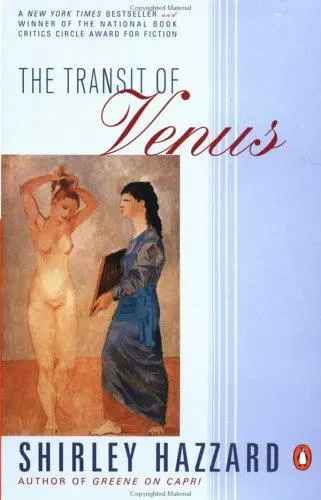
Hazzard’s novel follows two orphaned Australian sisters arriving in postwar England, but its deepest subject is the hidden moral pattern created by love, renunciation, accident, and unequal freedom. A reader moved by Eliot’s sense that character and circumstance slowly weave an inescapable design will recognize the power immediately.
Hazzard’s intelligence is compressed rather than expansive: sentences glitter, judgments arrive with surgical precision, and casual details acquire an almost prophetic weight. Yet beneath the elegance is fierce sympathy for women required to negotiate lives whose rules were written by others. Winner of the National Book Critics Circle Award, The Transit of Venus has inspired unusually devoted admiration because rereading reveals how exquisitely it was built. It delivers the rare combination Eliot mastered: social comedy, moral seriousness, passionate feeling, and the chill of inevitability.
If you loved Adam Bede
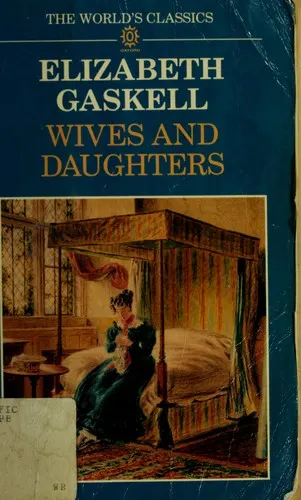
Gaskell offers the same pleasure of entering a provincial world so completely imagined that its gossip, courtships, households, and social gradations become morally consequential. Molly Gibson, a country doctor’s daughter, is as quietly steadfast as Adam, while the dazzling, compromised Cynthia has something of Hetty’s power to attract both censure and compassion.
Yet this is no imitation of Eliot. Gaskell is lighter, more conversational, and wonderfully alert to the comedy of people misunderstanding themselves. Often considered her masterpiece, the novel combines generous characterization with unsparing insight: even its foolish and selfish figures are seen from within. Its unfinished final pages are a genuine loss, but everything before them is so abundant and alive that missing the book would be the greater deprivation.
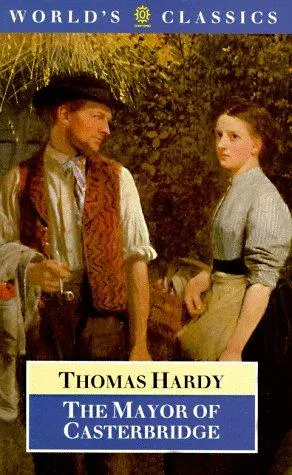
If the irreversible moral pressure of Adam Bede held you—the sense that one terrible act can continue shaping lives long after the moment has passed—Hardy’s novel is essential. It opens with Michael Henchard committing an appalling deed in drunken desperation; years later, outwardly transformed, he discovers that character, guilt, and circumstance do not submit neatly to repentance.
Henchard is one of the great creations of English fiction: forceful, jealous, loving, self-sabotaging, and too large for easy condemnation. Hardy’s Wessex is harsher than Eliot’s Loamshire, but he shares her respect for work, custom, and ordinary people caught in moral catastrophe. The result is a tragedy with the momentum of myth and the painful intimacy of village gossip.
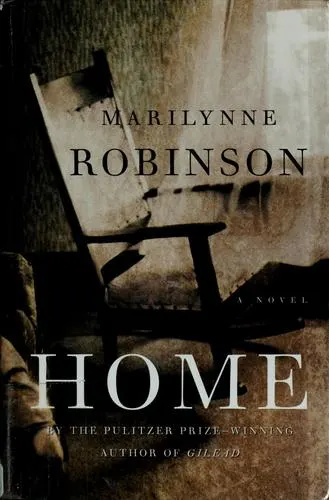
Robinson shares Eliot’s rare ability to make moral attention itself dramatic. Glory Boughton returns to her father’s house just as her estranged brother Jack—the family’s shame, sorrow, and enduring object of love—comes home as well. Almost nothing about Jack can be judged simply, and the novel continually asks how well goodness understands the person it wishes to save.
Readers moved by Dinah’s compassion, and by Eliot’s refusal to confuse mercy with sentimentality, will recognize the kinship immediately. Robinson’s prose is luminous but exact, finding immense emotional stakes in meals, silences, old grievances, and failed attempts at tenderness. Winner of the Orange Prize, Home is among the finest modern novels about grace—and about the wounds that even loving families cannot name away.