Books like The Fortunes of Richard Mahony
—because what lingers is not the goldfields or colonial pageantry, but the spectacle of character becoming destiny: ambition, marriage, displacement and slow psychological collapse. These three novels exert that same accumulating power.
If you liked The Fortunes of Richard Mahony, you’ll love these
Not lookalikes — kindred books. Each one shares something essential with The Fortunes of Richard Mahony, and we tell you exactly what.
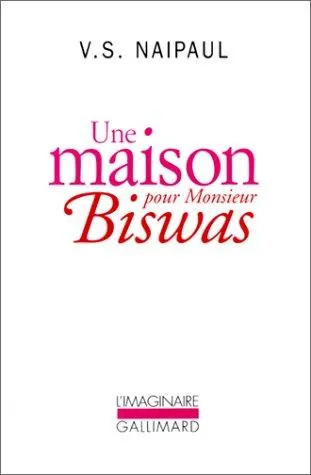
Mohun Biswas, touchy, thwarted and fiercely protective of his independence, spends his life trying to secure a place that is truly his own. As with Richard Mahony, every practical decision reveals a deeper hunger for dignity—and every setback aggravates the very traits that made escape seem possible.
Naipaul’s masterpiece is funnier than Richardson’s trilogy, but its comedy never softens its understanding of failure, marriage or dependence. A whole colonial society becomes visible through one difficult man and the family obliged to accommodate him. The result is intimate and epic at once: one of the twentieth century’s great novels of the terrible human need to possess a life of one’s own.
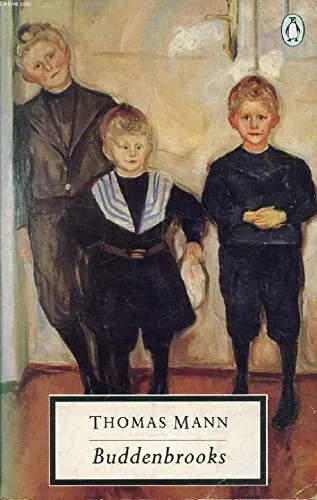
Richardson’s ability to make decline feel gradual, social and inward finds a magnificent counterpart here. Mann follows a prosperous mercantile family as inheritance changes from privilege into burden: habits harden, confidence thins, and private sensibility begins to conflict with public duty.
What makes the novel indispensable is its precision. Business dinners, marriages, illnesses and drawing-room judgments quietly acquire the force of fate. Published when Mann was only twenty-six, it became the work singled out in his Nobel citation and remains the rare family chronicle whose vast design never overwhelms its psychological subtlety.
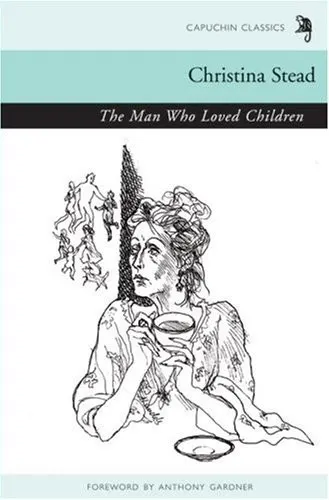
If Mary Mahony’s long, lucid endurance fascinated you as much as Richard’s deterioration, Stead’s ferocious domestic novel is essential. Its household is dominated by Sam Pollit, a charismatic, self-dramatizing father whose professions of love become instruments of control. Around him, wife and children develop their own languages of resistance, cruelty and survival.
Stead refuses easy villains or consoling innocence: she shows how personality colonizes a family, how affection can coexist with tyranny, and how relentless proximity alters everyone involved. Long championed by writers such as Randall Jarrell and widely regarded as Stead’s masterpiece, it has the same unnerving quality as Richardson’s trilogy—the sense that you have not merely read about a family but lived inside its weather.