Author
Books like Don DeLillo
11 books we recommend to Don DeLillo readers, drawn from White Noise, Libra, The Body Artist and Ratner's Star — each with the reason why.
If you loved White Noise
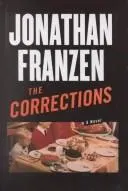
Like White Noise, The Corrections understands the family as both a refuge from modern life and one of its strangest products. Franzen moves among aging parents and their adult children while pharmaceuticals, finance, self-improvement, and consumer desire quietly rewrite what they think they want. His comedy is broader and more emotionally exposed than DeLillo’s, but it carries the same sting: people use the language supplied by institutions to avoid speaking about fear, failure, and death.
Winner of the National Book Award and now firmly established as a major American family novel, it earns its scale through relentless observation. Read it for scenes that are excruciatingly funny, then discover that the joke has become grief before you noticed.
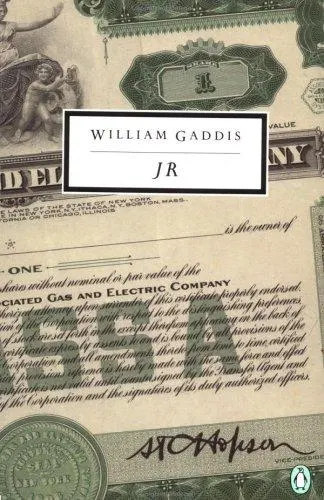
If you loved the way slogans, broadcasts, academic jargon, and casual conversation merge into White Noise’s verbal atmosphere, J R is the audacious next step. Almost entirely through unattributed dialogue, Gaddis creates an America talking itself into absurdity: an eleven-year-old schoolboy begins assembling a financial empire, while adults transmit the language of money without seeming to understand it.
This National Book Award winner is demanding, but its difficulty is purposeful and exhilarating. Gaddis makes capitalism feel less like a system people operate than a torrent of speech that operates them. Once your ear adjusts, the apparent chaos becomes precision comedy—and you begin hearing its voices everywhere outside the novel.
Ling Ma shares DeLillo’s fascination with the point where catastrophe becomes routine. Candace Chen works in Bible production, drifts through New York, and performs the rituals of employment and consumption with numbed competence even as an epidemic spreads. Ma’s deadpan exactness makes office life, nostalgia, and disaster eerily continuous rather than opposites.
Winner of the Kirkus Prize for fiction and a passionately admired contemporary novel, Severance is far more than an apocalypse story. Its deepest subject is repetition: the habits that sustain identity and the habits that hollow it out. It delivers the same chill White Noise does when ordinary life reveals itself as both ridiculous and terrifying—and it does so with a melancholy entirely Ma’s own.
If you loved Libra
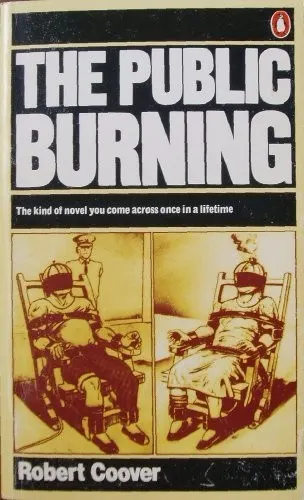
Coover turns the execution of Julius and Ethel Rosenberg into a delirious pageant narrated partly by Vice President Richard Nixon. Like Libra, it treats history not as a settled record but as a performance assembled from ideology, fantasy, bureaucratic language, and national appetite.
Where DeLillo is cool and mournful, Coover is obscene, comic, and carnivalesque: Uncle Sam becomes a character, propaganda acquires flesh, and Nixon’s self-invention becomes inseparable from America’s. Long revered as a cult masterpiece, The Public Burning is one of the boldest American novels about the manufacture of political reality. Readers haunted by Libra’s collision of documented fact and imagined consciousness should not miss its brilliant, ferocious counterpart.

Tree of Smoke follows intelligence officers, soldiers, missionaries, and civilians into the covert machinery of the Vietnam War. Its deepest affinity with Libra lies in the way grand designs decay when entrusted to lonely, frightened, self-mythologizing people. Strategies become rumors; rumors become convictions; institutions keep moving after their purposes have blurred.
Johnson’s prose alternates between hard clarity and visionary radiance, giving espionage the atmosphere of a damaged religion. The novel won the National Book Award, but its distinction is more visceral than ceremonial: few books make secrecy feel so spiritually corrosive. It offers the same terrible pleasure as Libra—the realization that history may be shaped less by masterminds than by believers trapped inside their own plots.
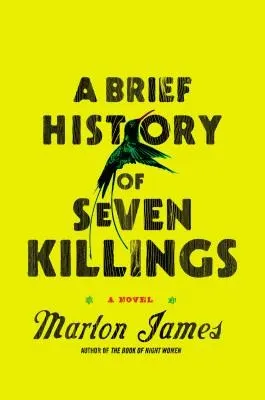
Beginning around the 1976 attack on Bob Marley’s home, Marlon James builds a chorus of gang members, politicians, CIA operatives, journalists, ghosts, and bystanders. No single voice owns the event. Each speaker alters its meaning, until the reader must navigate history as a field of competing testimonies rather than a clean sequence of causes.
That polyphonic method makes this a thrilling answer to Libra’s central problem: how can a novel approach an event whose explanations have become part of its mystery? James is more torrential and profane than DeLillo, with voices that seize the page and refuse neutrality. The Booker Prize recognized its scale, but its devoted readership comes from its sheer vitality—its menace, humor, rhythm, and panoramic intelligence. It does not solve conspiracy; it shows how conspiracy colonizes entire lives.
If you loved The Body Artist
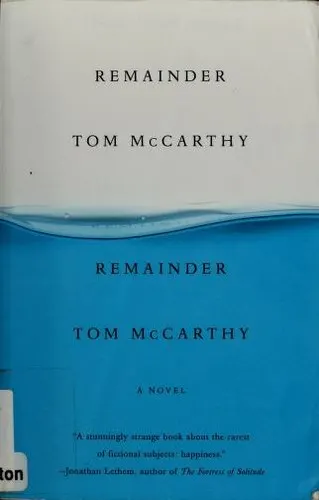
If Lauren Hartke’s bodily rituals fascinated you, Remainder offers a thrillingly obsessive variation. After an accident leaves him estranged from his own movements, its unnamed narrator begins reconstructing remembered scenes with fanatical precision—hiring performers, controlling gestures, repeating moments until they feel authentic.
McCarthy turns repetition into both metaphysical inquiry and grim comedy: can a staged act become more real than spontaneous life? A cult novel that helped establish him as one of contemporary fiction’s boldest conceptual writers, Remainder has DeLillo’s icy intelligence but a more manic pulse. It makes embodiment, performance, and authenticity feel newly dangerous.
A mother speaks with her dead teenage son—not to recover him through conventional remembrance, but to continue their exacting, affectionate arguments about words, sentiment, and the stories people impose on grief. Their exchanges unfold outside ordinary chronology, in a mental space language creates and repeatedly threatens to destroy.
Like The Body Artist, Li’s novel refuses the consolations expected of bereavement fiction. Its restraint is fierce rather than cold, and its verbal sparring keeps sorrow from becoming static or pious. Li wrote from devastating personal knowledge, yet the result is controlled, formally daring art: a book whose sentences seem to test whether love can survive without illusion.
A fugitive hiding on an apparently deserted island begins witnessing a group of elegant visitors who repeat the same actions while remaining oblivious to him. From that simple disturbance, Bioy Casares constructs a brief, crystalline puzzle about presence, desire, recording, and the terrible seduction of images.
Jorge Luis Borges called its plot perfect, and generations of writers and filmmakers have drawn from its central invention. Yet its real kinship with The Body Artist lies in atmosphere: both novels make repeated gestures uncanny and ask whether technology, performance, or sheer attention can preserve a person. Few books so short leave behind such a vast, haunted afterlife.
If you loved Ratner's Star
A secret scientific project gathers elite researchers to decipher what may be a message from space. That premise makes the kinship obvious; what makes Lem essential is his refusal to turn interpretation into a clean puzzle with a gratifying solution.
Instead, the novel anatomizes how scientists think: the metaphors they mistake for explanations, the disciplines that cannot communicate, and the human desires smuggled into supposedly objective reasoning. Lem’s wit is drier and more austere than DeLillo’s, but he shares DeLillo’s fascination with knowledge becoming theatrical at its limits. One of the great philosophical novels of science fiction, His Master’s Voice offers the unnerving possibility that intelligence is most visible not in what it deciphers, but in the elaborate forms of its failure.
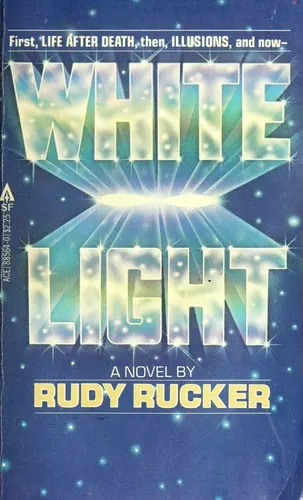
Felix Rayman, a dissatisfied mathematics professor, slips from academic frustration into a dreamlike encounter with infinity. Rucker—himself a mathematician—does not merely decorate the story with Cantor, continua, and transfinite numbers. He converts those ideas into places, creatures, jokes, and physical predicaments.
That makes White Light a particularly exhilarating companion to Ratner’s Star. Both novels treat mathematics as rigorous thought and as a portal through which ordinary reality becomes absurd; both understand that abstraction can produce slapstick as readily as sublimity. Rucker’s compact, unruly novel became a cult classic of mathematical science fiction because it possesses something exceedingly rare: genuine conceptual ambition without solemnity. It feels like contraband from a universe where a proof can become a landscape and infinity can misbehave.