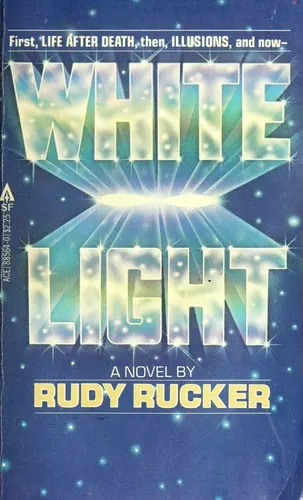
Books like White Light
Infinity, misbehaving. White Light turns mathematics into landscape, metaphysics into slapstick, and one compromised mind into a vehicle for genuine awe. These novels perform similarly audacious transformations.
If you liked White Light, you’ll love these
Not lookalikes — kindred books. Each one shares something essential with White Light, and we tell you exactly what.

A nameless murderer, an eccentric police station, bicycles with alarming ontological problems, and copious footnotes on the crackpot philosopher de Selby: O’Brien makes lunatic logic feel as rigorous as mathematics.
Like Rucker, he understands that the funniest ideas can also be the most disturbing. The novel’s circular arguments and impossible spaces gradually acquire metaphysical weight without losing their deadpan hilarity. Rejected during O’Brien’s lifetime and published posthumously, it became a cult classic because nothing else sounds—or thinks—quite like it. Anyone who loved White Light’s union of low comedy and vertiginous abstraction should consider this essential.
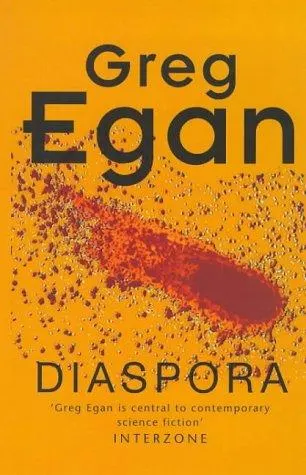
Read this for the part of White Light that looks toward infinity and feels exhilaration rather than intimidation. Diaspora opens with the spontaneous birth of a digital person, then treats mathematics as an experience: something that can be explored, visualized, loved, and used to apprehend realities beyond ordinary intuition.
Egan is more austere than Rucker, but the two share a rare conviction that advanced ideas belong inside imaginative fiction, not as decoration but as its source of wonder. Widely regarded as one of the defining posthuman hard-SF novels, Diaspora offers conceptual vistas vast enough to make most space opera seem provincial.
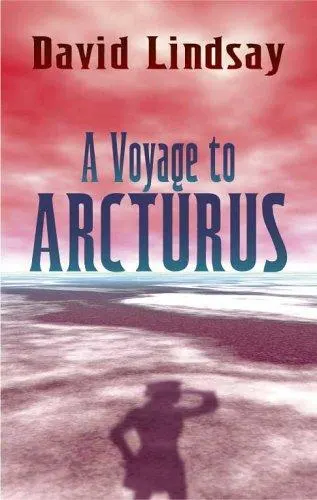
Lindsay’s cult classic begins with a séance and a journey to the planet Tormance, but its real destination is philosophical: every new color, organ, landscape, and sensation embodies a different theory of desire, identity, truth, or transcendence.
That is its deep kinship with White Light. Both books refuse to leave abstraction abstract; they give metaphysics weather, geography, monsters, and bodily consequences. Lindsay’s prose can be severe where Rucker is rowdy, yet his invention remains startling more than a century later. The novel influenced C. S. Lewis and has retained a fiercely devoted readership because it feels less like conventional fantasy than a transmission from an alien philosophy.