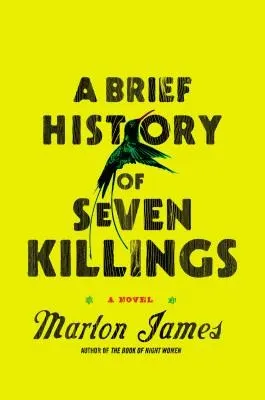
Books like A Brief History of Seven Killings
A Brief History of Seven Killings and Roberto Bolaño’s 2666 are monumental novels that make violence feel not like an isolated event but a whole civilization’s hidden organizing principle. The three books below share Marlon James’s appetite for unruly voices, compromised histories, and fiction audacious enough to swallow entire political worlds.
If you liked A Brief History of Seven Killings, you’ll love these
Not lookalikes — kindred books. Each one shares something essential with A Brief History of Seven Killings, and we tell you exactly what.
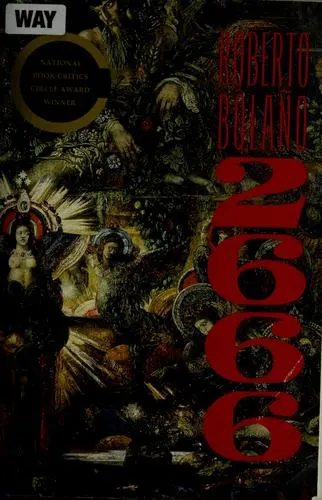
Like James, Bolaño builds a vast narrative from shifting perspectives, abrupt tonal changes, rumors, obsessions, and lives caught in machinery too large to comprehend. What begins with four literary critics searching for an elusive writer gradually widens into a terrifying panorama of art, labor, power, and institutional violence.
The kinship lies especially in the novels’ refusal to provide a safe, authoritative viewpoint. Both demand that readers assemble history from partial testimony while asking what storytelling can do in the face of horror—and whether aesthetic fascination can become complicity. Published posthumously, 2666 quickly became Bolaño’s defining masterpiece. Its scale is intimidating, but its strange momentum and moral force make it one of those rare novels that permanently enlarges a reader’s idea of what fiction can contain.
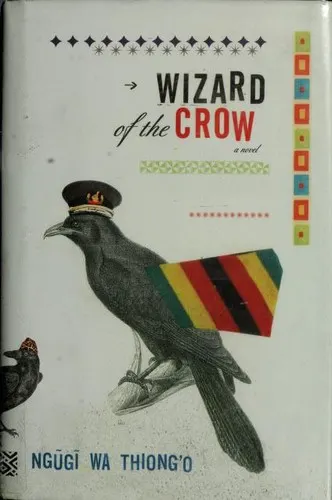
For readers who loved the savage comedy threaded through James’s bloodshed, Wizard of the Crow is indispensable. Ngũgĩ imagines an African dictatorship ruled by an absurd, terrifying tyrant whose vanity projects, courtiers, police, foreign creditors, and bewildered citizens generate a carnivalesque flood of stories.
This is not merely political allegory. Its gossip, folktale transformations, competing narrators, and exuberant exaggerations create a living oral world in which language itself becomes resistance. Ngũgĩ can make authoritarian power look ridiculous without ever making its victims’ suffering trivial. Written originally in Gikuyu by one of the foundational figures of postcolonial literature, the novel has the breadth of an epic and the immediacy of a story told urgently to a crowd. Anyone drawn to James’s fusion of historical anger, verbal invention, and pitch-black humor should not miss it.
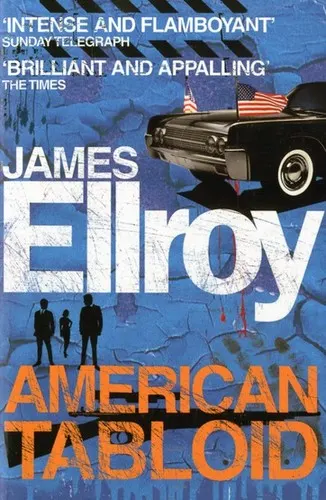
American Tabloid offers the adrenalized, underworld version of the kinship. Ellroy takes three ruthless operators moving among organized crime, law enforcement, intelligence agencies, and political campaigns, then turns mid-century American history into a feverish record of deals, vendettas, surveillance, and betrayal.
Its clipped, percussive prose is far removed from James’s patois-rich polyphony, but the effect is similarly propulsive: history arrives through compromised men whose appetites expose the corruption beneath public mythology. Ellroy’s famous opening claim that America was never innocent announces the novel’s purpose, and the book earns that swagger. Widely regarded as one of his major achievements, it makes conspiracy feel less like a secret master plan than the natural consequence of institutions and criminals feeding each other. If Seven Killings left you craving another novel with speed, brutality, political nerve, and no comforting center, American Tabloid delivers.