Author
Books like Cormac McCarthy
12 books we recommend to Cormac McCarthy readers, drawn from Blood Meridian, The Road, No Country for Old Men and Suttree — each with the reason why.
If you loved Blood Meridian
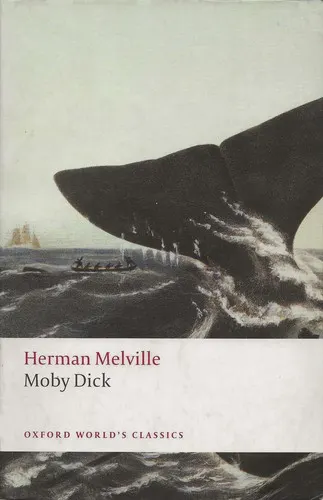
This is one of Blood Meridian’s deepest ancestors: a journey narrative transformed into scripture, anatomy, comedy, prophecy, and metaphysical trial. Melville’s ocean, like McCarthy’s desert, is both magnificently physical and terrifyingly indifferent; Ahab, like Judge Holden, possesses a rhetoric so powerful that interpretation itself becomes a form of domination.
Its wild tonal range is the revelation. Sailors’ jokes and technical digressions suddenly open onto passages of biblical grandeur, while the hunt gathers the force of an argument with creation. Few American novels pursue evil, fate, and human obsession with such intellectual audacity. Blood Meridian can make Moby-Dick feel newly contemporary—and Moby-Dick, in turn, reveals just how vast a novel can become.
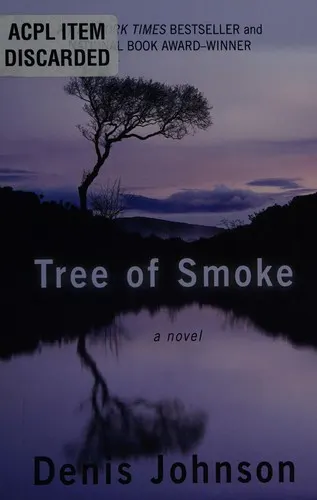
Denis Johnson’s National Book Award winner enters the Vietnam War not as a conventional combat story but as a fevered theater of espionage, faith, delusion, and American power. Its soldiers and intelligence operatives inhabit a world where plans turn into myths, myths justify atrocities, and nobody can locate the border between revelation and madness.
Johnson’s gift is different from McCarthy’s but comparably potent: flashes of bruised lyricism amid brutality, dark comedy beside spiritual terror, and characters who remain painfully human even when history reduces them to instruments. Tree of Smoke understands war as an atmosphere that invades language and conscience. It is sprawling, hallucinatory, and morally unsparing—the rare modern war novel large enough to stand near Blood Meridian without seeming diminished.
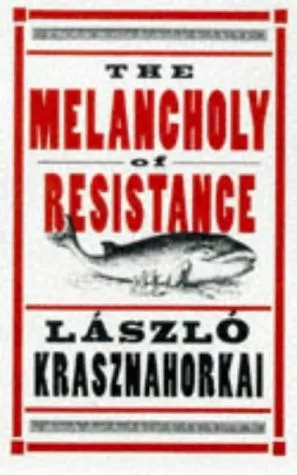
A shabby circus arrives in a frozen Hungarian town carrying an enormous stuffed whale, and ordinary reality begins to buckle. Krasznahorkai builds dread through immense, winding sentences that trap the reader inside rumor, fear, and gathering collective violence. The result has the inevitability of an apocalypse and the intimate ugliness of a neighborhood quarrel.
What connects it to Blood Meridian is not scenery but vision: both novels treat violence as something simultaneously political, animal, and metaphysical. Krasznahorkai—winner of the Man Booker International Prize—also shares McCarthy’s ability to make prose feel incantatory without sacrificing concrete horror. Béla Tarr’s celebrated film adaptation, Werckmeister Harmonies, has its own cult, but the novel’s engulfing voice is irreplaceable. Anyone haunted by McCarthy’s sense that civilization may be only a temporary arrangement should read it.
If you loved The Road
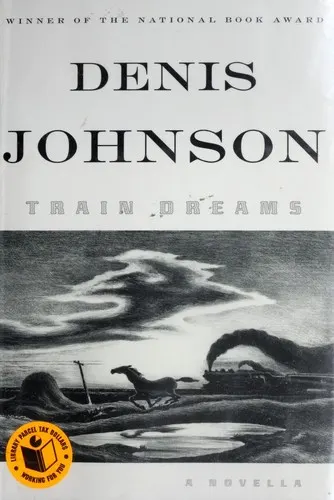
Robert Grainier, an ordinary laborer in the American West, moves through a life marked by harsh work, bewildering loss, and a world changing faster than he can understand. Johnson compresses decades into a short novel whose sentences feel weathered, strange, and inevitable.
Like The Road, this Pulitzer finalist finds grandeur without grandiosity. It treats loneliness as a physical landscape and small acts of care as nearly sacred. Grainier’s life is not conventionally heroic, yet Johnson makes it seem as mysterious and consequential as scripture. Few novels this brief leave behind such an immense silence.

An unnamed woman wakes in an Alpine hunting lodge to discover an invisible barrier separating her from the rest of the world. What follows is less an adventure than an exacting record of survival: tending animals, storing food, watching the seasons, and learning what remains when society disappears.
Haushofer understands, as McCarthy does, that survival becomes meaningful through responsibility. The woman’s care for the creatures dependent on her gives the novel its emotional gravity, while the calm, lucid narration makes every practical detail feel morally charged. Long neglected, this 1963 Austrian novel has become an international cult classic and a landmark of ecological and feminist fiction. Its quietness is not reassuring; it is devastating.
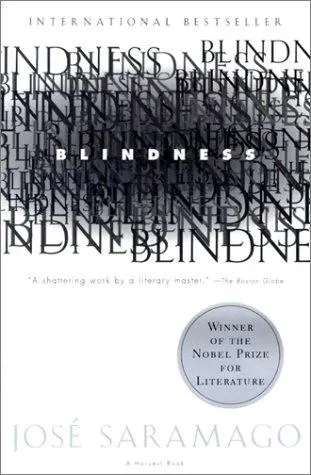
When an epidemic of sudden white blindness spreads through an unnamed city, the first victims are confined together under brutal conditions. One woman can still see, and that private fact makes her both witness and reluctant guardian.
Saramago’s surging, punctuation-light prose is very different from McCarthy’s austerity, but the two novels exert the same pressure: remove law, comfort, and certainty, then ask what human beings owe one another. Blindness is savage about cruelty without surrendering its belief in companionship, dignity, and care. One of the Nobel laureate’s defining novels, it has the force of a modern parable—and its images are almost impossible to forget.
If you loved No Country for Old Men

Three ordinary men discover a crashed plane containing millions of dollars, and one apparently manageable decision begins tightening around them. Like McCarthy, Smith understands that suspense becomes truly frightening when every practical choice is also a moral choice.
The prose is plain, the logic merciless, and the escalation so convincing that catastrophe feels both shocking and inevitable. This celebrated debut became an Oscar-nominated screenplay, but the novel remains the purest version of Smith’s achievement: a thriller engineered with the severity of tragedy.
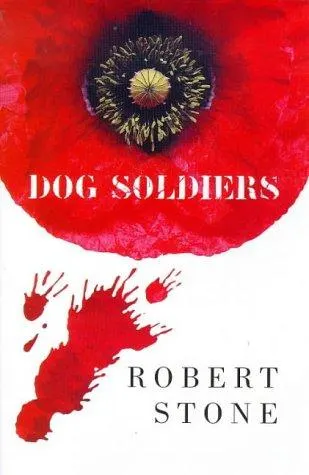
Stone’s National Book Award winner begins with an American journalist in Vietnam arranging to smuggle heroin home. What follows is a hunted, disillusioned journey through an America whose ideals have curdled into appetite, paranoia, and force.
Readers drawn to Sheriff Bell’s sense that the country has crossed some invisible threshold will recognize Stone’s moral weather. Yet Dog Soldiers has its own feverish energy: damaged people reach for courage, loyalty, or transcendence while knowing those words may already be hollow. It is one of the essential American novels about what remains after belief collapses.

Eddie Coyle sells guns to criminals and faces a prison sentence he desperately wants to avoid. Higgins strips crime fiction of glamour: his underworld runs on favors, grudges, cautious negotiations, and the quiet knowledge that everyone is replaceable.
The dialogue is astonishing—funny, evasive, threatening, and exact enough to reveal an entire hierarchy without explanation. Elmore Leonard called it the best crime novel ever written, and its influence can be heard in decades of fiction and film. If you admired how No Country lets menace emerge from ordinary conversation, Higgins’s landmark novel is indispensable.
If you loved Suttree
Lowry’s masterpiece offers the closest equivalent to McCarthy’s fusion of verbal splendor and self-destruction. On the Day of the Dead in Mexico, an alcoholic former British consul moves through a world charged with private guilt, political menace, hallucination, and cosmic significance. Like Suttree, he is both participant and estranged observer, lucid enough to understand his ruin but not necessarily to escape it.
The prose can turn a cantina, a garden, or a distant volcano into an emblem of damnation, yet the book is also painfully funny and crowded with the humiliating logistics of drink. Its reputation as one of the great modern novels was hard won—the book’s density defeated some early readers, then inspired a fierce, lasting devotion. Anyone who loves the way Suttree makes degradation visionary should experience Lowry’s even more feverish descent.
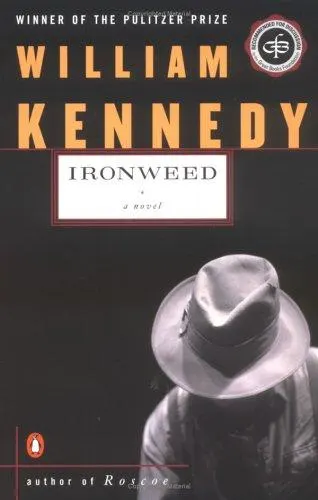
Francis Phelan returns to Albany carrying the memories of those he has failed and the dead he cannot dismiss. Kennedy writes the dispossessed from within: hunger, cold, drink, shame, jokes, stubborn loyalties. His derelicts are never exhibits in a social argument. They possess histories, vanity, imagination, and an unruly dignity—the same moral generosity that makes Suttree’s Knoxville companions unforgettable.
Winner of the Pulitzer Prize and the defining novel of Kennedy’s Albany cycle, Ironweed earns its supernatural touches through emotional precision. Its language is less torrential than McCarthy’s, but it can rise suddenly from street grit into haunted eloquence. Read it for Francis’s battered consciousness and for a vision of failure that refuses both sentimentality and contempt.
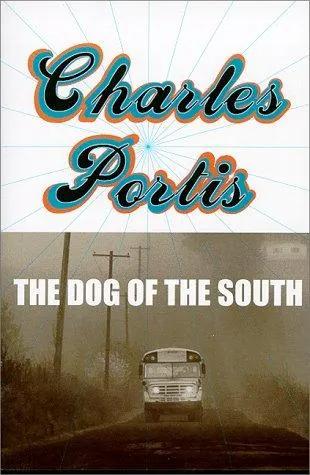
For the part of Suttree that makes you laugh aloud amid squalor, read Portis. Ray Midge’s wife has fled with another man—and with Ray’s car and credit cards—so he sets off after them, narrating his pursuit with pedantic calm while attracting eccentrics, frauds, and monomaniacs. Portis’s sentences are clean where McCarthy’s are baroque, but both writers understand that character is revealed most vividly through peculiar speech, misplaced pride, and magnificent uselessness.
Portis became a writers’ writer and a cult favorite because no one else quite matched his deadpan timing or affection for crackpots. The Dog of the South is not merely comic relief after Suttree: beneath its absurdity lies the same fascination with men who abandon respectable life and then invent elaborate principles to explain themselves. Missing Portis means missing one of American fiction’s funniest and most exact voices.