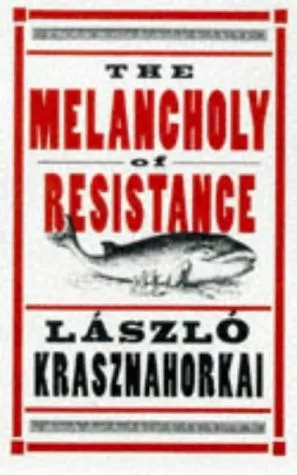
Books like The Melancholy of Resistance
After Krasznahorkai’s long sentences have made disorder feel cosmic, ordinary realism can seem underpowered. What satisfies is fiction in which language itself buckles under collective delusion, metaphysical terror, and vicious comedy.
If you liked The Melancholy of Resistance, you’ll love these
Not lookalikes — kindred books. Each one shares something essential with The Melancholy of Resistance, and we tell you exactly what.
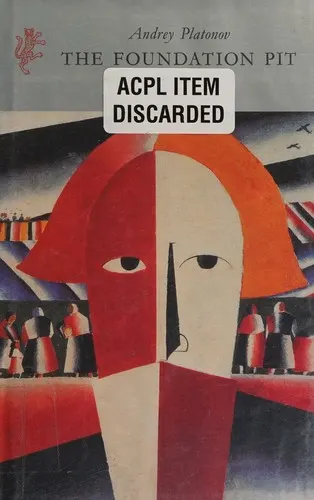
Voshchev, dismissed from his job for thinking too much, joins laborers excavating the foundation for an immense communal home. As in Krasznahorkai, a provincial undertaking expands into a parable about humanity’s desperate wish to impose order on an indifferent universe.
Platonov’s real marvel is his deliberately damaged Russian: bureaucratic slogans, peasant speech, and philosophical yearning collide until every sentence sounds both absurd and bereaved. The resulting comedy is inseparable from horror. Suppressed in the Soviet Union for decades, this short novel is now regarded as Platonov’s masterpiece. Anyone moved by Valuska’s innocence amid ideological brutality should not miss it.
Peter Kien, a celebrated sinologist, has arranged his life as a sealed kingdom of books. Unfortunately, other people exist. Canetti turns the collision between Kien’s immaculate intellectual system and the appetites outside it into an increasingly savage grotesque.
What connects it to The Melancholy of Resistance is not merely social breakdown but the terrifying solitude of its characters: each inhabits a private language and mistakes obsession for reality. Their encounters become brutal comic set pieces, while the surrounding city feels ready to convert resentment into mass violence. Canetti’s only novel, written before his landmark study Crowds and Power and long before his Nobel Prize, remains one of modernism’s most ferocious black comedies.
Donoso begins among the old women, servants, relics, and whispered legends of a decaying Chilean religious house, then makes the novel’s very architecture unstable. Voices leak into one another; identities become enclosures; stories breed stories until the reader can no longer stand safely outside the nightmare.
Where Krasznahorkai moves through a town like an approaching storm, Donoso creates suffocation: a dense, bodily, feverishly imaginative world governed by shame, privilege, superstition, and fear of deformity. Yet its excess is often horribly funny. Widely considered Donoso’s masterpiece and a summit of the Latin American Boom, it offers the rare experience of a novel inventing its own monstrous physics around you.