
Books like The Friends of Eddie Coyle
Pressure. Higgins makes crime feel less like adventure than a job performed by frightened, compromised people whose every conversation alters the balance of power. These novels share that precision, moral chill, and sympathy without sentimentality.
If you liked The Friends of Eddie Coyle, you’ll love these
Not lookalikes — kindred books. Each one shares something essential with The Friends of Eddie Coyle, and we tell you exactly what.
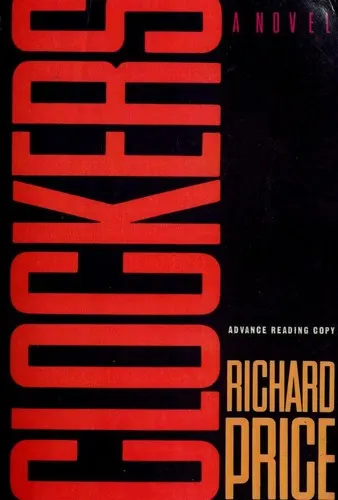
Price is Higgins’s great heir in the art of dialogue as action. Dealers, detectives, and witnesses talk to probe for weakness, conceal fear, and improvise versions of themselves; the truth emerges not through exposition but through competing voices.
Yet Clockers is no imitation. Its panoramic view of policing and street commerce shows institutions grinding against individual lives, while its characters remain irreducibly human. Widely regarded as Price’s masterpiece—and memorably filmed by Spike Lee—it has the density of a social novel and the propulsion of first-rate crime fiction.

Where Higgins understands the underworld as precarious employment, Bunker understands it as a closed economy. His newly released narrator wants to live straight, but prison habits, social suspicion, and the practical attractions of robbery keep narrowing his options. Every decision has material weight: money, weapons, transportation, trust.
Bunker’s own years in prison give the novel authority, but its greatness lies in its unsparing intelligence rather than autobiography. A foundational work of American convict fiction, later adapted as Straight Time, it strips criminal life of glamour while preserving its terrible momentum.
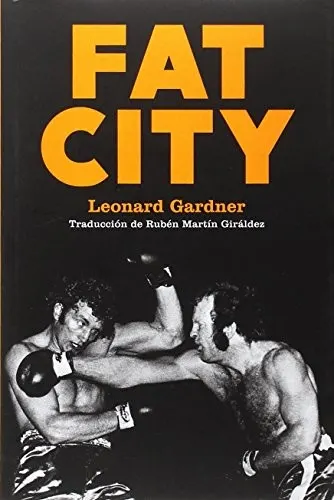
This is the unexpected match: a boxing novel for readers who loved Higgins’s exhausted working men. Gardner follows fighters, trainers, and laborers in Stockton, California, with the same refusal to turn failure into either melodrama or uplift. They speak past one another, nurse small hopes, and discover that wanting another life is not the same as escaping this one.
The prose is lean, exact, and quietly devastating; whole histories seem embedded in a gesture or a shabby room. John Huston’s admired film adaptation helped secure its reputation, but the novel itself has endured as a cult classic because it achieves something rarer: complete compassion without a trace of consolation.