Author
Books like Vladimir Nabokov
10 books we recommend to Vladimir Nabokov readers, drawn from Lolita, Pale Fire, Pnin, Invitation to a Beheading and Bend Sinister — each with the reason why.
If you loved Lolita
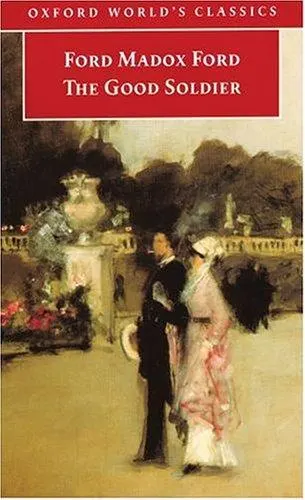
Ford’s novel offers a quieter but equally treacherous encounter with a narrator. John Dowell begins by calling his tale “the saddest story” he has ever heard, then recounts the intimate history of two wealthy couples. Yet his hesitant repetitions, disordered chronology, and professions of incomprehension steadily become more revealing than the facts he supplies.
Unlike Humbert’s jeweled performance, Dowell’s voice sounds almost artless—which makes its evasions exceptionally unnerving. Ford turns social politeness into a screen behind which desire, cruelty, and self-deception flicker. The novel’s fractured method profoundly influenced modern fiction, but its formal importance understates its emotional power: it leaves you wondering whether Dowell is innocent, obtuse, manipulative, or some unbearable combination of all three. Few novels make the act of listening to a storyteller feel so perilous.
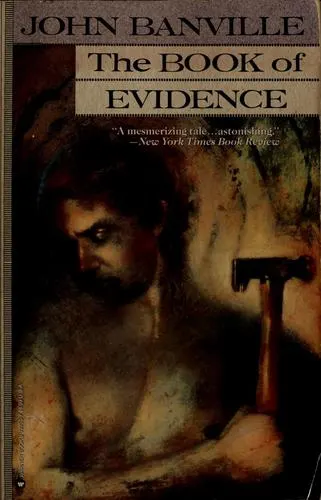
Freddie Montgomery, an educated drifter facing a murder charge, sets down his version of events in prose of extraordinary sensuous precision. He notices colors, textures, gestures, and paintings with an aesthete’s rapture; he also uses that rapture to evade the human reality before him. The friction between verbal beauty and moral vacancy is where the novel burns.
Banville does not imitate Nabokov’s style. His sentences are colder, more mineral, and his narrator’s wit has a sickly self-awareness all its own. But readers fascinated by Lolita’s central ethical problem—what happens when exquisite language becomes a criminal’s preferred alibi—will find this Booker-shortlisted novel devastating. Freddie wants to make his confession into art; Banville lets him try, while ensuring that the life outside his rhetoric keeps breaking through. It is a compact, ferociously controlled masterpiece.
If you loved Pale Fire
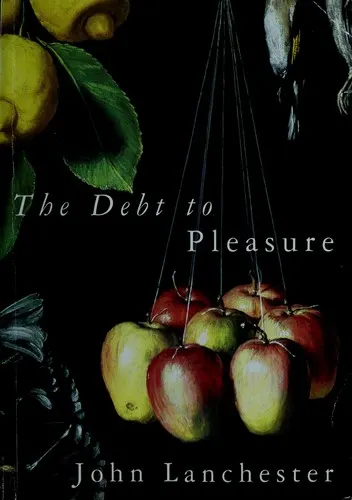
Tarquin Winot presents his story as a cultivated mixture of travelogue, memoir, recipes, and aesthetic instruction. His prose is sumptuous, fastidious, and lethally self-satisfied: every judgment about an omelette or a painting also reveals something he would prefer the reader not to notice.
Like Kinbote, Tarquin mistakes eloquence for control. The delight is in reading both with and against him, catching the pressure of another story beneath his immaculate sentences. Winner of the Whitbread First Novel Award, The Debt to Pleasure is one of the rare literary puzzles whose solution matters less than the mesmerizing voice that created it.
An elderly Midwesterner, Alden Dennis Weer, wanders through memories of childhood, family businesses, old houses, courtships, and stories heard long ago. Everything sounds gently anecdotal; almost nothing is innocent. Repetitions acquire new meanings, casual omissions become conspicuous, and rooms seem to connect in ways chronology cannot explain.
Peace offers the particular pleasure Pale Fire gives its most devoted readers: the dawning realization that the real novel must be assembled from what its narrator mishandles. Wolfe never steps forward to settle the evidence, so rereading becomes discovery rather than repetition. Often regarded by Wolfe’s admirers as his quiet masterpiece, it is a small book with an almost inexhaustible afterlife in the mind.
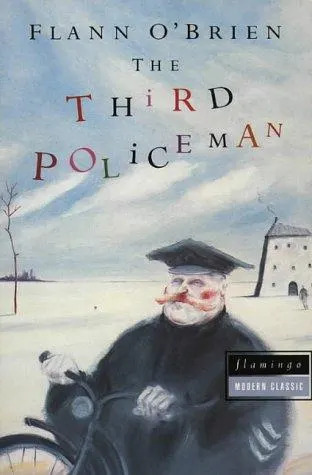
Its unnamed narrator is a murderer, amateur philosopher, and obsessive student of de Selby, a wholly invented savant whose theories are defended and demolished in increasingly deranged scholarly footnotes. The rival commentators, dubious citations, and magnificent academic spite form a second comedy beneath the first—an obvious delight for anyone who wished Kinbote’s notes would keep breeding forever.
But O’Brien’s nonsense is exact rather than whimsical. Each absurd premise is pursued with such remorseless logic that the world begins to feel both hilarious and metaphysically unsafe. Rejected during O’Brien’s lifetime and published posthumously, The Third Policeman became a cult masterpiece because its jokes do not dissipate: they deepen into dread, wonder, and one of fiction’s strangest visions of consciousness.
If you loved Pnin
Gerhardie’s cult classic turns a sprawling multilingual family into a carnival of vanity, misunderstanding and thwarted longing. Its young narrator observes everyone with Nabokovian relish, yet his own blind spots gradually become part of the comedy.
Like Pnin, it understands exile as both linguistic absurdity and permanent emotional weather. Gerhardie—admired by writers including Evelyn Waugh and Graham Greene—can make a character ridiculous in one sentence and heartbreaking in the next. Anyone who loves Pnin’s collision of verbal brilliance and homesickness should discover this neglected comic masterpiece.
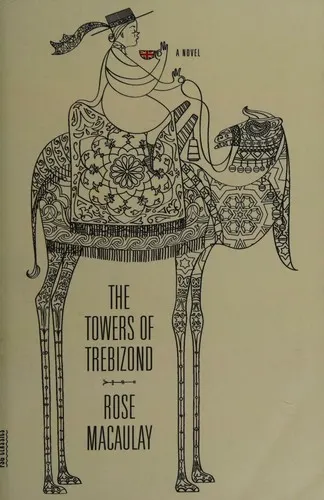
It begins with an aunt, a camel and a proposed Anglican mission to Turkey, and proceeds in a tone of serene, glittering lunacy. But Macaulay’s narrator is concealing a private ache, and the novel’s apparent lightness acquires an extraordinary emotional undertow.
That tonal trapdoor will feel familiar to a Pnin reader: eccentric people are allowed their full comic splendor, while pain waits quietly beneath the performance. Winner of the James Tait Black Memorial Prize, The Towers of Trebizond has endured because its famous wit is inseparable from its moral seriousness. Its final effect is much larger—and sadder—than its mischievous opening suggests.
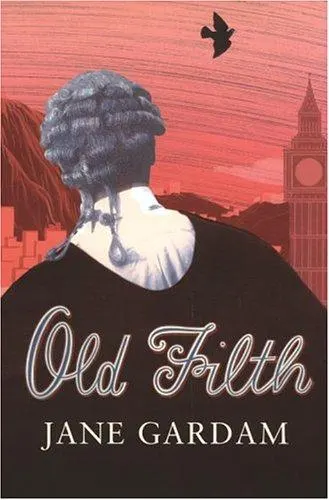
Sir Edward Feathers, a retired judge known by the colonial nickname FILTH—“Failed in London, Try Hong Kong”—initially appears as an imposing, faintly absurd relic. Gardam then builds his life from deft fragments, omissions and sideways revelations, making every habit and social misstep carry unsuspected weight.
The kinship with Pnin lies in this patient restoration of dignity. Both novels invite us to smile at a solitary, displaced man before showing how inadequate that smile is. Gardam’s crystalline compression, sly narrative engineering and refusal of easy pathos have earned Old Filth unusually devoted readers and two companion novels. Once Feathers has entered your imagination, not knowing the rest of him feels like a genuine loss.
If you loved Invitation to a Beheading
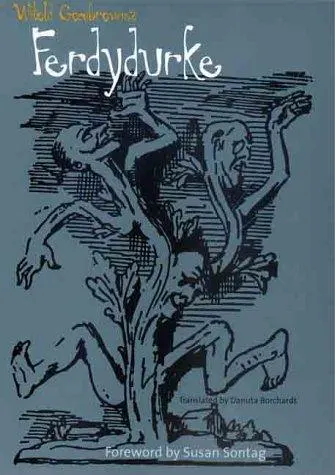
Gombrowicz begins with an adult writer being forcibly returned to school, then turns that humiliation into a ferocious comedy about the identities other people impose on us. Its great subject is “form”: the social poses, childish grimaces, solemn phrases, and ready-made selves that imprison consciousness.
Cincinnatus’s refusal to become intelligible to his judges finds a wild cousin here. Gombrowicz attacks every demand to be mature, respectable, cultured, or easily categorized, using grotesque set pieces and gleefully mutinous prose. Long regarded as a central work of twentieth-century Polish literature, Ferdydurke has inspired unusually devoted readers because it does not merely describe freedom—it behaves freely on every page.
If you loved Bend Sinister
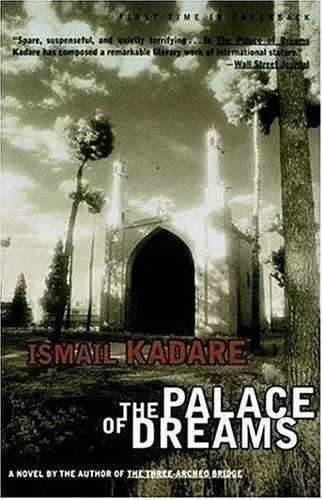
Mark-Alem enters an imperial institution that collects, sorts, and interprets the dreams of an entire population. Kadare renders its corridors, classifications, and obscure ranks with such grave precision that bureaucracy begins to feel like a supernatural force.
The kinship with Bend Sinister lies in the way power colonizes meaning itself. The state does not merely demand obedience; it claims jurisdiction over private consciousness, while nobody—including its servants—can discover where responsibility resides. Kadare’s restrained, wintry prose offers a bracing contrast to Nabokov’s exuberance, but the same mixture of absurdity and menace accumulates around every euphemism and procedural detail. The novel provoked official condemnation in communist Albania, and Kadare later became the inaugural Man Booker International Prize winner. This is his most haunting political fable: compact, lucid, and capable of making an office door seem more frightening than a prison gate.