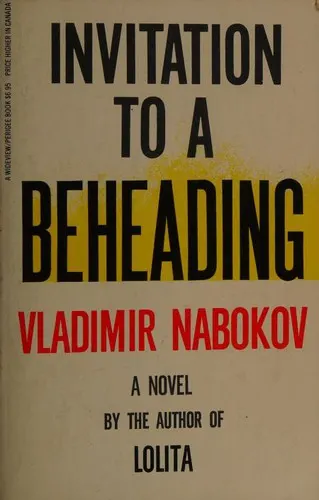
Books like Invitation to a Beheading
What lingers is the desire for another prison whose walls turn out to be theatrical scenery: a novel where tyranny is ridiculous, language is liberating, and one lucid consciousness refuses to accept the world’s counterfeit reality.
If you liked Invitation to a Beheading, you’ll love these
Not lookalikes — kindred books. Each one shares something essential with Invitation to a Beheading, and we tell you exactly what.
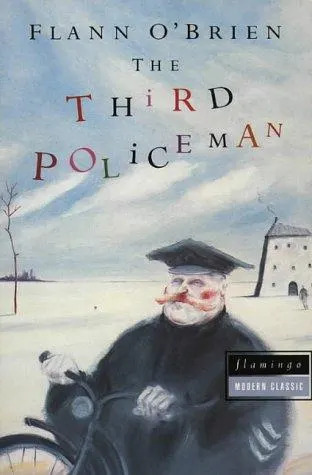
An unnamed narrator enters an Irish police station and finds himself subjected to questions, laws, and scientific theories that grow more nonsensical the more rigorously they are explained. Like Nabokov, O’Brien makes nightmare logic irresistibly funny: bicycles acquire metaphysical importance, language becomes a trapdoor, and authority speaks with the serene confidence of absolute lunacy.
This cult classic offers the same exhilarating suspicion that the visible world is a badly constructed set. Yet its comedy is unmistakably its own—deadpan, recursive, and steeped in mock scholarship. Few novels make existential terror this playful, or playfulness this terrifying.
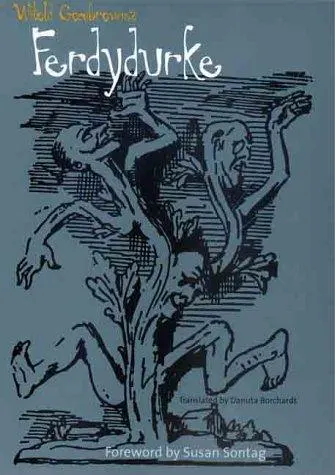
Gombrowicz begins with an adult writer being forcibly returned to school, then turns that humiliation into a ferocious comedy about the identities other people impose on us. Its great subject is “form”: the social poses, childish grimaces, solemn phrases, and ready-made selves that imprison consciousness.
Cincinnatus’s refusal to become intelligible to his judges finds a wild cousin here. Gombrowicz attacks every demand to be mature, respectable, cultured, or easily categorized, using grotesque set pieces and gleefully mutinous prose. Long regarded as a central work of twentieth-century Polish literature, Ferdydurke has inspired unusually devoted readers because it does not merely describe freedom—it behaves freely on every page.
The closest next step is one of Nabokov’s most unjustly overshadowed novels. Adam Krug, a celebrated philosopher, lives under a newly installed dictatorship whose ideology is both murderous and preposterously banal. The regime wants not simply his obedience but his intellectual endorsement, and Nabokov stages the contest as a collision between an irreplaceable mind and a state devoted to enforced sameness.
Here again dictatorship is shabby theater: slogans wobble, officials become grotesques, and verbal invention sabotages political language. But Bend Sinister is more emotionally exposed than Invitation to a Beheading, shadowed from its opening by Krug’s grief and love. It also pushes Nabokov’s signature idea further—that an artist may reveal the tyrant’s world as fabricated without pretending its suffering is unreal. Anyone who loved Cincinnatus’s inward sovereignty should not miss Krug’s darker, more intimate resistance.