Books like Peace
Reading Peace is like wandering through a gracious old house while its owner reminisces: every room seems comfortable, every anecdote polished, yet the doors do not quite connect and something terrible may be standing just outside your line of sight. These novels offer that same exhilaration of discovering that apparent digressions are evidence—and that the book you finish is not the book you began.
If you liked Peace, you’ll love these
Not lookalikes — kindred books. Each one shares something essential with Peace, and we tell you exactly what.
A celebrated poet’s final work appears with a foreword and commentary by his neighbor, Charles Kinbote. What begins as literary apparatus gradually becomes a contest between poem and commentator, each seeming to expose what the other suppresses.
Like Wolfe, Nabokov makes interpretation part of the drama. Kinbote’s vanity is hilarious, but his misplaced emphases, suspicious omissions, and private mythology force you to read around him. Almost every detail can change allegiance on a second pass. Frequently ranked among the great twentieth-century novels, Pale Fire earns that status not through solemnity but through dazzling prose, structural audacity, and the intoxicating possibility that its real story exists only in the reader’s reconstruction.
Concert pianist Ryder arrives in an unnamed European city for an important performance, only to be swept into an endless succession of appointments, requests, and strangely intimate encounters he cannot remember arranging. Corridors stretch impossibly; journeys collapse; strangers address him with the wounded familiarity of family.
The kinship with Peace lies in how calmly the impossible is narrated. Ishiguro turns faulty memory into landscape and social embarrassment into metaphysical dread. Beneath the novel’s deadpan comedy is a devastating study of a man continually revising his life so he need never face it. Once notoriously divisive, The Unconsoled has become, for many devoted Ishiguro readers, his boldest achievement: a vast anxiety dream whose emotional logic is more exact than realism.
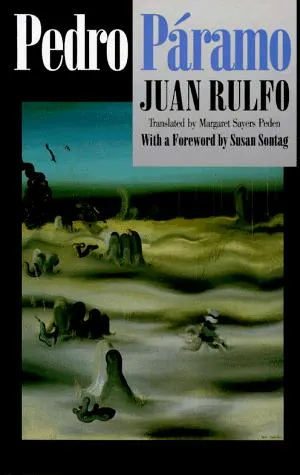
Juan Preciado travels to the town of Comala to find the father he has never known. The place seems nearly empty, yet voices gather around him—gossiping, confessing, remembering—and chronology loosens as naturally as dust underfoot.
Rulfo shares Wolfe’s gift for making haunting a method of narration rather than a supernatural decoration. You must determine who is speaking, when they speak, and what buried history gives their words such pressure. At barely more than a hundred pages, Pedro Páramo contains an entire ruined society, assembled from murmurs and absences. Its influence on Latin American fiction is immense—García Márquez regarded encountering it as a decisive revelation—but its reputation can undersell its immediate force. It is eerie, intimate, merciless, and inexhaustible.