Author
Books like Richard Powers
15 books we recommend to Richard Powers readers, drawn from The Overstory, Bewilderment, The Echo Maker, The Gold Bug Variations and Gain — each with the reason why.
If you loved The Overstory
Kingsolver braids three lives in southern Appalachia—among them a solitary wildlife biologist devoted to protecting coyotes—into a sensuous argument about predation, fertility, and coexistence. As in The Overstory, scientific ideas never feel ornamental: they alter whom the characters love, what they defend, and how they understand themselves.
Kingsolver’s great trick is to make ecology intimate. Desire, grief, insects, farming, and food chains all become expressions of the same unruly interconnectedness. Few novels so convincingly dissolve the border between human drama and the living world.
Silko’s landmark novel follows Tayo, a Laguna Pueblo veteran returning from World War II profoundly wounded. His recovery cannot be separated from stories, community, animals, weather, and a land damaged by the same destructive worldview that damaged him.
A foundational work of Native American literature, Ceremony offers something a lover of The Overstory will recognize immediately: the revelation that isolation is a dangerous fiction. Its nonlinear weave of prose, poetry, memory, and traditional narrative does more than describe interconnection—it enacts it. The novel permanently changes the moral meaning of landscape.
Robinson begins with a devastating heatwave, then expands into a many-voiced account of humanity trying—imperfectly, contentiously—to confront climate catastrophe. Bureaucrats, activists, scientists, financiers, refugees, technologies, laws, and even abstract systems enter the chorus.
Where The Overstory asks how people become capable of acting for lives beyond their own, Robinson asks what such action might look like at planetary scale. The result is an audacious systems novel, celebrated for making policy, economics, and collective agency feel urgent rather than inert. It is rare climate fiction that understands both the enormity of the crisis and the necessity of imagining credible hope.
If you loved Bewilderment
Lou Arrendale is an autistic man offered an experimental treatment that might make him neurotypical. Like Robin’s neurofeedback in Bewilderment, the possibility raises an unnerving question: when does care become an attempt to erase the person being cared for?
Moon writes from inside Lou’s patterns of perception, giving his thought its own rigor, beauty, and wit rather than filtering it through pity. The resulting moral pressure is extraordinarily intimate: every promise of transformation also threatens a hard-won identity. Winner of the Nebula Award, The Speed of Dark is one of science fiction’s most humane treatments of neurological difference—and an essential companion to Powers’s refusal to define an unconventional mind as merely broken.
A father and daughter live as the last human beings in a world nature has begun to reclaim. He teaches her how to read weather, track animals, make tools, and inherit stories: practical lessons braided with the knowledge that he cannot protect her forever.
Krivak’s spare, luminous prose makes parental love feel like an endangered form of knowledge passed from one generation to the next. Readers who loved Bewilderment’s moments of father and child attending closely to the nonhuman world will recognize the same reverence here, but The Bear is quieter and more mythic—a brief novel with the emotional and ecological scale of an elegy. Its devoted readership has grown largely by word of mouth, and it is the sort of book people press into friends’ hands.
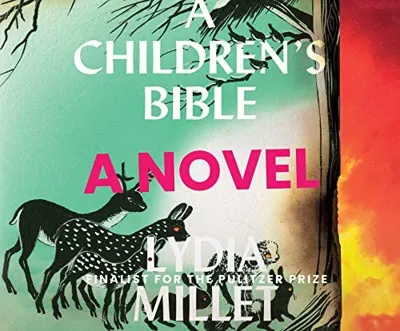
Several families share a summer house while their children watch the adults drink, flirt, and evade every serious responsibility. Then an extreme storm arrives, and the young people’s contempt for their parents acquires frightening practical force.
A National Book Award finalist, Millet’s novel turns generational betrayal into a savage, darkly funny fable. Where Bewilderment concentrates climate grief within one father-son bond, A Children’s Bible lets the children judge an entire adult world that has handed them catastrophe and called it normal. The biblical echoes are playful until they become piercing, and the brisk, cool narration only sharpens the anger underneath. It is compact, strange, and merciless—the climate novel for anyone tired of being politely reassured.
If you loved The Echo Maker
Leo Liebenstein, a psychiatrist, becomes convinced that the woman in his home is not his wife but an exact duplicate. Galchen thus reverses Powers’s clinical perspective: instead of watching a patient’s certainty from outside, we inhabit the reasoning of a diagnostician who cannot diagnose himself.
The kinship lies deeper than the shared interest in misidentification. Like Powers, Galchen understands that intimacy depends on acts of interpretation: we assemble the people we love from gestures, memories, and stories, then call the result knowledge. Her cerebral comedy gradually acquires real pathos as Leo turns love into an elaborate explanatory system. This audacious debut helped establish Galchen as one of The New Yorker’s “20 Under 40”; its blend of intellectual play, unreliable perception, and emotional ache makes it perhaps the closest companion to The Echo Maker without feeling like an imitation.
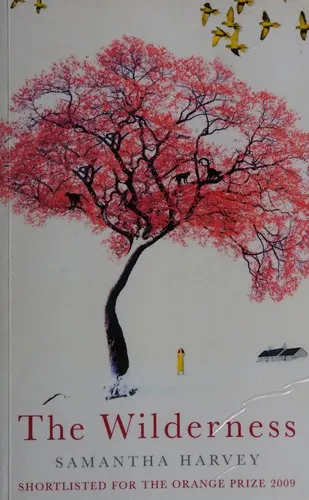
Jake, an aging architect with Alzheimer’s disease, tries to reconstruct his life while the mental structures holding it together begin to shift. Where The Echo Maker lets us feel the terror of being unrecognized, Harvey explores the complementary terror of losing the ability to recognize one’s own past.
Her great achievement is formal: memories recur altered, associations replace chronology, and language itself seems to search for a route through damaged cognition. Yet Jake never becomes a neurological specimen. He remains vain, tender, difficult, desirous—a whole person whose family must negotiate the unstable border between caring for him and defining him. Harvey’s Booker-longlisted, Betty Trask–winning debut has only gained stature since she later won the Booker Prize for Orbital. Readers drawn to Powers’s union of neurological exactness and intimate grief should not miss where her remarkable career began.
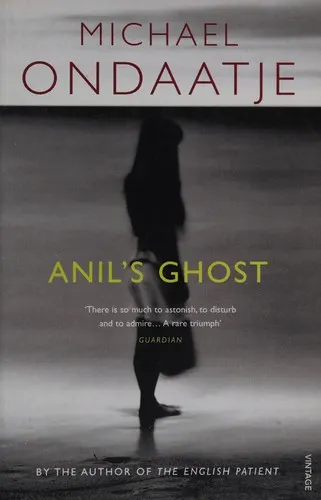
Anil Tissera, a forensic anthropologist working for an international human-rights organization, returns to Sri Lanka and encounters a skeleton whose identity may carry dangerous significance. Ondaatje builds the novel from bones, tools, landscapes, professional rituals, and partial testimony: physical evidence becomes the starting point for questions that evidence alone cannot settle.
This is the match for readers who loved Powers’s ability to make scientific inquiry, moral responsibility, and lyrical attention coexist. Like the Platte River in The Echo Maker, Ondaatje’s landscape is not scenery but an archive of human action. And like Gerald Weber, Anil must confront the limits and consequences of professional interpretation. Winner of the Giller Prize and the Prix Médicis étranger, Anil’s Ghost is a compressed, haunting novel about what it means to restore an identity—and why doing so can matter beyond measure.
If you loved The Gold Bug Variations
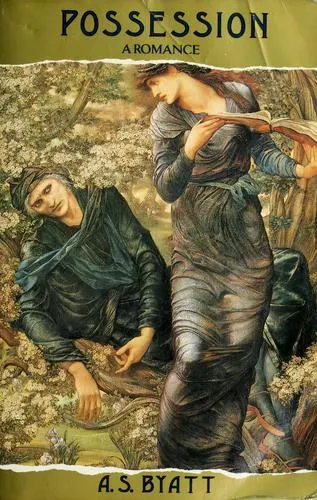
A young scholar’s discovery of a hidden letter sets two literary investigations—and two love stories—moving across different centuries. Like The Gold Bug Variations, Possession makes research erotically charged: interpretation becomes courtship, and intellectual discovery carries genuine emotional risk.
Byatt also shares Powers’s delight in virtuoso construction. Poems, letters, diaries, and competing scholarly voices form a double-stranded narrative in which echoes matter without reducing the characters to pieces in a puzzle. Winner of the Booker Prize and now a modern classic, it is that rare literary mystery whose dazzling erudition deepens, rather than chills, its romantic ache.
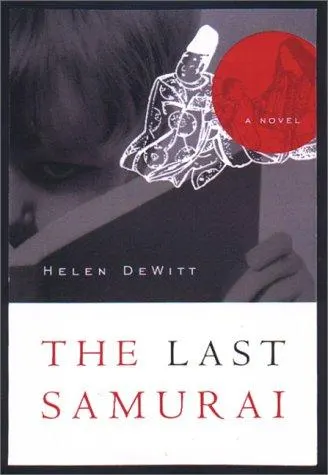
Sibylla, a fiercely intelligent single mother, raises her precocious son Ludo amid Greek, Japanese, mathematics, music, and repeated viewings of Kurosawa’s Seven Samurai. DeWitt writes about knowledge not as decoration but as appetite: the wish to learn everything is also a wish to escape loneliness, mediocrity, and inherited limits.
Its rapid shifts among languages, diagrams, jokes, arguments, and painful human encounters should exhilarate anyone who loved Powers’s ability to make thought itself dramatic. Long sustained by unusually devoted readers before its celebrated reissue, The Last Samurai has become a true cult classic. It is funnier and more unruly than Powers, but equally convinced that brilliance matters most where it fails to protect the heart.
Perec takes the rooms of a Paris apartment building apart as if they were variations in an immense composition. Moving through the building according to an elaborate hidden design, he accumulates lives, objects, paintings, schemes, disappearances, and unfinished ambitions; tiny details begin to rhyme across apparently separate stories.
The kinship with The Gold Bug Variations lies in the pleasure of discovering that form can be both puzzle and elegy. Perec’s constraints never feel like sterile display: they reveal how people try to impose order on time, chance, and loss. Awarded the Prix Médicis and widely regarded as the masterpiece of Oulipo, this is one of the few novels whose architecture is as moving as the people inhabiting it.
If you loved Gain
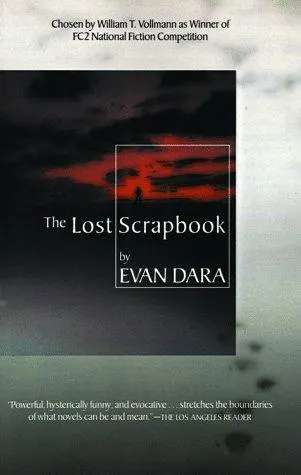
This cult American novel comes closest to Gain’s extraordinary sense that responsibility is everywhere and therefore almost impossible to locate. Dara passes restlessly among voices—conversations, broadcasts, arguments, stray testimony—until an entire community seems to be thinking aloud. The technique turns environmental and civic damage into something experienced collectively rather than packaged as one character’s moral lesson.
Selected by William H. Gass for FC2’s First Novel Prize, The Lost Scrapbook has inspired unusually fervent devotion despite remaining obscure. Its difficulty is purposeful: the reader must assemble connections that institutions and ordinary habits work to conceal. If Gain made you feel the novel could diagnose forms of causation unavailable to journalism or history, Dara’s book is indispensable.
Gaddis’s National Book Award winner is the great comic counterpart to Gain. An eleven-year-old discovers that modern finance can be manipulated through telephones, paperwork, and other people’s credulity; from there, capitalism seems to speak itself into existence. The novel is composed almost entirely of unattributed dialogue, with interruptions, misunderstandings, and sales pitches colliding at manic speed.
What makes JR more than satire is its refusal to place greed safely inside a few monsters. Everyone is improvising within systems whose momentum exceeds their understanding. Gaddis makes bureaucracy and commerce grotesquely funny while preserving the exhaustion and thwarted hopes of individual lives. Once its voices click into focus, the apparent chaos becomes one of fiction’s most astonishing feats of orchestration.
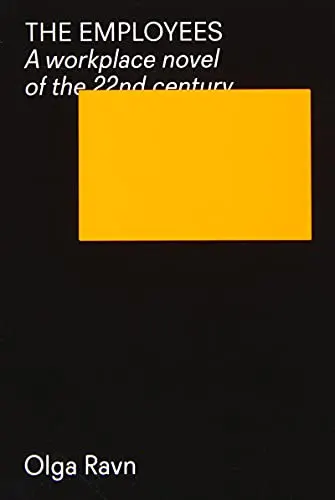
The Employees compresses into a haunting, crystalline novella questions that Gain unfolds across generations. A series of numbered workplace statements, taken aboard a distant spacecraft, records how human and humanoid employees respond to mysterious objects. Corporate language attempts to classify their sensations, loyalties, memories, and usefulness—but the testimony keeps exceeding the categories provided for it.
Shortlisted for the International Booker Prize in Martin Aitken’s translation, Ravn’s novel is both chillingly funny and unexpectedly tender. Its committee reports reveal how employment colonizes identity, while its fragmentary form makes personhood itself feel contested. Read it for the unnerving pleasure of watching administrative prose develop a soul—or expose the soul it has been trying to suppress.