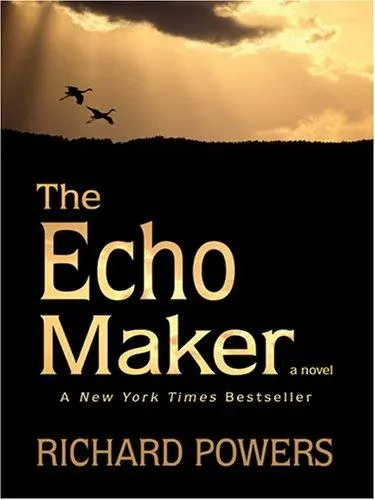
Books like The Echo Maker
What lingers is the hunger for another novel in which a mystery of the mind becomes a crisis of love—and in which science illuminates human identity without ever explaining it away.
If you liked The Echo Maker, you’ll love these
Not lookalikes — kindred books. Each one shares something essential with The Echo Maker, and we tell you exactly what.
Leo Liebenstein, a psychiatrist, becomes convinced that the woman in his home is not his wife but an exact duplicate. Galchen thus reverses Powers’s clinical perspective: instead of watching a patient’s certainty from outside, we inhabit the reasoning of a diagnostician who cannot diagnose himself.
The kinship lies deeper than the shared interest in misidentification. Like Powers, Galchen understands that intimacy depends on acts of interpretation: we assemble the people we love from gestures, memories, and stories, then call the result knowledge. Her cerebral comedy gradually acquires real pathos as Leo turns love into an elaborate explanatory system. This audacious debut helped establish Galchen as one of The New Yorker’s “20 Under 40”; its blend of intellectual play, unreliable perception, and emotional ache makes it perhaps the closest companion to The Echo Maker without feeling like an imitation.
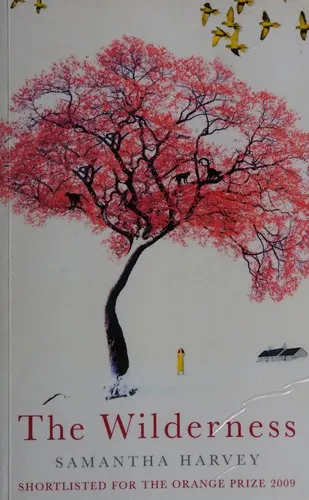
Jake, an aging architect with Alzheimer’s disease, tries to reconstruct his life while the mental structures holding it together begin to shift. Where The Echo Maker lets us feel the terror of being unrecognized, Harvey explores the complementary terror of losing the ability to recognize one’s own past.
Her great achievement is formal: memories recur altered, associations replace chronology, and language itself seems to search for a route through damaged cognition. Yet Jake never becomes a neurological specimen. He remains vain, tender, difficult, desirous—a whole person whose family must negotiate the unstable border between caring for him and defining him. Harvey’s Booker-longlisted, Betty Trask–winning debut has only gained stature since she later won the Booker Prize for Orbital. Readers drawn to Powers’s union of neurological exactness and intimate grief should not miss where her remarkable career began.
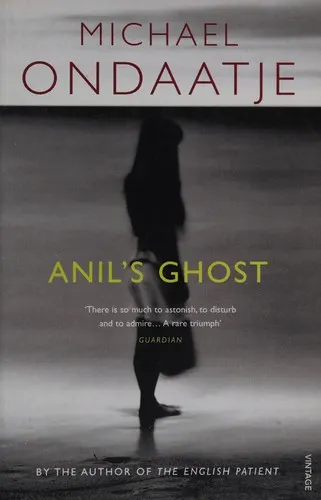
Anil Tissera, a forensic anthropologist working for an international human-rights organization, returns to Sri Lanka and encounters a skeleton whose identity may carry dangerous significance. Ondaatje builds the novel from bones, tools, landscapes, professional rituals, and partial testimony: physical evidence becomes the starting point for questions that evidence alone cannot settle.
This is the match for readers who loved Powers’s ability to make scientific inquiry, moral responsibility, and lyrical attention coexist. Like the Platte River in The Echo Maker, Ondaatje’s landscape is not scenery but an archive of human action. And like Gerald Weber, Anil must confront the limits and consequences of professional interpretation. Winner of the Giller Prize and the Prix Médicis étranger, Anil’s Ghost is a compressed, haunting novel about what it means to restore an identity—and why doing so can matter beyond measure.