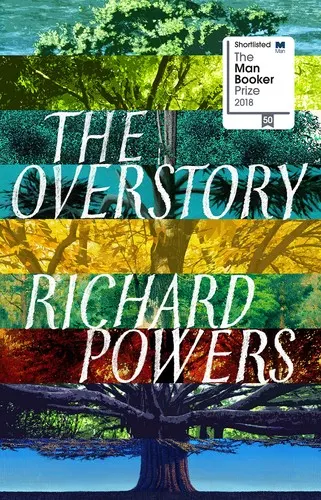
Books like The Overstory
You responded not just to Powers’s trees, but to his larger achievement: making ecological interdependence emotionally immediate, formally daring, and morally difficult. These three novels carry that power in distinct directions.
If you liked The Overstory, you’ll love these
Not lookalikes — kindred books. Each one shares something essential with The Overstory, and we tell you exactly what.
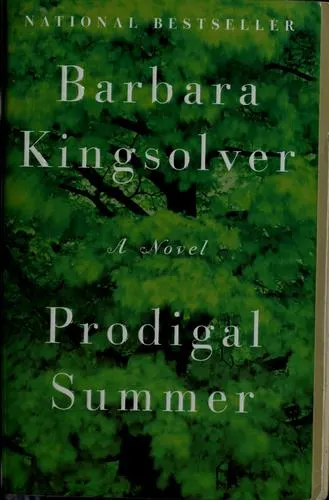
Kingsolver braids three lives in southern Appalachia—among them a solitary wildlife biologist devoted to protecting coyotes—into a sensuous argument about predation, fertility, and coexistence. As in The Overstory, scientific ideas never feel ornamental: they alter whom the characters love, what they defend, and how they understand themselves.
Kingsolver’s great trick is to make ecology intimate. Desire, grief, insects, farming, and food chains all become expressions of the same unruly interconnectedness. Few novels so convincingly dissolve the border between human drama and the living world.

Silko’s landmark novel follows Tayo, a Laguna Pueblo veteran returning from World War II profoundly wounded. His recovery cannot be separated from stories, community, animals, weather, and a land damaged by the same destructive worldview that damaged him.
A foundational work of Native American literature, Ceremony offers something a lover of The Overstory will recognize immediately: the revelation that isolation is a dangerous fiction. Its nonlinear weave of prose, poetry, memory, and traditional narrative does more than describe interconnection—it enacts it. The novel permanently changes the moral meaning of landscape.
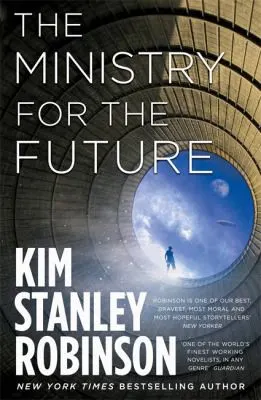
Robinson begins with a devastating heatwave, then expands into a many-voiced account of humanity trying—imperfectly, contentiously—to confront climate catastrophe. Bureaucrats, activists, scientists, financiers, refugees, technologies, laws, and even abstract systems enter the chorus.
Where The Overstory asks how people become capable of acting for lives beyond their own, Robinson asks what such action might look like at planetary scale. The result is an audacious systems novel, celebrated for making policy, economics, and collective agency feel urgent rather than inert. It is rare climate fiction that understands both the enormity of the crisis and the necessity of imagining credible hope.