Author
Books like Penelope Fitzgerald
11 books we recommend to Penelope Fitzgerald readers, drawn from The Blue Flower, Offshore, The Beginning of Spring and At Freddie's — each with the reason why.
If you loved The Blue Flower
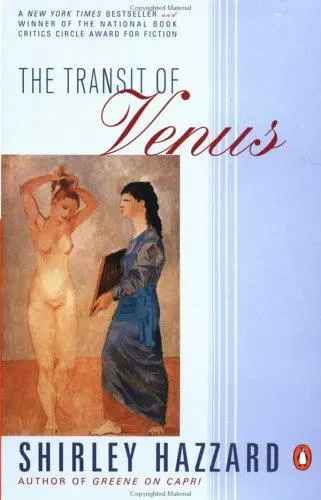
Hazzard writes with Fitzgerald’s exhilarating compression: a sentence can be socially funny, emotionally devastating, and quietly prophetic all at once. Two orphaned Australian sisters arrive in postwar England, where love and ambition draw them into lives whose patterns become visible only by degrees.
Like The Blue Flower, this is a novel about passion’s refusal to justify itself. Hazzard observes romantic idealism without either mocking or endorsing it, while her poised, allusive narration makes every omission feel charged. Winner of the National Book Critics Circle Award and adored by writers for its architectural precision, The Transit of Venus offers the rare pleasure of a novel that becomes larger—and stranger—after you finish it.
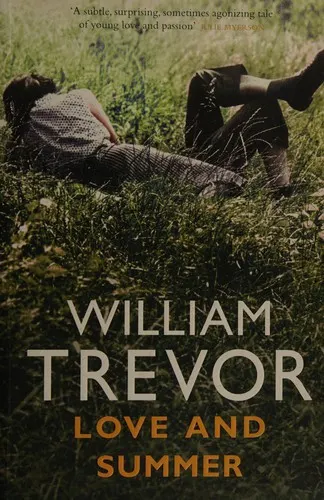
In a small Irish town, a young married woman meets an outsider with a camera. Trevor takes this simple beginning and makes it shimmer with possibility, danger, self-deception, and grace.
What will feel familiar is his tenderness toward people whose longings look absurd from the outside but are absolute from within. Like Fitzgerald, he can place comedy beside sorrow without announcing the change in temperature; both writers trust a tiny gesture or a misheard remark more than pages of explanation. Love and Summer, Trevor’s final novel, is the distilled work of one of the great short-form stylists: lucid, merciful, and so restrained that its emotional force seems to arrive from nowhere.

Goethe’s unsettling masterpiece asks whether human attachments obey forces as impersonal as chemical attraction. At a country estate, four cultivated people discover that good intentions, social arrangements, and reason are weak defenses against affinity.
This is the philosophical companion to The Blue Flower—not merely another German novel from the period, but an equally searching examination of what happens when an idea of love collides with ordinary bodies and households. Its cool, lucid surface conceals a radical ambiguity: is passion destiny, moral failure, or a story people tell to dignify appetite? Few novels have influenced later thinking about desire so deeply. Reading it makes Fitzgerald’s Fritz seem part of a larger, still-unfinished argument about whether love discovers meaning or invents it.
If you loved Offshore
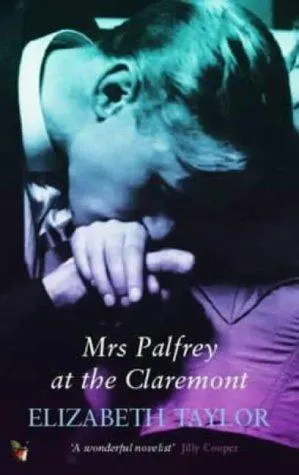
Like Fitzgerald, Taylor sees that a makeshift community can be both refuge and trap. Mrs Palfrey arrives at a modest London hotel whose elderly residents monitor one another’s visitors, clothes, illnesses, and small claims to importance. Their rituals are funny because Taylor renders them with ruthless precision; they are moving because she never forgets what those rituals defend against.
Shortlisted for the Booker Prize and now one of Taylor’s best-loved novels, it has Offshore’s rare balance of comedy and mercy. Every social misstep matters, yet nobody is reduced to a joke. If you loved Fitzgerald’s tender regard for people maintaining dignity under visibly unstable conditions, Mrs Palfrey is indispensable.
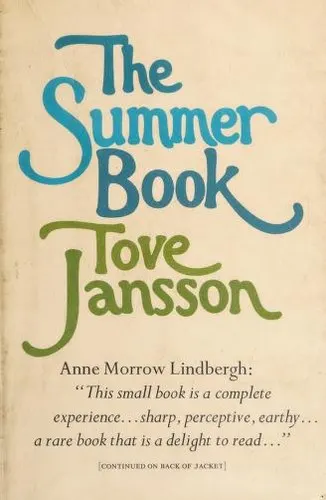
Jansson builds this cherished novel from brief encounters between six-year-old Sophia and her grandmother on a small Finnish island: arguments, inventions, questions about God, observations of animals and weather. Their affection is never made sugary. They can be impatient, secretive, unreasonable, and startlingly wise—often within the same conversation.
What recalls Offshore most deeply is the trust placed in children, silence, and physical surroundings. Jansson lets a change in wind or an awkward reply carry the emotional weight another novelist would explain. The result is spare but inexhaustible: a book many readers return to because its smallest scenes seem to expand with age.
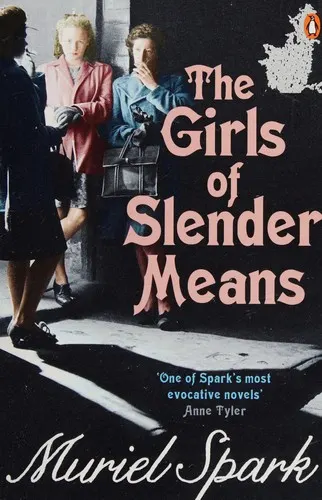
In 1945, the young women of the May of Teck Club inhabit a shabby London residence with strict rules, rationed meals, narrow rooms, and an elaborate internal hierarchy. They share gossip, ambitions, and a coveted designer dress that only the slenderest can wear. Spark turns these details into social comedy of extraordinary speed and sharpness.
This is the more dangerous cousin of Offshore. Both novels compress an entire precarious society into a few rooms and a small cast; both understand vanity without treating it as trivial. But Spark’s sentences have a concealed blade, and the lightness of her touch makes the novel’s moral force more startling. Widely regarded as one of her finest works, it achieves in barely more than a hundred pages what most novels cannot manage in four hundred.
If you loved The Beginning of Spring

In a snowbound Finnish village, the fiercely practical Katri Kling begins insinuating herself into the life of Anna Aemelin, a wealthy illustrator of children’s books. Jansson makes their wary intimacy both a psychological contest and a moral puzzle: each woman sees through the other, yet neither possesses the whole truth.
Like Fitzgerald, Jansson writes with crystalline economy and refuses to explain away strangeness. Objects, money, weather and small acts of manipulation carry extraordinary weight; sympathy keeps shifting beneath the reader’s feet. Winner of the Best Translated Book Award in Thomas Teal’s English version, this austere, hypnotic novel offers the same pleasure of inhabiting a world that is lucid in every detail and mysterious as a whole.
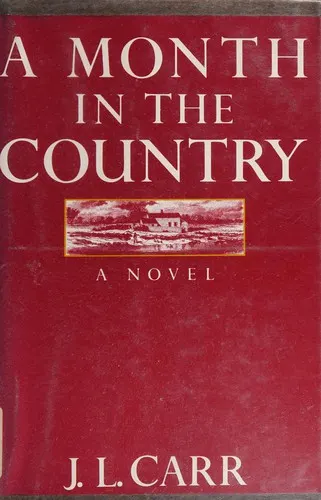
A damaged veteran arrives in a Yorkshire village to uncover a medieval wall painting in the summer of 1920. Carr’s celebrated miniature—winner of the Guardian Fiction Prize and shortlisted for the Booker—looks almost modest, then quietly opens into a profound book about work, missed chances and happiness recognized too late.
Its kinship with Fitzgerald lies in its tact. Carr trusts physical particulars—a ladder, a church roof, a shared meal—to disclose what his characters cannot say. The comedy is dry, the sorrow never advertised, and the past exists in layers: beneath paint, beneath landscape, beneath ordinary conversation. Few short novels leave such a large emotional afterlife.
If you loved At Freddie's
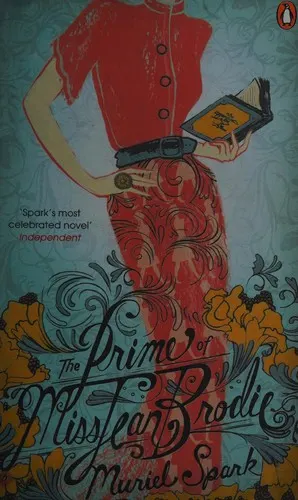
Miss Brodie’s chosen pupils, like Freddie’s young actors, are not decorative innocents but sharp, unpredictable people being shaped by a charismatic woman. Spark is fascinated by authority as a kind of authorship: Brodie wants to arrange lives as confidently as Freddie stages a performance, while the girls keep exceeding the roles assigned to them.
This is Spark’s most enduring novel because its elegance conceals extraordinary moral pressure. Every joke has a delayed sting; every brisk character sketch alters the balance of power. Its celebrated stage and screen lives began with the theatrical force already present on the page. If you love Fitzgerald’s ability to make comedy, vanity, devotion, and danger occupy one perfect sentence, Spark is indispensable.
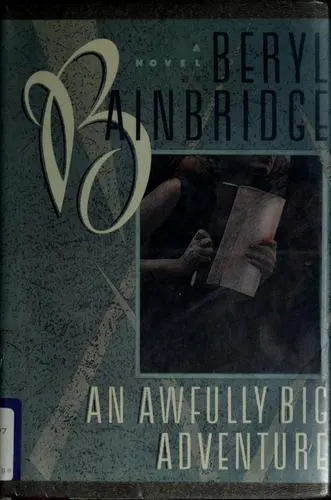
Stella, a socially awkward teenager, joins a shabby Liverpool repertory company where grandeur survives amid damp costumes, bad tea, bruised egos, and relentless practical work. Bainbridge knows that theatre is both enchantment and employment: people may speak magnificently onstage while misunderstanding one another completely off it.
The kinship with At Freddie’s lies less in the shared theatrical world than in the emotional method. Bainbridge never explains where to place your sympathy. Her deadpan comedy lets loneliness and self-deception emerge sideways, often through some perfectly chosen mundane detail. Five times shortlisted for the Booker, she was one of Britain’s great specialists in laughter that suddenly catches in the throat; this is among her funniest, cruelest, and most haunting novels.
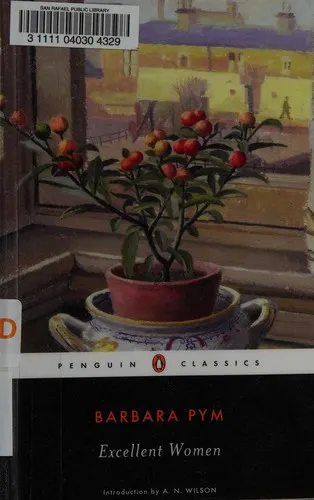
Mildred Lathbury, an unmarried woman in postwar London, is assumed to be endlessly available for church work, neighborly intervention, and the tidying of other people’s complications. Like Fitzgerald, Pym understands that a tiny institution—a parish, a school, a social circle—can contain a complete system of rank, patronage, performance, and rebellion.
Pym’s apparent gentleness is wonderfully deceptive. A curate’s preference, an unsuitable hat, or a cup of tea offered at the wrong moment becomes socially momentous, yet Mildred’s dry intelligence prevents the comedy from turning cosy. Philip Larkin and Lord David Cecil famously helped revive Pym’s career by independently naming her among the century’s most underrated writers. Excellent Women shows why her devotees remain so ardent: nobody else makes being overlooked seem so observant, funny, and quietly triumphant.