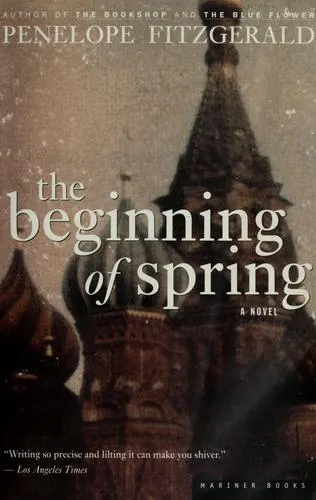
Books like The Beginning of Spring
What lingers is Fitzgerald’s rare mixture of exact observation and radical uncertainty: comedy sharpened by danger, history felt just beyond the room, and people whose motives remain tantalizingly out of reach.
If you liked The Beginning of Spring, you’ll love these
Not lookalikes — kindred books. Each one shares something essential with The Beginning of Spring, and we tell you exactly what.
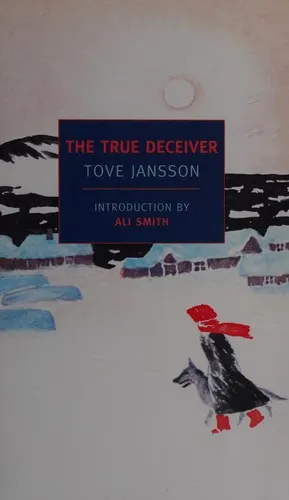
In a snowbound Finnish village, the fiercely practical Katri Kling begins insinuating herself into the life of Anna Aemelin, a wealthy illustrator of children’s books. Jansson makes their wary intimacy both a psychological contest and a moral puzzle: each woman sees through the other, yet neither possesses the whole truth.
Like Fitzgerald, Jansson writes with crystalline economy and refuses to explain away strangeness. Objects, money, weather and small acts of manipulation carry extraordinary weight; sympathy keeps shifting beneath the reader’s feet. Winner of the Best Translated Book Award in Thomas Teal’s English version, this austere, hypnotic novel offers the same pleasure of inhabiting a world that is lucid in every detail and mysterious as a whole.
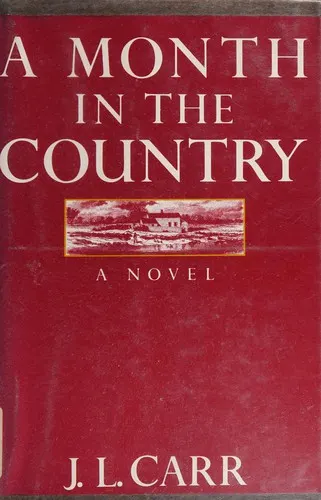
A damaged veteran arrives in a Yorkshire village to uncover a medieval wall painting in the summer of 1920. Carr’s celebrated miniature—winner of the Guardian Fiction Prize and shortlisted for the Booker—looks almost modest, then quietly opens into a profound book about work, missed chances and happiness recognized too late.
Its kinship with Fitzgerald lies in its tact. Carr trusts physical particulars—a ladder, a church roof, a shared meal—to disclose what his characters cannot say. The comedy is dry, the sorrow never advertised, and the past exists in layers: beneath paint, beneath landscape, beneath ordinary conversation. Few short novels leave such a large emotional afterlife.
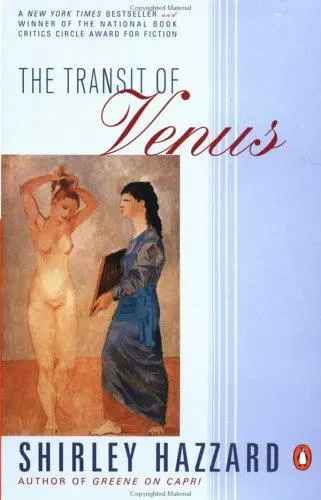
Two Australian sisters arrive in postwar England and enter a social world whose polished surfaces conceal fierce appetites, bargains and betrayals. Hazzard’s sentences are more opulent than Fitzgerald’s, but they share a thrilling precision: a glance or apparently casual phrase can alter the meaning of an entire relationship.
The novel announces its governing mystery in its opening pages, then lets fate move almost invisibly through decades of private life. History is never mere backdrop; it changes what love, independence and belonging can cost. The National Book Critics Circle Award winner has inspired unusually passionate admiration because it rewards rereading so extravagantly—its wit dazzles at first, while its hidden architecture becomes apparent only afterward. Missing it means missing one of the great novels of emotional intelligence and narrative design.