Author
Books like Patricia Highsmith
14 books we recommend to Patricia Highsmith readers, drawn from The Talented Mr. Ripley, The Price of Salt, Deep Water, This Sweet Sickness and Edith's Diary — each with the reason why.
If you loved The Talented Mr. Ripley
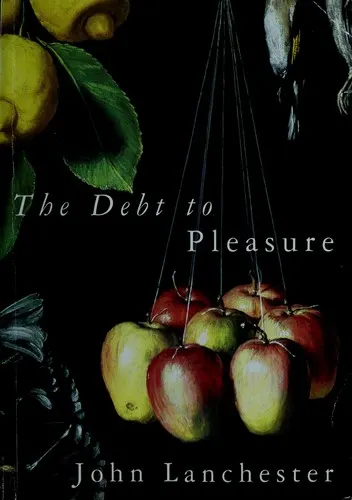
Tarquin Winot travels through France composing what appears to be a memoir-cum-cookbook: recipes, aesthetic judgments and serenely imperious opinions delivered in immaculate prose. Gradually, his cultivated voice begins to disclose something far darker.
Like Tom Ripley, Tarquin treats taste as both identity and camouflage. Lanchester makes food, art and travel sensuously pleasurable while teaching you to distrust the man arranging them. The result is witty, poisonous and unnervingly intimate—a virtuoso debut that won the Whitbread First Novel Award and has attracted devoted readers ever since. Few novels so elegantly demonstrate how readily sophistication can become an alibi.
Levin’s young antihero has charm, intelligence and one overriding ambition: entry into a rich family’s world. When his girlfriend’s pregnancy threatens that future, he regards her less as a person than as a problem requiring an ingenious solution.
Ripley readers will recognize the chilling mixture of aspiration, resentment and practical amorality. But Levin supplies a different pleasure: brutally efficient suspense, with every social gesture and small logistical detail tightened into a trap. Winner of the Edgar Award for Best First Novel, it remains a model of thriller construction. It moves with such clean inevitability that stopping midway feels almost impossible.
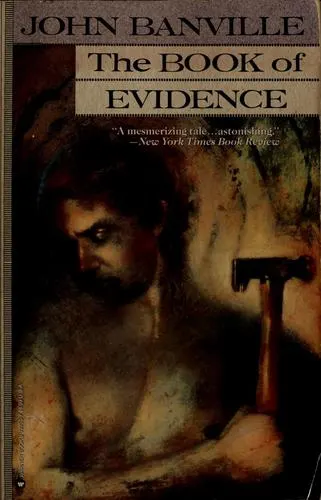
Freddie Montgomery addresses the court in his own defense, attempting to explain the killing for which he is being tried. What emerges is not a reliable confession but a dazzling performance by a man who can describe beauty more readily than he can recognize another person’s reality.
Banville shares Highsmith’s fascination with the criminal as self-author: vain, evasive, intermittently lucid and forever revising himself for his audience. Freddie’s voice is richer and more baroque than Ripley’s cool intelligence, yet it creates the same disturbing complicity—we keep listening because his perceptions are so acute, even when his moral vision is grotesquely deficient. Shortlisted for the Booker Prize, this is psychological crime fiction raised to the level of a fiercely beautiful literary monologue.
If you loved The Price of Salt
Evelyn Hall arrives in Reno to establish residency for a divorce and meets Ann Childs, a younger casino worker whose self-possession unsettles her careful life. Rule writes attraction without sentimentality: glances, hesitations, and candid conversations carry the emotional force, while the characters remain intelligent adults rather than symbols of suffering.
Published in 1964 and later adapted into the beloved film Desert Hearts, this landmark novel shares Highsmith’s then-defiant refusal to treat love between women as inherently doomed. Its dry wit, moral seriousness, and hard-won hope make it perhaps the closest companion to The Price of Salt.
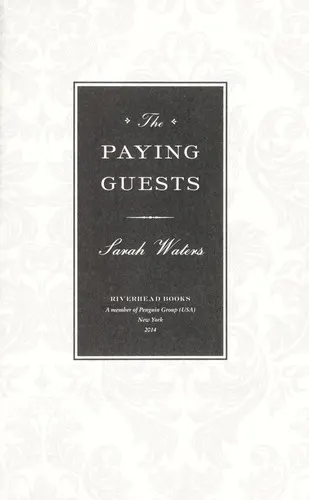
In postwar London, Frances Wray and her widowed mother are forced by dwindling finances to take in lodgers. The arrival of Leonard and Lilian Barber alters the emotional pressure inside their respectable house, and Waters makes every shared landing, overheard sound, and closed door feel charged.
This is the recommendation for readers who loved Highsmith’s ability to turn desire into suspense. Waters renders physical attraction with extraordinary immediacy, then examines what secrecy does to judgment and responsibility. Her patient accumulation of domestic detail produces an almost unbearable tension: the room seems to shrink around the characters as their possible lives expand.
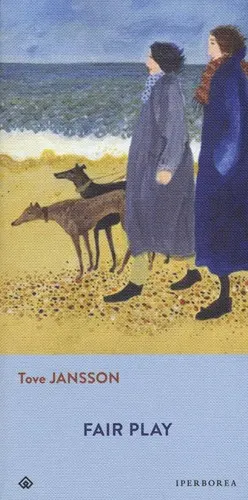
Mari and Jonna are women, artists, and longtime partners who live in neighboring apartments connected by an attic passage. Through compact episodes—working, traveling, watching films, quarrelling over habits—Jansson reveals how love survives through attention, independence, irritation, and tact.
Where The Price of Salt imagines the possibility of a shared future, Fair Play quietly inhabits one. Jansson, internationally revered for far more than her Moomin books, writes with luminous economy and no appetite for romantic clichés. This slender, deeply cherished novel offers something still uncommon: queer love not as crisis or proclamation, but as an intricate life’s work.
If you loved Deep Water
Its famous opening calmly announces that Dr. Edmund Bickleigh has decided to murder his wife. The suspense lies not in identifying a culprit but in watching vanity, resentment, lust, and self-justification harden into intent.
Like Deep Water, it finds something horribly comic beneath respectable married life. Iles’s placid English village is a theater of gossip and humiliation, and his irony is every bit as pitiless as Highsmith’s. Published in 1931, this landmark of the inverted crime novel helped make the criminal mind—not the detective’s solution—the genre’s real mystery. Highsmith readers should experience one of the forms’ cold-blooded ancestors.

Barbara Covett, a lonely schoolteacher, fastens upon her glamorous new colleague Sheba Hart and narrates the scandal that follows Sheba’s affair with a pupil. But Barbara’s solicitude carries its own appetite, and every apparently candid sentence reveals another layer of possessiveness.
What connects this Booker-shortlisted novel to Deep Water is its understanding that affection can be surveillance, loyalty can be leverage, and a person may describe everyone accurately except herself. Heller’s prose is acidly funny, socially exact, and so intimate that Barbara’s company becomes both irresistible and suffocating. Few novels make emotional parasitism this entertaining.
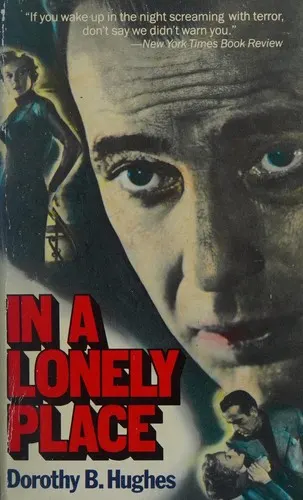
Dix Steele moves through postwar Los Angeles sustained by charm, grievance, and a proprietary view of women. Hughes keeps the reader unnervingly close to his consciousness while allowing the women around him to perceive dangers he cannot—or will not—recognize.
That is the Highsmith-like thrill: proximity without reassurance. Dix’s self-image and the reality visible at its edges steadily grind against each other, producing tension without melodrama. Long recognized as a noir classic and increasingly celebrated for the intelligence of its female characters, In a Lonely Place is lean, atmospheric, and far more psychologically radical than its hard-boiled exterior suggests.
If you loved This Sweet Sickness
David Axelrod begins by setting a small fire at his beloved’s family home, imagining he can rescue them and regain their favor. That grotesque plan captures the kinship with Highsmith: desire has become a private system of reasoning in which violation looks like devotion.
Spencer gives obsession a feverish eloquence rather than Highsmith’s chill, but he is equally exact about self-deception. David’s intelligence only makes him better at converting humiliation, jealousy and coercion into evidence that his love is exceptional. A modern classic repeatedly diminished by its film adaptations, Endless Love is far stranger and more psychologically merciless on the page: one of the rare novels that understands romantic absolutism as both genuinely moving and morally catastrophic.

Lise leaves her job and travels south on holiday, dressed in violently clashing colors and behaving as though everyone she meets has already been assigned a role. Spark soon tells us where the journey will end; the mystery is what design Lise is pursuing and why.
Where Highsmith traps us inside David’s explanations, Spark keeps Lise at an unnerving distance. Her crisp, cutting narration turns every purchase and conversation into a clue, while the comedy makes the gathering dread sharper rather than lighter. This tiny, ferocious cult classic offers the same sensation of inevitability as This Sweet Sickness: a disturbed person imposing a plot on reality, and reality beginning to comply.
If you loved Edith's Diary
Mrs Armitage enters the novel laughing helplessly in a psychiatrist’s office, her identity nearly buried beneath marriage, motherhood and other people’s demands. Mortimer writes her distress with the same unnerving mixture Highsmith achieves in Edith’s Diary: intimate sympathy sharpened by ruthless, sometimes vicious comedy.
Revived by NYRB Classics after years of neglect, this semi-autobiographical novel is now regarded as Mortimer’s defining work. Its dialogue cuts like broken glass, and its domestic details accumulate into a devastating argument about what happens when a woman’s appointed source of happiness becomes the machinery of her erasure.
Angelica Deverell is a provincial schoolgirl who dislikes the world she has been given, so she writes a more splendid one and insists upon its truth. That impulse will feel instantly familiar to anyone fascinated by Edith’s diary—not simply as escape, but as an act of authorship, pride and resistance.
Taylor’s great feat is her double vision. Angel’s fantasies can be ludicrous, yet Taylor never reduces her to a joke; vanity, imagination, loneliness and creative power remain inseparable. Long cherished as a writer’s writer, Taylor is at her boldest here, making self-delusion look at once absurd, magnificent and frighteningly necessary.
Rachel Waring inherits a Georgian house and greets her new life with irrepressible confidence. Because she tells the story herself, every encounter arrives polished by her optimism—and the reader gradually learns to listen for what that brightness may be concealing.
Benatar creates the peculiar unease Highsmith’s readers know well: the sensation of being trapped inside a consciousness that is rearranging reality while remaining painfully human. Rachel is funny, embarrassing, eloquent and impossible to dismiss. Rescued from obscurity by NYRB Classics and embraced as a cult novel, Wish Her Safe at Home deserves that devotion; few books make unreliable happiness feel so seductive or so desolate.