
Books like Deep Water
You’re drawn to elegant suspense in which respectability becomes a disguise, intimacy turns predatory, and the most unsettling character is also the most fascinating company. These novels sharpen those pleasures in three distinct ways.
If you liked Deep Water, you’ll love these
Not lookalikes — kindred books. Each one shares something essential with Deep Water, and we tell you exactly what.
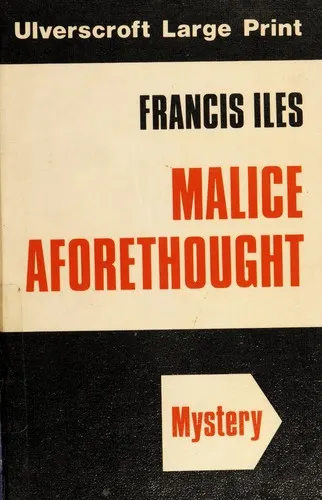
Its famous opening calmly announces that Dr. Edmund Bickleigh has decided to murder his wife. The suspense lies not in identifying a culprit but in watching vanity, resentment, lust, and self-justification harden into intent.
Like Deep Water, it finds something horribly comic beneath respectable married life. Iles’s placid English village is a theater of gossip and humiliation, and his irony is every bit as pitiless as Highsmith’s. Published in 1931, this landmark of the inverted crime novel helped make the criminal mind—not the detective’s solution—the genre’s real mystery. Highsmith readers should experience one of the forms’ cold-blooded ancestors.

Barbara Covett, a lonely schoolteacher, fastens upon her glamorous new colleague Sheba Hart and narrates the scandal that follows Sheba’s affair with a pupil. But Barbara’s solicitude carries its own appetite, and every apparently candid sentence reveals another layer of possessiveness.
What connects this Booker-shortlisted novel to Deep Water is its understanding that affection can be surveillance, loyalty can be leverage, and a person may describe everyone accurately except herself. Heller’s prose is acidly funny, socially exact, and so intimate that Barbara’s company becomes both irresistible and suffocating. Few novels make emotional parasitism this entertaining.

Dix Steele moves through postwar Los Angeles sustained by charm, grievance, and a proprietary view of women. Hughes keeps the reader unnervingly close to his consciousness while allowing the women around him to perceive dangers he cannot—or will not—recognize.
That is the Highsmith-like thrill: proximity without reassurance. Dix’s self-image and the reality visible at its edges steadily grind against each other, producing tension without melodrama. Long recognized as a noir classic and increasingly celebrated for the intelligence of its female characters, In a Lonely Place is lean, atmospheric, and far more psychologically radical than its hard-boiled exterior suggests.