Author
Books like Michael Chabon
8 books we recommend to Michael Chabon readers, drawn from The Amazing Adventures of Kavalier & Clay, The Yiddish Policemen's Union and Telegraph Avenue — each with the reason why.
If you loved The Amazing Adventures of Kavalier & Clay
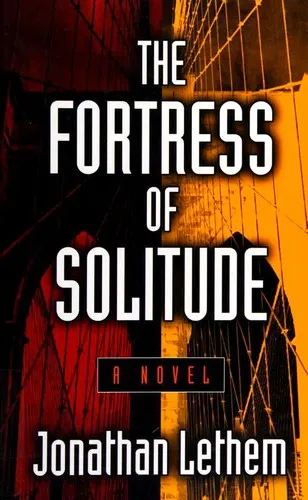
Lethem understands, as Chabon does, that fantasy can be both a refuge and a dangerous promise. His Brooklyn boys build a friendship out of music, comics, street mythology, and their longing to become someone less vulnerable. The novel’s real subject is the emotional debt incurred when one friend escapes the world that formed them and another cannot.
Its recreation of 1970s Brooklyn is dense and alive, but atmosphere is never the endpoint: neighborhood change, race, privilege, guilt, and artistic self-invention all become personal. Few novels capture so painfully the moment when childhood’s imagined powers fail—and why we keep needing them anyway. For many Lethem readers, this remains his defining novel.
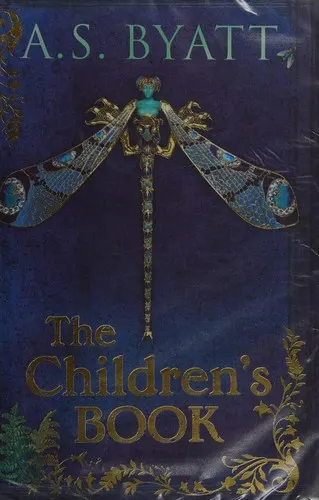
For the panoramic side of Kavalier & Clay—the sense that private lives are being carried toward the machinery of history—read Byatt’s magnificent family chronicle. It begins among artists, writers, craftsmen, and children in late-Victorian England, where beautiful objects and radical ideas flourish alongside secrets that beauty cannot redeem.
Byatt makes creation tactile: pottery, puppetry, storytelling, design. Yet she is equally sharp about the cost of turning life into art, especially when charismatic adults treat those around them as raw material. Shortlisted for the Booker Prize, this is an intellectually sumptuous novel whose gathering historical pressure gives its enchanted early world a terrible poignancy.
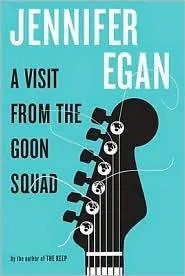
Egan shares Chabon’s faith that supposedly disposable popular culture can carry enormous human meaning. Here it is music rather than comics: bands, producers, assistants, failures, and would-be visionaries chase the instant when noise becomes art and art becomes a life. Every success is shadowed by time, compromise, and the question of what remains after the audience moves on.
The novel leaps among characters, decades, and forms with audacious control, including a celebrated chapter told through presentation slides. That ingenuity never feels like a stunt; it expresses how memory skips, repeats, and edits. Winner of both the Pulitzer Prize and the National Book Critics Circle Award, it has become one of the century’s most admired American novels because beneath its structural fireworks lies a profoundly tender understanding of friendship, damage, and second chances.
If you loved The Yiddish Policemen's Union
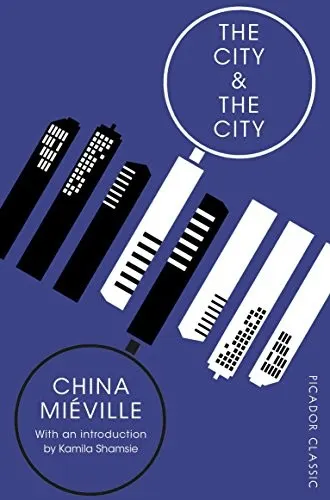
A murdered woman is discovered in Besźel, a city that occupies the same physical space as another city whose inhabitants must be carefully “unseen.” Inspector Tyador Borlú’s investigation turns that surreal civic arrangement into both a rigorous mystery and a study of how people learn not to perceive inconvenient realities.
Like Chabon, Miéville makes an invented jurisdiction feel less like a clever conceit than a pressure exerted on every citizen’s mind. His prose is leaner and colder, but he shares Chabon’s fascination with borders, compromised policemen, tribal loyalties, and places sustained by collective belief. The Arthur C. Clarke Award-winning result is one of the rare speculative detective novels in which the solution matters—and the world itself remains the greater mystery.
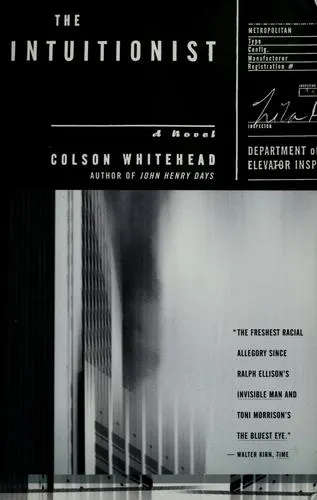
Lila Mae Watson, the city’s first Black female elevator inspector, becomes the focus of suspicion after a supposedly sound elevator catastrophically fails. She is also an Intuitionist: rather than checking machinery component by component, she listens to the elevator as though apprehending its inner life.
That premise gives Whitehead room for deadpan bureaucracy, noir pursuit, political factionalism, and an astonishingly supple metaphor about race and progress. Readers who admired how Chabon turned chess, policing, and territorial politics into expressions of displaced identity will recognize the same exhilarating transformation here: municipal absurdity becomes moral architecture. This was the debut that announced Whitehead as a major novelist, and its strange, compressed brilliance still feels unlike anything written before or since.
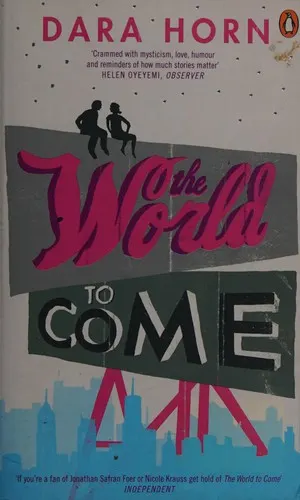
Benjamin Ziskind, a former child prodigy drifting through adulthood, recognizes a small Chagall at a museum as a work that once belonged to his family—and steals it. From that deliciously audacious opening, Dara Horn builds a mystery that reaches through generations of Jewish artists, writers, lovers, and refugees.
Where Chabon uses alternate history to ask what constitutes a homeland, Horn asks whether stories and art can preserve what history repeatedly destroys. Her comedy is intimate rather than hard-boiled, but it carries the same undertow of loss, the same delight in Jewish argument and invention, and the same refusal to separate absurdity from sorrow. Winner of the National Jewish Book Award for Fiction, it is a novel of immense imaginative warmth: playful enough to enchant, grave enough to haunt.
If you loved Telegraph Avenue
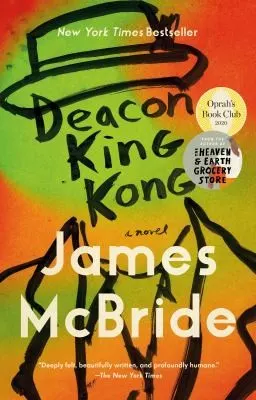
McBride’s Brooklyn housing project is as densely alive as Chabon’s Oakland: every doorway seems to release another grievance, joke, secret, or improbable act of loyalty. The novel opens with an elderly church deacon shooting a local drug dealer, then fans outward into a warm, antic portrait of the community around them.
Like Telegraph Avenue, it treats neighborhood institutions—churches, bars, informal businesses—as fragile ecosystems, and its comedy never trivializes the pressures of race, poverty, age, and change. McBride moves among characters with astonishing generosity, letting even minor figures acquire history and moral weight. Named one of The New York Times’s ten best books of 2020, it is the rare panoramic social novel that feels both exuberantly crowded and deeply intimate.
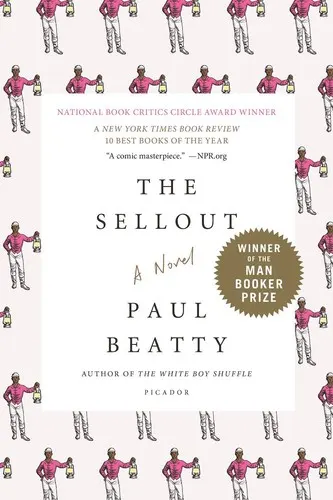
For readers intoxicated by Chabon’s high-speed sentences, racial candor, and willingness to make civic absurdity genuinely funny, The Sellout is indispensable. Beatty begins with a Black narrator facing the Supreme Court and works backward into the story of Dickens, California—a town erased from the map—and his outrageous attempt to restore it.
The kinship is tonal rather than merely topical: both novels use jokes, references, digressions, and verbal bravado to expose how race is lived beneath America’s official language. Beatty is harsher and more satirical than Chabon; every page seems to contain a line too audacious for anyone else to have written. The first American novel to win the Booker Prize, it earned that distinction without sanding down its provocations. Missing it means missing one of contemporary fiction’s funniest and most fearless performances.