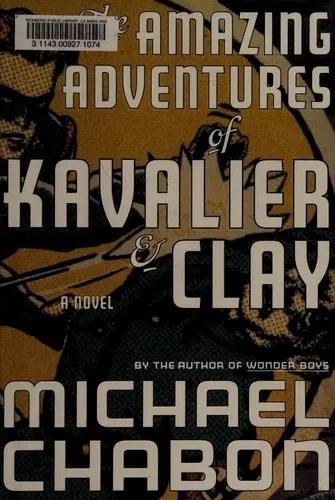
Books like The Amazing Adventures of Kavalier & Clay
Bright with invention and bruised by history, these novels turn popular art, fierce friendships, and impossible ambitions into stories of dazzling sweep and intimate heartbreak.
If you liked The Amazing Adventures of Kavalier & Clay, you’ll love these
Not lookalikes — kindred books. Each one shares something essential with The Amazing Adventures of Kavalier & Clay, and we tell you exactly what.
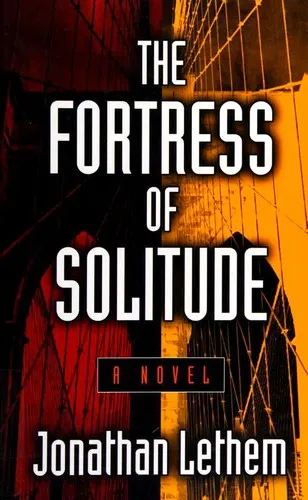
Lethem understands, as Chabon does, that fantasy can be both a refuge and a dangerous promise. His Brooklyn boys build a friendship out of music, comics, street mythology, and their longing to become someone less vulnerable. The novel’s real subject is the emotional debt incurred when one friend escapes the world that formed them and another cannot.
Its recreation of 1970s Brooklyn is dense and alive, but atmosphere is never the endpoint: neighborhood change, race, privilege, guilt, and artistic self-invention all become personal. Few novels capture so painfully the moment when childhood’s imagined powers fail—and why we keep needing them anyway. For many Lethem readers, this remains his defining novel.
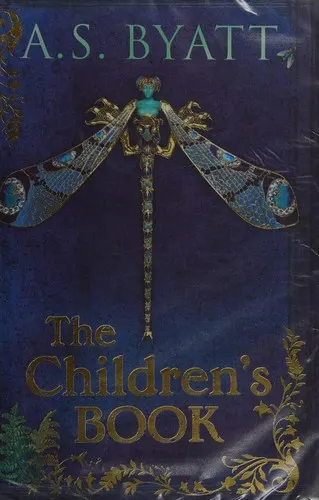
For the panoramic side of Kavalier & Clay—the sense that private lives are being carried toward the machinery of history—read Byatt’s magnificent family chronicle. It begins among artists, writers, craftsmen, and children in late-Victorian England, where beautiful objects and radical ideas flourish alongside secrets that beauty cannot redeem.
Byatt makes creation tactile: pottery, puppetry, storytelling, design. Yet she is equally sharp about the cost of turning life into art, especially when charismatic adults treat those around them as raw material. Shortlisted for the Booker Prize, this is an intellectually sumptuous novel whose gathering historical pressure gives its enchanted early world a terrible poignancy.
Egan shares Chabon’s faith that supposedly disposable popular culture can carry enormous human meaning. Here it is music rather than comics: bands, producers, assistants, failures, and would-be visionaries chase the instant when noise becomes art and art becomes a life. Every success is shadowed by time, compromise, and the question of what remains after the audience moves on.
The novel leaps among characters, decades, and forms with audacious control, including a celebrated chapter told through presentation slides. That ingenuity never feels like a stunt; it expresses how memory skips, repeats, and edits. Winner of both the Pulitzer Prize and the National Book Critics Circle Award, it has become one of the century’s most admired American novels because beneath its structural fireworks lies a profoundly tender understanding of friendship, damage, and second chances.