Author
Books like M. John Harrison
7 books we recommend to M. John Harrison readers, drawn from Light, Nova Swing and In Viriconium — each with the reason why.
If you loved Light
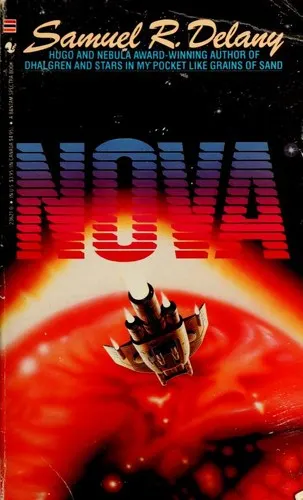
Lorq Von Ray gathers a gloriously mismatched crew for a voyage into a stellar catastrophe, but Delany treats space opera less as escapism than as a collision among myth, capital, art and obsession. Tarot cards coexist with new technologies; sensory experience becomes music; a scarred adventurer’s private compulsion reshapes an interstellar struggle.
Like Harrison, Delany can suggest an immense future without embalming it in exposition. His universe arrives through slang, bodies, work and competing interpretations—and his characters never become tidy instruments of the plot. Published in 1968, Nova helped supply the stylistic and conceptual vocabulary later claimed by cyberpunk. It remains startlingly compressed and modern: the rare ancestor of Light that can still meet it brilliance for brilliance.

An unnamed man pursues an elusive woman while walls of ice advance across the world. That premise soon feels less like conventional apocalypse than a fever in which desire, cruelty and environmental collapse have become indistinguishable.
What connects Ice to Light is its refusal to tell you which level of reality deserves your trust. Scenes recur in altered forms; fantasy invades observation without warning; the narrator’s authority decays even as his voice exerts a terrible fascination. Kavan’s prose is cold, lucid and hallucinatory, making each impossible transition feel inevitable. Since its 1967 publication, Ice has grown into a fiercely admired cult classic because no explanatory key can exhaust it. You finish it haunted rather than satisfied—and then discover that its white landscapes have lodged permanently in your imagination.
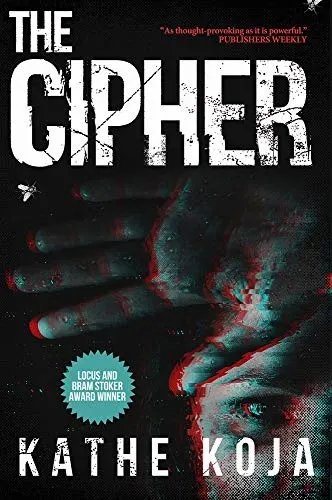
Nicholas, a failed poet living in urban squalor, and the dangerously magnetic Nakota discover a lightless hole in a storage room. They call it the Funhole. Their first experiments with it are grubby, reckless and impossible to stop.
The Cipher shares Harrison’s conviction that contact with the unknowable would not ennoble humanity. It would attract vanity, lust, artistic ambition and self-destruction. Koja writes physical disgust with almost ecstatic precision: stained rooms, exhausted bodies and bad relationships become the medium of metaphysical horror. Nicholas’s bitter, skittering voice is repellent and painfully alive.
Winner of the Bram Stoker Award for First Novel, The Cipher spent years as an elusive cult book before returning to print. Its devotees are right: few novels make cosmic mystery feel so intimate, sordid and transformative. If Light’s union of transcendence and human wreckage is what seized you, leaving the Funhole unexplored would be a serious mistake.
If you loved Nova Swing
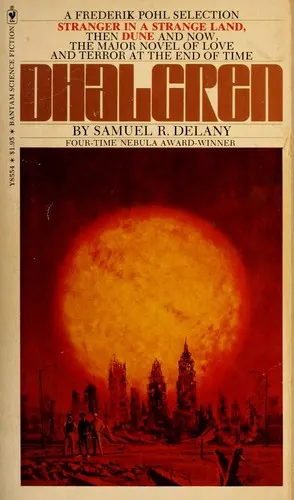
A young man enters Bellona, a city cut off from ordinary America, and finds that time, identity, and even basic facts no longer hold still. He acquires a name, joins the city’s drifting communities, and begins writing in a notebook whose relationship to the novel soon feels tantalizingly unstable.
Like Nova Swing, Dhalgren makes urban derangement sensuous rather than schematic. Its littered streets, casual sex, improvised households, rumors, and sudden beauties matter more than any promised explanation. Delany trusts repetition, contradiction, and charged encounters to create meaning; the city becomes something you inhabit rather than solve. Famously divisive yet enduringly beloved—and a rare avant-garde novel to sell more than a million copies—it helped make this kind of literary, disorienting science fiction possible. Skipping it would mean missing one of Nova Swing’s great imaginative ancestors.
After his life collapses, Peter Sinclair retreats to a friend’s cottage and begins writing an account of himself. The manuscript gradually opens onto another geography—Priest’s Dream Archipelago—and the apparent border between autobiography, invention, and lived experience becomes impossible to police.
Where Nova Swing intoxicates with grime, color, and verbal static, The Affirmation works by immaculate control. Priest keeps every sentence calm while the foundations underneath it shift. The result is not a puzzle with a reassuring solution but an exact study of how longing edits memory and how a person might choose the reality capable of containing him. Widely regarded as one of Priest’s finest novels, it rewards rereading because each interpretation quietly compromises the others. Its final effect is devastating: not confusion, but the suspicion that certainty was always the lesser thing.
If you loved In Viriconium
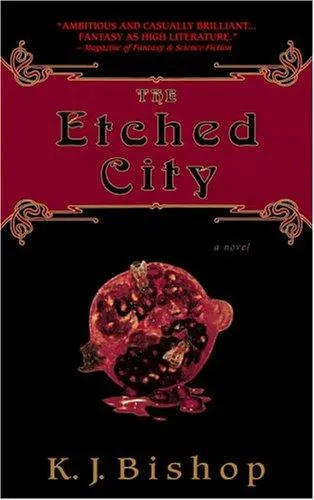
Bishop’s cult New Weird novel offers the closest equivalent to Harrison’s union of decadent beauty and metaphysical unease. Two fugitives reach the city of Ashamoil, where gunmen, artists, priests and grotesques move through streets that seem less constructed than dreamed.
What matters is not the exotic scenery but Bishop’s refusal to make fantasy cohere obediently. Images acquire more authority than explanations; art interferes with reality; moral identities blur. Her prose can be lush, cruel and startlingly exact, and the book keeps slipping away from the adventure novel it initially appears to be. The Etched City became a touchstone of the New Weird because it proved fantasy could be intoxicating without being reassuring. For a Viriconium reader, it is nearly indispensable.
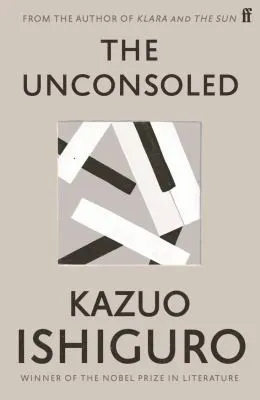
A celebrated pianist arrives in an unnamed European city for an important performance. Almost immediately, strangers enlist him in obscure obligations; rooms connect impossibly; journeys stretch or collapse; everyone behaves as though he has forgotten promises he cannot remember making.
Ishiguro replaces Harrison’s terminal fantasy city with the social architecture of anxiety, but the effect is uncannily similar: a world governed by rules that remain just beyond comprehension. The comedy is excruciating, the sadness cumulative, and the dream logic is sustained across an audaciously large novel without ever becoming arbitrary. Initially notorious for bewildering readers, The Unconsoled has acquired a devoted reputation as one of Ishiguro’s boldest achievements. Anyone who loved Viriconium’s attack on narrative certainty should experience its singular, quietly devastating spell.