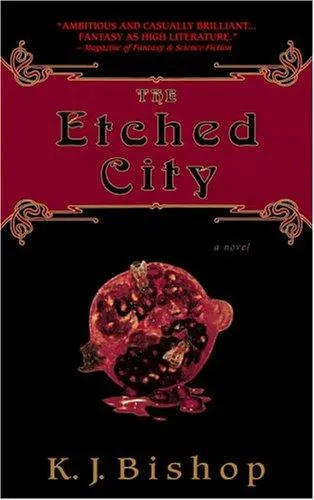
Books like The Etched City
Dust, perfume, blood, and metaphysical unease hang over these books. Each offers gorgeous prose, compromised souls, and a world that grows less stable the more intently it is observed.
If you liked The Etched City, you’ll love these
Not lookalikes — kindred books. Each one shares something essential with The Etched City, and we tell you exactly what.
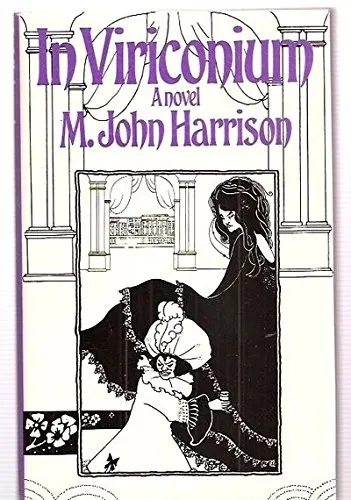
Harrison’s Viriconium is not so much a setting as a beautiful illness: languid, shabby, feverish, and resistant to every comforting rule of fantasy. In this final Viriconium novel, artists, poseurs, and social parasites drift through a city afflicted by a mysterious plague, while reality itself seems exhausted.
Like Bishop, Harrison understands decadence as more than ornament. Beauty becomes morally suspect; art may be revelation, fraud, or both; and the prose makes degradation shimmer. Harrison’s refusal of coherent world-building profoundly influenced literary fantasy and the New Weird. In Viriconium is its purest expression—a short, disorienting masterpiece that makes conventional imaginary cities feel like stage scenery.
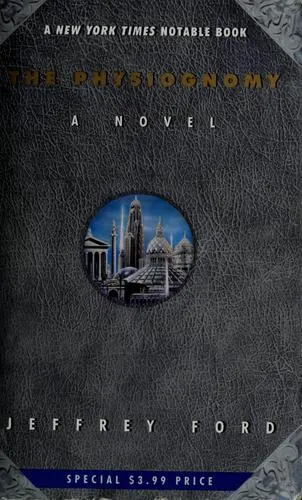
Cley is a state-sanctioned Physiognomist, licensed to determine character from the measurements of a face and body. He is also vain, cruel, drug-dependent, and utterly certain that his grotesque pseudoscience reveals the truth. His assignment to investigate a theft begins the slow destruction of that certainty.
The pleasure here lies in watching Ford turn baroque invention into a ruthless moral instrument. The Well-Built City is absurd, sinister, and darkly funny; its marvels expose the appetites of those who created them. Readers drawn to Gwynn’s charisma and corruption will recognize Ford’s fascination with a protagonist who cannot be neatly redeemed or dismissed. Winner of the World Fantasy Award, The Physiognomy is both a phantasmagoria and a savage study of how power disguises prejudice as knowledge.
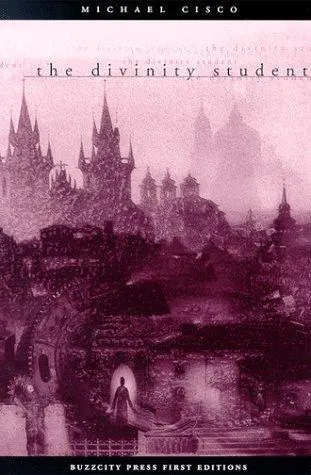
A young man is struck by lightning, opened, altered, and sent to a mysterious institution where words are harvested with the gravity of organs. From that beginning, Cisco constructs a novel that feels less written than summoned.
The kinship with The Etched City is deepest at the level of language: hallucinatory images acquire physical force, abstractions walk about in flesh, and the border between spiritual revelation and bodily horror disappears. Yet Cisco’s vision is entirely his own—colder, stranger, and compressed into the logic of nightmare. The Divinity Student won the International Horror Guild Award for best first novel and has become a cult touchstone of the weird. Few books make language itself seem so dangerous.