
Books like Ice
The Blind Owl draws the reader down into obsession’s darkest private chamber; The Hearing Trumpet blows the walls off that chamber with anarchic laughter. Between those extremes, Malina offers perhaps the closest equivalent to Ice’s beautiful, unnerving fusion of desire, violence, and collapsing reality.
If you liked Ice, you’ll love these
Not lookalikes — kindred books. Each one shares something essential with Ice, and we tell you exactly what.
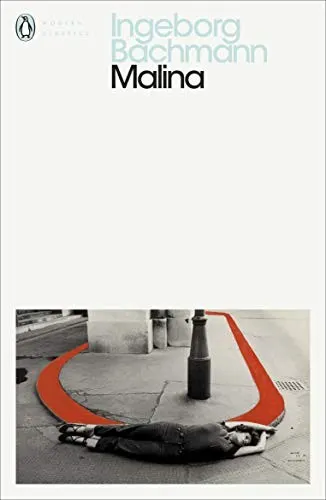
Like Ice, Malina makes emotional violence inseparable from the form of the novel. Its unnamed woman narrator lives between two men—one desired, one ominously embedded in her daily existence—while ordinary Vienna gives way to fractured memories, nightmares, repetitions, and gaps in identity. The question is never simply what happened, but whether a self can survive the language used to describe it.
Bachmann, one of postwar Europe’s major writers, turns psychological disintegration into prose of extraordinary control. Lovers of Kavan’s shifts between lucidity and dream will recognize the same terrible uncertainty: is the catastrophe external, internal, or produced by the structures of love itself? Malina is harsher and more intimate than Ice, but it possesses the same rare quality of seeming at once rigorously composed and dangerously unstable.
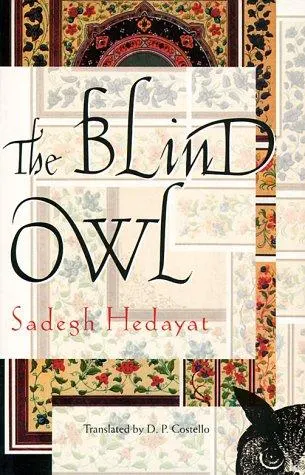
A solitary narrator, a spectral young woman, an atmosphere poisoned by fixation: The Blind Owl enters the same territory of obsessive pursuit as Ice, then folds it into a recursive nightmare. Images return altered; people seem to become one another; time loses its authority. Its short chapters have the sealed, hallucinatory pressure of a fever that knows exactly where it is taking you even when you do not.
Hedayat’s masterpiece became a foundational work of Persian modernism and has inspired generations of fiercely devoted readers. Yet its reputation hardly prepares you for how immediate and disturbing it feels. If Ice captivated you because its repetitions intensify rather than explain its mystery, The Blind Owl is indispensable: few novels make derangement so exact, or beauty so toxic.
Carrington begins with Marian Leatherby, a nearly deaf ninety-two-year-old woman whose family plans to send her to an institution. A friend gives her a hearing trumpet—and the respectable world promptly reveals itself as grotesque, conspiratorial, and far less stable than it pretends.
Where Kavan’s surrealism is glacial and persecutory, Carrington’s is mutinous, comic, and gloriously undomesticated. Both writers refuse the safe division between fantasy and reality; both let bizarre images accumulate until they become a more convincing account of power than realism could provide. Long treasured as a cult classic, The Hearing Trumpet has the liberating force of a book obeying no law but its own. Read it after Ice and the uncanny may stop feeling like a prison and begin to feel like an escape route.