Author
Books like Jun'ichirō Tanizaki
6 books we recommend to Jun'ichirō Tanizaki readers, drawn from The Makioka Sisters and Some Prefer Nettles — each with the reason why.
If you loved The Makioka Sisters
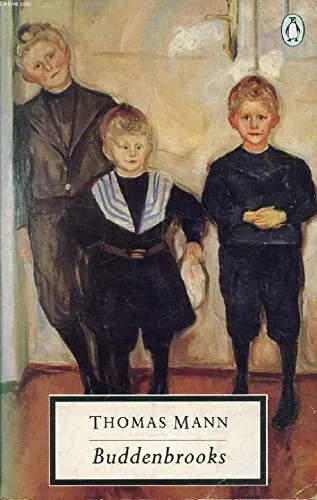
Mann likewise makes family decline palpable through dinners, houses, business courtesies, marriages, and tiny breaches of decorum. His prosperous Lübeck clan inhabits a world whose rules seem permanent even as every exquisitely observed gesture reveals their fragility.
The kinship lies especially in the tone: affectionate but unsparing, stately yet quietly comic. Published when Mann was only twenty-five, Buddenbrooks established his reputation and was singled out when he received the Nobel Prize. Anyone who loved Tanizaki’s ability to turn social ritual into cumulative heartbreak should not miss its great European counterpart.
The Years captures time not through conventional dramatic peaks but through weather, rooms, recurring phrases, awkward visits, and family members glimpsed at revealing intervals. Moving across decades in the life of the Pargiters, Woolf lets history alter private existence almost imperceptibly—the same oblique pressure that makes the world beyond the Makioka household so haunting.
This is Woolf at her most spacious and socially observant. Her most commercially successful novel during her lifetime, it has the delicacy of her modernism without sacrificing the absorbing pleasures of a family chronicle. Its ellipses leave you feeling the vanished years as keenly as the scenes she gives you.
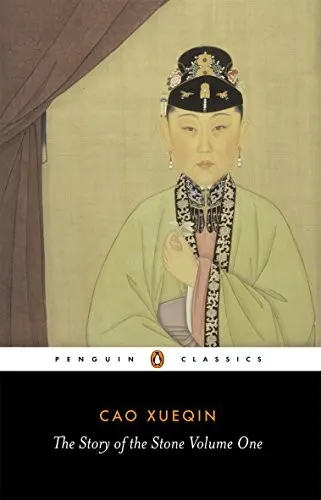
If what you loved was Tanizaki’s creation of an entire domestic civilization, Dream of the Red Chamber is indispensable. Within the wealthy Jia household, fabrics, gardens, poems, servants’ quarrels, family obligations, and courtship carry immense emotional force. Its women are drawn with extraordinary individuality, while beauty and ceremony are shadowed from the outset by impermanence.
The novel rewards the same patient attentiveness as The Makioka Sisters: distinctions that initially seem minute gradually become the substance of a whole social world. One of China’s Four Great Classical Novels, it has inspired an entire scholarly discipline, yet its greatness is intimate rather than monumental. Few books make everyday family life feel so abundant—or its passing so painful.
If you loved Some Prefer Nettles
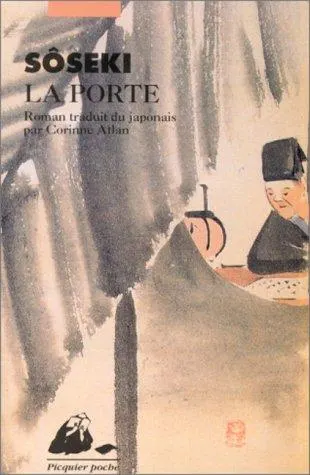
Sōsuke and Oyone inhabit a marriage of small routines, financial worries, companionable silences, and things they cannot quite confront. Like Tanizaki, Sōseki makes apparent stillness morally and emotionally eventful: a conversation trails off, an ordinary room acquires pressure, and passivity becomes a choice with consequences.
One of Sōseki’s most admired late novels, The Gate has none of the showiness often associated with stories of marital crisis. Its greatness lies in its muted register—the tender, almost airless intimacy of two people who are refuge and confinement to each other. Readers who loved the suspended, autumnal mood of Some Prefer Nettles will recognize a master equally capable of turning hesitation into drama.
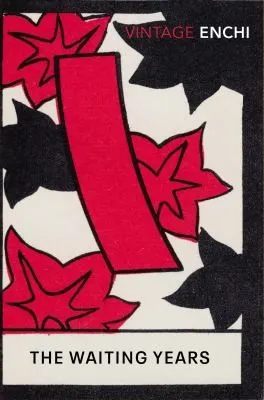
At the novel’s outset, Tomo is ordered by her powerful husband to select a young concubine for him. Enchi takes that cruel arrangement and examines the household it creates from the inside: its rituals, bargains, jealousies, humiliations, and strange forms of endurance.
Where Some Prefer Nettles exposes the erotic charge hidden within tradition and decorum, The Waiting Years asks who pays for such beautiful arrangements. Enchi’s prose is controlled rather than accusatory, which makes every gracious gesture cut more deeply. Winner of Japan’s Noma Literary Prize and now regarded as one of Enchi’s defining achievements, it gives the domestic world a tragic scale without sacrificing psychological precision. Tanizaki’s O-hisa may leave you curious about the women absorbed into male aesthetic fantasies; Enchi’s novel makes that curiosity impossible to satisfy anywhere else.
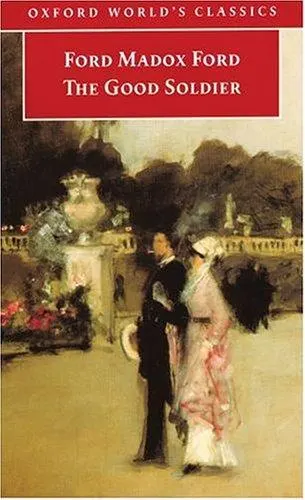
Ford’s narrator begins with two affluent married couples and calls what follows “the saddest story” he has ever heard—but he cannot tell it straight. He circles, revises, contradicts himself, and notices far less than he believes. The resulting novel is one of English modernism’s great anatomies of self-deception.
Its kinship with Some Prefer Nettles lies not in milieu but in intelligence: both novels understand that civilized manners can become elaborate machinery for avoiding knowledge. Ford makes chronology itself behave like Kaname’s mind, continually postponing the recognition that would force decisive judgment. Elegant, intimate, and quietly poisonous, The Good Soldier offers the rare pleasure of a novel whose every rereading changes the moral weight of what seemed obvious before.