Author
Books like John Edward Williams
9 books we recommend to John Edward Williams readers, drawn from Stoner, Butcher's Crossing and Augustus — each with the reason why.
If you loved Stoner
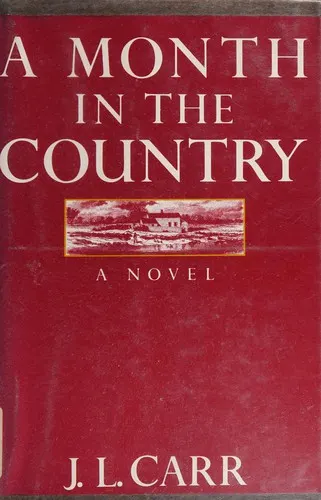
A damaged veteran arrives in a Yorkshire village to uncover a medieval wall painting. Carr makes the patient labor of restoration—inch by inch, color by color—feel like a way of returning to life. A lover of Stoner will recognize the dignity of vocation, the solace of doing one thing well, and the ache created by happiness understood only after it has passed.
This Booker-shortlisted miniature has become a cherished classic because it achieves in barely a hundred pages what larger novels often cannot: an entire season, a wounded consciousness, and the irreversible movement of time. Its final note is as quiet and devastating as anything in Williams.
Maxwell begins with a murder from his Illinois childhood, but the novel’s true subject is the lifelong burden of having failed another person. Memory circles the event, patiently imagining the private griefs hidden behind familiar faces. Like Williams, Maxwell refuses melodrama; his plain, exact sentences let remorse gather almost invisibly until it becomes overwhelming.
A Pulitzer finalist and winner of the William Dean Howells Medal, this short novel is revered by writers for its moral delicacy. It understands that an outwardly uneventful life can contain an inexhaustible tragedy—and that attention itself may be a belated form of love.

A writer hires the formidable Emerence as her housekeeper and gradually finds herself drawn into a relationship governed by labor, pride, secrecy, and fiercely conditional love. Emerence is one of modern fiction’s great creations: abrasive, commanding, endlessly capable, and impossible to reduce to either servant or saint.
Where Stoner is hushed, The Door is confrontational, yet both novels ask what work reveals about character and how easily love can be betrayed by vanity, blindness, or good intentions. Szabó’s masterpiece has the force of a confession: by announcing catastrophe at the outset, it turns every ordinary exchange into a moral reckoning. Few novels leave such a vivid sense that truly knowing another person may be both our greatest obligation and our most impossible task.
If you loved Butcher's Crossing
Hall’s cult classic dismantles the Western hero from the inside. A mining town hires a celebrated gunman to impose order, but every apparent solution creates new obligations, resentments, and violence. What matters is not who is bravest; it is how a community manufactures legends to disguise fear and self-interest.
Thomas Pynchon famously championed Warlock, and its revival as an NYRB Classic confirmed what devoted readers already knew: this is one of the great novels about the dangerous gap between American mythology and American life. Its moral intelligence, unsentimental men, and accumulating sense of doom make it an essential companion to Williams.
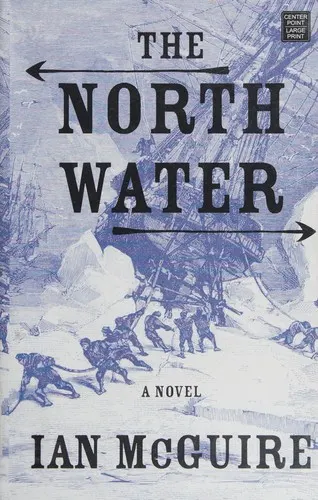
A disgraced surgeon joins a nineteenth-century whaling voyage alongside Henry Drax, a harpooner whose appetites seem almost prehuman. McGuire writes cold, injury, blood, and animal slaughter with such physical immediacy that the ship’s decks feel slick beneath your feet.
Yet this Booker-longlisted novel is more than an ordeal narrative. Like Williams, McGuire examines the commercial machinery behind supposedly heroic encounters with wilderness: men turn living abundance into product, then call the devastation adventure. The prose is harsher and more ferocious than Williams’s, but the same terrible recognition waits beneath it—that nature is indifferent, while human greed is anything but.
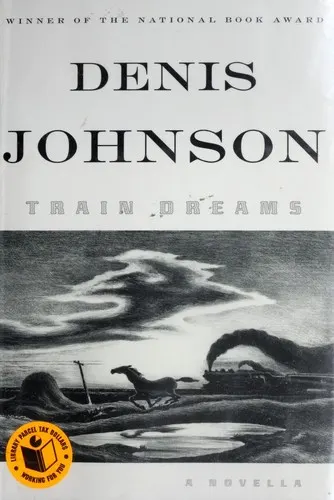
Robert Grainier is an itinerant laborer in the early-twentieth-century American West, working among forests, railroads, rough camps, and men accustomed to casual brutality. Denis Johnson compresses a whole vanished world into a short novel of astonishing resonance: each plain sentence seems to open onto something ancient, lonely, and nearly supernatural.
A Pulitzer finalist and now widely regarded as one of Johnson’s masterpieces, Train Dreams offers the haunting aftermath of the impulses explored in Butcher’s Crossing. Where Williams shows men trying to conquer the wilderness, Johnson catches the fragile human lives left amid its destruction and transformation. It can be read in an evening, but its images remain for years.
If you loved Augustus
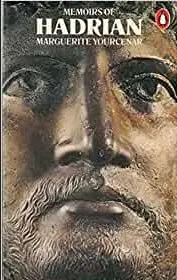
Like Williams, Yourcenar turns a Roman emperor into neither monster nor marble icon, but a cultivated, self-questioning man trying to understand the uses and limits of power. The aging Hadrian addresses a long letter to the young Marcus Aurelius, weighing government, war, beauty, love, and mortality in prose of extraordinary poise.
Where Augustus builds its ruler through a chorus of documents, this modern classic offers one sustained, hypnotically persuasive voice. Yourcenar spent decades imagining it, and that patient authority is palpable: every reflection feels both ancient and urgently alive. Few historical novels so completely erase the distance between reader and vanished mind.
If the deepest pleasure of Augustus was its melancholy—the sense that every triumph carries loss—The Leopard is indispensable. As Garibaldi’s forces transform nineteenth-century Sicily, Prince Fabrizio watches an old political and social order begin to yield to a new one. He is lucid enough to recognize change, proud enough to resist it, and intelligent enough to see the compromises beneath historical slogans.
Lampedusa’s only novel is sensuous, ironic, and devastatingly alert to time: dinners, gardens, estates, and family negotiations acquire the weight of an ending civilization. Rejected during its author’s lifetime, it was published posthumously, won Italy’s Strega Prize, and became one of the country’s most cherished novels. Its final sadness has the inevitability of music.

Mantel shares Williams’s fascination with how power actually works: through access, timing, memory, favors, paperwork, and an exact reading of other people. Her Thomas Cromwell enters as a battered young man and reappears as the formidably capable adviser navigating Henry VIII’s court. The familiar public history matters less than Cromwell’s moment-by-moment calculation within it.
The present-tense narration places you almost unnervingly close to his intelligence, while refusing to simplify him into hero or villain. Mantel’s language is muscular, witty, and densely alive; rooms seem crowded with debts, threats, and half-heard bargains. The Booker Prize confirmed its stature, but its real achievement is rarer: it permanently changed how many readers imagine Cromwell and made bureaucratic statecraft as gripping as battle.