Author
Books like Jack London
11 books we recommend to Jack London readers, drawn from The Call of the Wild, The Iron Heel, Martin Eden and The Sea-Wolf — each with the reason why.
If you loved The Call of the Wild
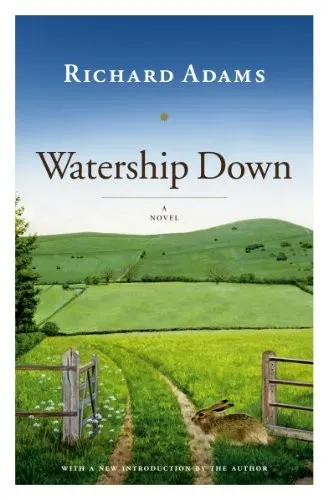
Adams takes rabbits seriously without turning them into disguised, cuddly humans. When Fiver foresees catastrophe, a small band leaves its warren; from there, every road, field, scent, and shadow becomes charged with danger. Like London, Adams makes you inhabit an animal’s scale of existence, where weather is fate and a moment’s hesitation can be fatal.
But this Carnegie Medal and Guardian Prize winner also builds an enthralling culture of stories, beliefs, leadership, and competing ideas of freedom. Its chases and battles have genuine ferocity, while its invented rabbit folklore gives the adventure mythic depth. Readers often begin it expecting a charming animal tale and finish convinced they have read an epic.
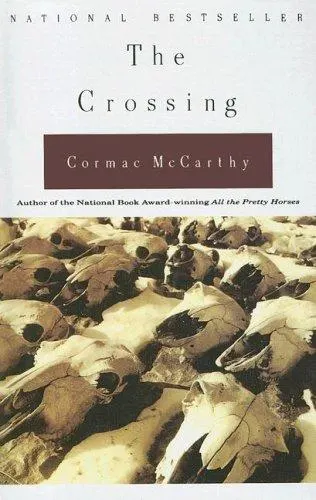
The opening movement of The Crossing follows young Billy Parham as he tries to trap a she-wolf preying on his family’s cattle. What develops from that encounter is rooted in the same realization that drives Buck’s story: the wild is not scenery but an order of being, indifferent to human ownership and moral certainty.
McCarthy’s language is more demanding than London’s, but it possesses a comparable muscular grandeur. Wolves, horses, hunger, distance, and sudden violence carry philosophical weight without becoming mere symbols. Often singled out as the most haunting volume of McCarthy’s acclaimed Border Trilogy, The Crossing turns an encounter with an animal into something ancient, sorrowful, and immense. Anyone moved by Buck’s passage beyond the human world should not miss it.
If you loved The Iron Heel
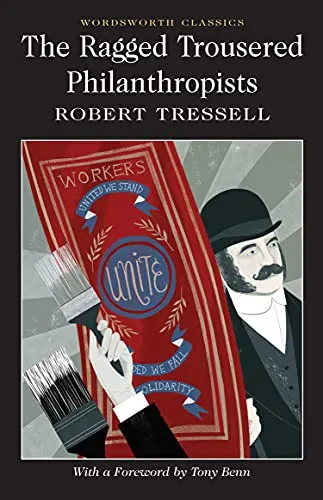
Frank Owen eats his meagre lunch beside fellow house-painters and tries to convince them that their poverty is designed, not natural. If you loved Ernest Everhard’s ferocious arguments—the pleasure of watching received wisdom dismantled piece by piece—Tressell offers that same combative clarity from the workshop floor.
Its humour, anger and exact knowledge of exploited labour keep the socialism from becoming abstract. Published after Tressell’s death, it became a cherished classic of the British labour movement because generations of readers recognized their workplaces and their own resignation in it. Few novels make economic power so visible—or make understanding it feel so urgent.
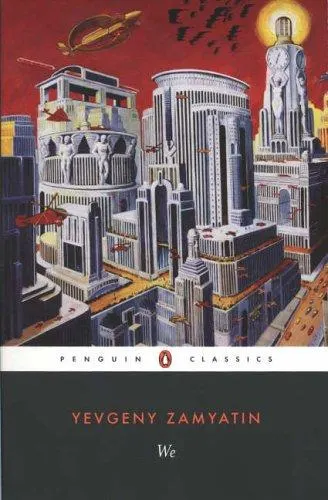
D-503, mathematician and builder of a spacecraft, begins a journal celebrating a society governed by glass, timetables and perfect calculation. Yet the very act of writing reveals pressures that official language cannot contain. Like London, Zamyatin turns a personal document into evidence against an entire political order.
The resemblance is structural and emotional rather than merely dystopian: private consciousness becomes a battlefield, love disrupts ideology, and the future speaks with unnerving confidence about what humanity must sacrifice for stability. Written in the early Soviet period and suppressed there, We became one of the foundational modern dystopias and directly influenced Orwell. Its feverish, fractured prose still feels less like a warning preserved in amber than a message smuggled out yesterday.
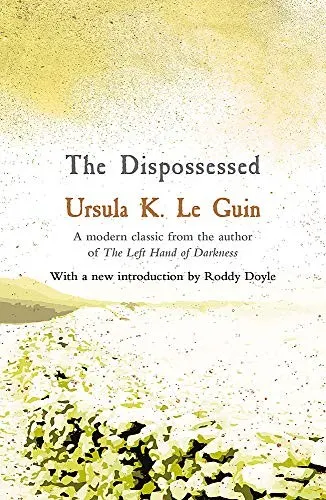
A wall divides the anarchist moon Anarres from the rest of the universe; physicist Shevek begins by crossing it. From that stark opening, Le Guin asks the question waiting inside The Iron Heel: not only how power is overthrown, but how revolutionary ideals survive institutions, scarcity, habit and human vanity.
Le Guin shares London’s seriousness about political theory, but her method is more searching than declarative. She makes competing social systems tangible through work, friendship, sex, scientific ambition and the subtle pressures of conformity. Winner of both the Hugo and Nebula awards, The Dispossessed is revered because it neither abandons utopian hope nor protects it from criticism. For a reader stirred by London’s revolutionary conviction, it is the indispensable next argument.
If you loved Martin Eden
Lucien Chardon is a gifted provincial poet who wants literature to carry him into a richer, more cultivated world. Balzac surrounds that longing with an extraordinarily concrete anatomy of cultural power: printers, patrons, journalists, booksellers and fashionable arbiters all help determine what talent is worth.
Like Martin Eden, this is both an intoxicating story of ambition and a pitiless inquiry into who gets to manufacture reputation. A centerpiece of Balzac’s vast Comédie humaine, it remains one of the supreme novels about art becoming merchandise. Anyone gripped by London’s collision of creative hunger, class desire and the literary marketplace should consider it indispensable.
Here the aspiring writer’s struggle is stripped to its nerves. An unnamed young man wanders Kristiania with an empty stomach, trying to sell his work while pride, exhilaration and humiliation distort his thoughts. Hamsun makes every tiny decision—whether to ask for help, admit need or preserve a grandiose image of oneself—feel dangerously consequential.
Martin Eden readers will recognize the frightening alliance between artistic conviction and self-destruction. But Hamsun renders it from inside, in prose so psychologically immediate that Hunger helped open the way for modernist fiction. It is short, feverish and unforgettable: not merely a novel about deprivation, but about the vanity and ecstasy that can make deprivation seem like proof of genius.
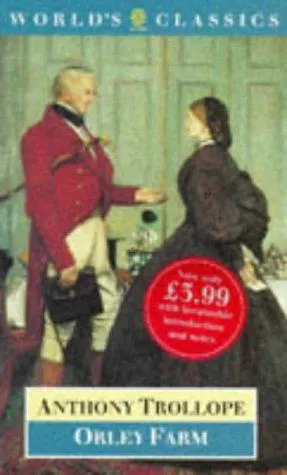
Julien Sorel, a sawmill owner’s son secretly devoted to books and Napoleon, possesses Martin’s combustible mixture of intelligence, resentment and longing. He studies the manners of people above him because social polish is not decoration here; it is a language of power, and speaking it may require disguising everything most vital in oneself.
Stendhal is especially brilliant about ambition entering love. Attraction becomes inseparable from status, wounded pride and the desire to be recognized by someone who represents an inaccessible world. One of the foundational psychological novels, The Red and the Black has the speed and danger of a young man improvising his identity in hostile territory. If Martin’s attempts to remake himself for Ruth fascinated you, Julien Sorel is a character you need to meet.
If you loved The Sea-Wolf
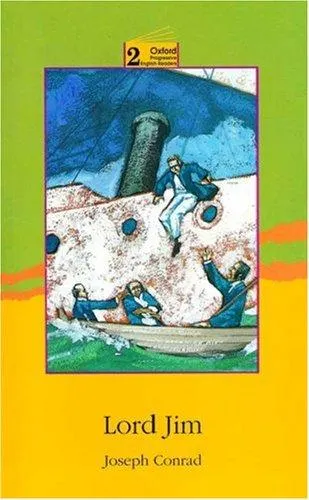
Like The Sea-Wolf, this is an adventure novel in which danger becomes a ruthless test of ideas. Conrad’s Jim has built his identity around courage and romantic heroism; when reality puts that self-image under pressure, he must discover whether character is something one possesses or something one must repeatedly prove.
Conrad replaces London’s blunt physical force with psychological intensity, but he shares London’s fascination with pride, shame, self-invention, and the judgment of other men. Lord Jim became one of the defining novels of moral uncertainty because it refuses easy verdicts. If Humphrey Van Weyden’s struggle to preserve and remake himself gripped you, Jim’s far more elusive reckoning is indispensable.
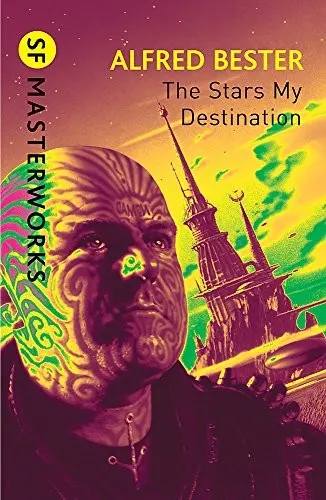
Gully Foyle begins as an abandoned, nearly inarticulate survivor with one consuming grievance. From that primitive spark, Bester launches a compact, ferocious story about willpower, revenge, education, and the terrifying possibilities of a person who decides that limits no longer apply.
What connects it to The Sea-Wolf is its explosive treatment of self-creation. Foyle contains something of both Humphrey and Wolf Larsen: the forced transformation of the former and the predatory vitality of the latter. Bester’s prose hurtles forward, yet the novel keeps asking whether raw power can ever become genuine greatness. Long revered as an SF classic and a precursor to cyberpunk, it feels less like a period piece than a live electrical wire.
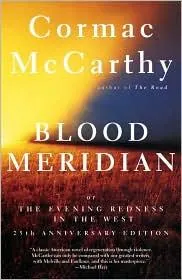
For readers haunted by Wolf Larsen rather than merely entertained by him, Blood Meridian offers his most formidable literary cousin: Judge Holden, a learned, magnetic colossus whose intelligence does not restrain his brutality but gives it a philosophy. Around him, McCarthy constructs a world in which violence threatens to become not an exception to civilization but its governing principle.
This is harsher and more demanding than London, with biblical cadences and nightmare imagery, but it produces the same charged collision between physical extremity and metaphysical argument. Few American novels have inspired such awed, unsettled devotion, and the Judge is among modern fiction’s most unforgettable creations. Wolf Larsen’s speeches stay with you; Judge Holden’s may alter the temperature of your thoughts.