Books like The Red and the Black
Can someone batter his way into a society designed to exclude him without letting its hypocrisies remake him? These three novels pursue Stendhal’s question with comparable psychological sharpness, social intelligence, and dangerous charm.
If you liked The Red and the Black, you’ll love these
Not lookalikes — kindred books. Each one shares something essential with The Red and the Black, and we tell you exactly what.
Julien Sorel’s nearest literary cousin may be Lucien Chardon, a gifted provincial young man convinced that talent can overcome money, birth, and connections. When Lucien enters Paris, Balzac shows exactly how prestige is manufactured: reputations are traded, principles acquire price tags, and literature becomes inseparable from commerce and vanity.
Where Stendhal is swift and cutting, Balzac is magnificently expansive. He makes an entire civilization’s machinery visible while preserving the intimate ache of one young man’s hunger to be admired. Often regarded as one of Balzac’s supreme achievements, Lost Illusions is the indispensable next step for anyone who found Julien’s mixture of brilliance, resentment, self-deception, and vulnerability impossible to resist.
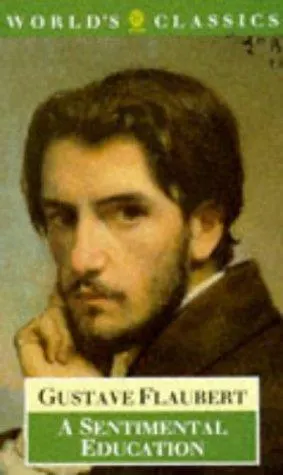
Frédéric Moreau possesses Julien’s longing for distinction but not his ruthless concentration. He dreams of love, art, wealth, and political significance, yet each desire blurs into the next. Flaubert turns that diffuseness into a devastating anatomy of aspiration: Frédéric continually mistakes the beautiful image of a life for the difficult business of living it.
The novel’s irony is colder and quieter than Stendhal’s, operating through exquisite sentences and tiny mismatches between what Frédéric imagines and what the reader sees. Its Paris is a marketplace of poses—romantic, revolutionary, bourgeois—and its celebrated treatment of a generation’s disappointed hopes helped define the modern novel of disillusionment. To miss it would be to miss one of the great answers to Stendhal’s portrait of ambition.
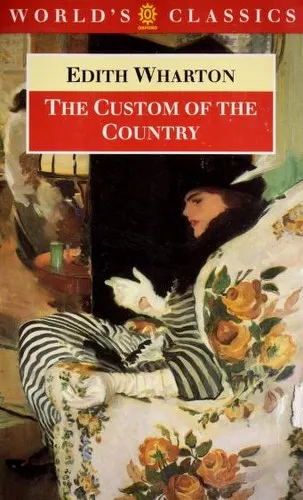
Undine Spragg arrives in New York society with beauty, appetite, and an almost supernatural instinct for whatever the next room values. Unlike Julien, she wastes little energy examining herself; Wharton therefore shifts the fascination from tortured inwardness to predatory momentum. Watching Undine learn the codes of class is both appalling and exhilarating.
Wharton’s comedy has Stendhal’s lethal precision. A marriage proposal, a drawing room, or an inconvenient bill can reveal an entire hierarchy, and every polished social ritual conceals an economic bargain. Undine is one of Wharton’s most formidable creations: a social climber so perfectly adapted to modern desire that she feels less like a villain than a prophecy. Readers who loved Stendhal’s refusal to moralize away charisma will find this ferocious novel difficult to put down—and harder to forget.