
Books like The Iron Heel
Across seven centuries, Avis Everhard’s recovered pages open and her lost revolutionary husband seems to stand alive again. These three novels share London’s faith that political ideas can generate real drama—and his refusal to separate systems of power from intimate human choices.
If you liked The Iron Heel, you’ll love these
Not lookalikes — kindred books. Each one shares something essential with The Iron Heel, and we tell you exactly what.
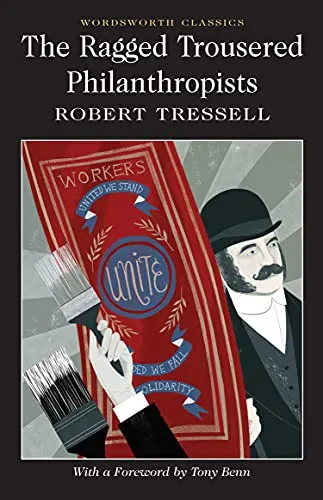
Frank Owen eats his meagre lunch beside fellow house-painters and tries to convince them that their poverty is designed, not natural. If you loved Ernest Everhard’s ferocious arguments—the pleasure of watching received wisdom dismantled piece by piece—Tressell offers that same combative clarity from the workshop floor.
Its humour, anger and exact knowledge of exploited labour keep the socialism from becoming abstract. Published after Tressell’s death, it became a cherished classic of the British labour movement because generations of readers recognized their workplaces and their own resignation in it. Few novels make economic power so visible—or make understanding it feel so urgent.
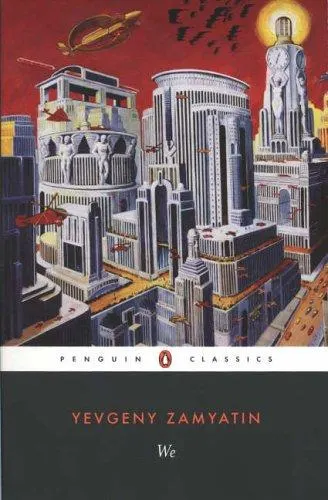
D-503, mathematician and builder of a spacecraft, begins a journal celebrating a society governed by glass, timetables and perfect calculation. Yet the very act of writing reveals pressures that official language cannot contain. Like London, Zamyatin turns a personal document into evidence against an entire political order.
The resemblance is structural and emotional rather than merely dystopian: private consciousness becomes a battlefield, love disrupts ideology, and the future speaks with unnerving confidence about what humanity must sacrifice for stability. Written in the early Soviet period and suppressed there, We became one of the foundational modern dystopias and directly influenced Orwell. Its feverish, fractured prose still feels less like a warning preserved in amber than a message smuggled out yesterday.
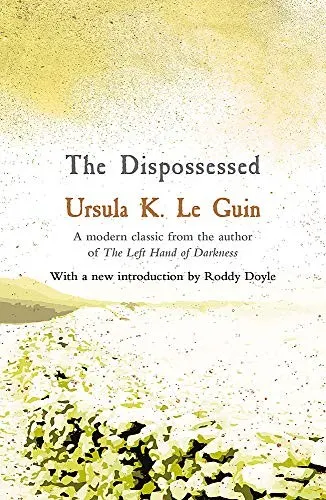
A wall divides the anarchist moon Anarres from the rest of the universe; physicist Shevek begins by crossing it. From that stark opening, Le Guin asks the question waiting inside The Iron Heel: not only how power is overthrown, but how revolutionary ideals survive institutions, scarcity, habit and human vanity.
Le Guin shares London’s seriousness about political theory, but her method is more searching than declarative. She makes competing social systems tangible through work, friendship, sex, scientific ambition and the subtle pressures of conformity. Winner of both the Hugo and Nebula awards, The Dispossessed is revered because it neither abandons utopian hope nor protects it from criticism. For a reader stirred by London’s revolutionary conviction, it is the indispensable next argument.