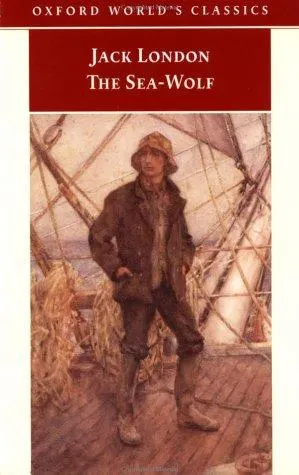
Books like The Sea-Wolf
If strength is the only law, what can conscience possibly mean—and can you survive a powerful nihilist without becoming one yourself? These three novels turn that conflict into fierce, consequential drama.
If you liked The Sea-Wolf, you’ll love these
Not lookalikes — kindred books. Each one shares something essential with The Sea-Wolf, and we tell you exactly what.
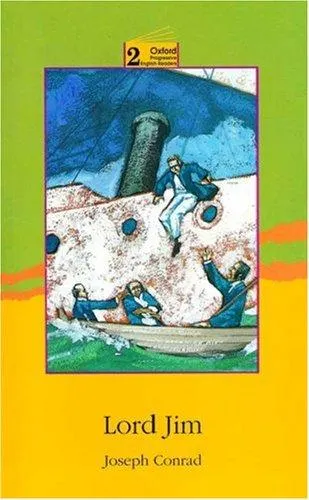
Like The Sea-Wolf, this is an adventure novel in which danger becomes a ruthless test of ideas. Conrad’s Jim has built his identity around courage and romantic heroism; when reality puts that self-image under pressure, he must discover whether character is something one possesses or something one must repeatedly prove.
Conrad replaces London’s blunt physical force with psychological intensity, but he shares London’s fascination with pride, shame, self-invention, and the judgment of other men. Lord Jim became one of the defining novels of moral uncertainty because it refuses easy verdicts. If Humphrey Van Weyden’s struggle to preserve and remake himself gripped you, Jim’s far more elusive reckoning is indispensable.
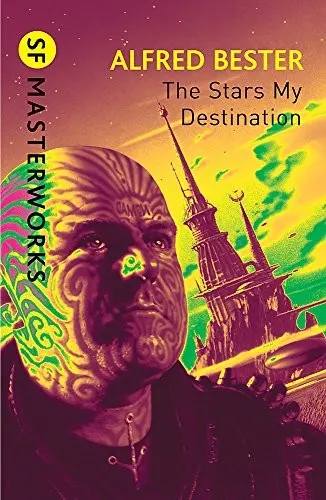
Gully Foyle begins as an abandoned, nearly inarticulate survivor with one consuming grievance. From that primitive spark, Bester launches a compact, ferocious story about willpower, revenge, education, and the terrifying possibilities of a person who decides that limits no longer apply.
What connects it to The Sea-Wolf is its explosive treatment of self-creation. Foyle contains something of both Humphrey and Wolf Larsen: the forced transformation of the former and the predatory vitality of the latter. Bester’s prose hurtles forward, yet the novel keeps asking whether raw power can ever become genuine greatness. Long revered as an SF classic and a precursor to cyberpunk, it feels less like a period piece than a live electrical wire.
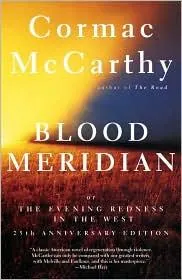
For readers haunted by Wolf Larsen rather than merely entertained by him, Blood Meridian offers his most formidable literary cousin: Judge Holden, a learned, magnetic colossus whose intelligence does not restrain his brutality but gives it a philosophy. Around him, McCarthy constructs a world in which violence threatens to become not an exception to civilization but its governing principle.
This is harsher and more demanding than London, with biblical cadences and nightmare imagery, but it produces the same charged collision between physical extremity and metaphysical argument. Few American novels have inspired such awed, unsettled devotion, and the Judge is among modern fiction’s most unforgettable creations. Wolf Larsen’s speeches stay with you; Judge Holden’s may alter the temperature of your thoughts.