Author
Books like Gene Wolfe
7 books we recommend to Gene Wolfe readers, drawn from The Shadow of the Torturer, The Fifth Head of Cerberus and Peace — each with the reason why.
If you loved The Shadow of the Torturer
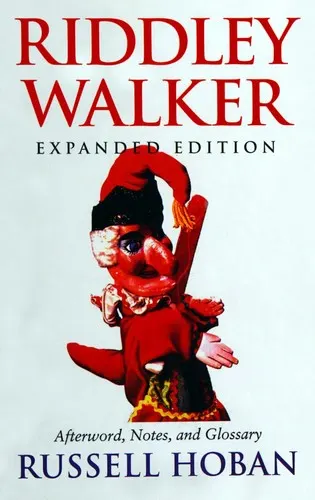
Hoban makes reading itself an act of archaeology. Riddley narrates in a fractured future English whose misspellings, puns, and half-preserved phrases contain the remains of a civilization he cannot fully comprehend. As with Severian, the narrator’s apparent clarity is deceptive: every ordinary word may carry evidence that he lacks the knowledge to recognize.
The voice initially demands patience, then becomes thrillingly legible; you begin reconstructing history faster than Riddley can, while wondering which of your conclusions are merely new myths. Winner of the John W. Campbell Memorial Award and now a cult classic, Riddley Walker offers that rare Wolfean pleasure of discovering that interpretation is not supplementary to the story—it is the story.
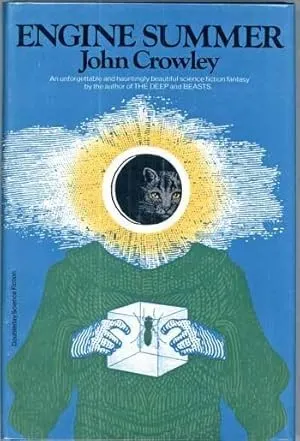
Rush That Speaks begins telling the story of his youth in a pastoral community whose customs seem lucid to him and tantalizingly strange to us. Crowley’s masterstroke is to make Rush guileless rather than evasive: the gaps arise because he has no reason to explain what everyone around him takes for granted. The reader must infer the shape of his world from metaphors, rituals, names, and casual misunderstandings.
Where Wolfe is baroque and shadowed, Crowley is delicate, sunlit, and heartbreakingly clear. Yet Engine Summer has the same hidden structural intelligence and the same ability to transform on rereading. Its devoted reputation as one of speculative fiction’s quiet masterpieces is deserved: this short novel leaves an emotional and metaphysical afterimage far larger than its size.
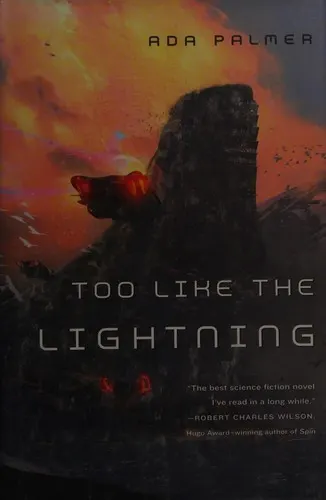
Mycroft Canner announces himself as both historian and criminal, then relates the twenty-fifth century in an aggressively archaic eighteenth-century manner—addressing the reader, disputing anticipated objections, assigning gendered pronouns according to his own judgments, and continually reminding us that history is being shaped while we read it. Anyone who relishes Severian’s cultivated voice and strategic candor will immediately recognize the game, though Palmer plays it at a faster, more argumentative pitch.
Palmer, a historian, builds her future from clashing philosophies rather than decorative lore: theology, censorship, punishment, gender, and political legitimacy become forces with real dramatic pressure. A Hugo finalist with an unusually passionate readership, Too Like the Lightning is dense, audacious, and deliberately destabilizing. Few modern novels so confidently assume that their readers want to wrestle with them—and are capable of winning.
If you loved The Fifth Head of Cerberus
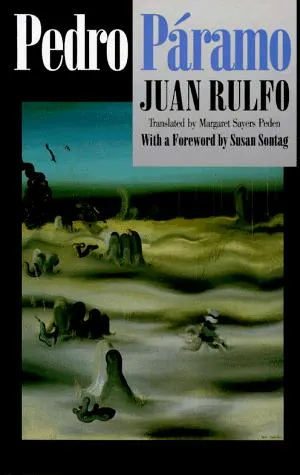
Juan Preciado travels to Comala to find the father he has never known and enters a town whose voices seem to drift free of chronology and embodiment. Rulfo provides fragments rather than explanations: grievances, memories, rumors, and intimate confessions gradually disclose the shape of a whole society.
Like The Fifth Head of Cerberus, this extraordinarily compressed novel treats identity as an inheritance corrupted by power. Its gaps matter as much as its statements, and every new voice alters what came before. Rulfo’s only novel became a foundation stone of modern Latin American fiction and helped make the later Boom possible. Few books this short contain so many buried lives—or reward rereading so completely.
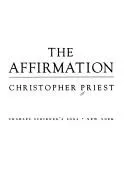
After his life collapses, Peter Sinclair retreats to a cottage and begins writing an autobiography. Revision becomes reinvention; the life on the page starts opening onto Priest’s Dream Archipelago, while the distinction between remembering, inventing, and inhabiting a self grows treacherous.
This is perhaps the closest match for Wolfe’s peculiar intellectual pleasure. Both novels make contradictions productive, use doubled identities without reducing them to a puzzle gimmick, and force you to decide whether a manuscript records reality or manufactures it. Priest’s cool, lucid prose hides trapdoors everywhere. A central book in his celebrated Dream Archipelago sequence, The Affirmation is the kind of novel whose final shape exists only in the reader’s mind—and changes on the second reading.
If you loved Peace
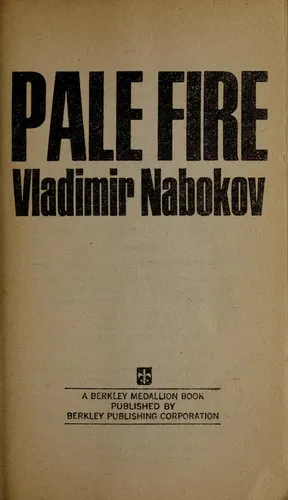
A celebrated poet’s final work appears with a foreword and commentary by his neighbor, Charles Kinbote. What begins as literary apparatus gradually becomes a contest between poem and commentator, each seeming to expose what the other suppresses.
Like Wolfe, Nabokov makes interpretation part of the drama. Kinbote’s vanity is hilarious, but his misplaced emphases, suspicious omissions, and private mythology force you to read around him. Almost every detail can change allegiance on a second pass. Frequently ranked among the great twentieth-century novels, Pale Fire earns that status not through solemnity but through dazzling prose, structural audacity, and the intoxicating possibility that its real story exists only in the reader’s reconstruction.
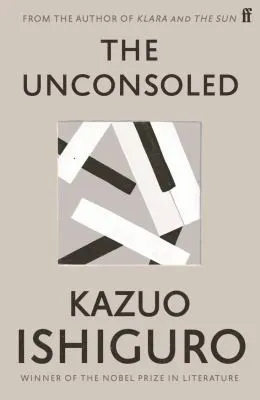
Concert pianist Ryder arrives in an unnamed European city for an important performance, only to be swept into an endless succession of appointments, requests, and strangely intimate encounters he cannot remember arranging. Corridors stretch impossibly; journeys collapse; strangers address him with the wounded familiarity of family.
The kinship with Peace lies in how calmly the impossible is narrated. Ishiguro turns faulty memory into landscape and social embarrassment into metaphysical dread. Beneath the novel’s deadpan comedy is a devastating study of a man continually revising his life so he need never face it. Once notoriously divisive, The Unconsoled has become, for many devoted Ishiguro readers, his boldest achievement: a vast anxiety dream whose emotional logic is more exact than realism.