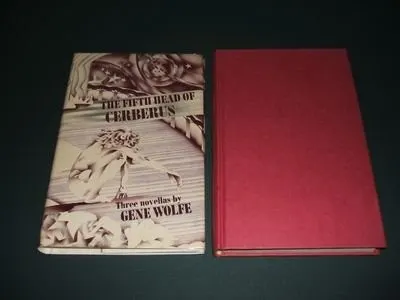
Books like The Fifth Head of Cerberus
Begin in Comala, the parched village of Juan Rulfo’s Pedro Páramo. Its murmuring fragments reveal what unites these choices: each makes the reader reconstruct identity, history, and reality from testimony that cannot simply be trusted.
If you liked The Fifth Head of Cerberus, you’ll love these
Not lookalikes — kindred books. Each one shares something essential with The Fifth Head of Cerberus, and we tell you exactly what.
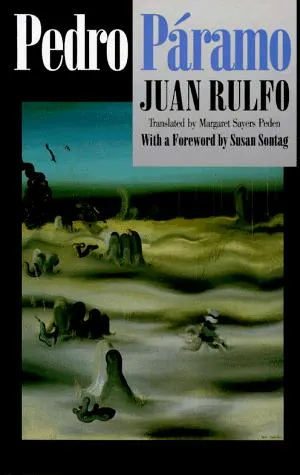
Juan Preciado travels to Comala to find the father he has never known and enters a town whose voices seem to drift free of chronology and embodiment. Rulfo provides fragments rather than explanations: grievances, memories, rumors, and intimate confessions gradually disclose the shape of a whole society.
Like The Fifth Head of Cerberus, this extraordinarily compressed novel treats identity as an inheritance corrupted by power. Its gaps matter as much as its statements, and every new voice alters what came before. Rulfo’s only novel became a foundation stone of modern Latin American fiction and helped make the later Boom possible. Few books this short contain so many buried lives—or reward rereading so completely.
After his life collapses, Peter Sinclair retreats to a cottage and begins writing an autobiography. Revision becomes reinvention; the life on the page starts opening onto Priest’s Dream Archipelago, while the distinction between remembering, inventing, and inhabiting a self grows treacherous.
This is perhaps the closest match for Wolfe’s peculiar intellectual pleasure. Both novels make contradictions productive, use doubled identities without reducing them to a puzzle gimmick, and force you to decide whether a manuscript records reality or manufactures it. Priest’s cool, lucid prose hides trapdoors everywhere. A central book in his celebrated Dream Archipelago sequence, The Affirmation is the kind of novel whose final shape exists only in the reader’s mind—and changes on the second reading.
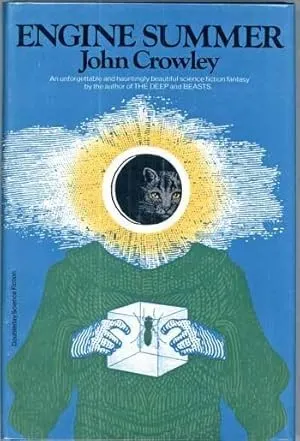
Rush That Speaks grows up among the Truthful Speakers, a small community living amid remnants whose original purposes have become obscure. He tells his story in language at once plain and estranging: familiar words carry altered meanings, customs preserve misunderstood histories, and apparent simplicity repeatedly proves deceptive.
Wolfe readers will recognize the exhilaration of discovering that the narrator understands less—and sometimes more—than he can articulate. Like V.R.T.’s account, Rush’s narrative is both personal testimony and an anthropological artifact, inviting us to infer the civilization around him from omissions and verbal fossils. Hugo- and Nebula-nominated, Engine Summer has inspired fierce devotion among writers and readers of literary science fiction. Its tenderness is inseparable from its structural cunning; neglecting it means missing one of the genre’s quiet masterpieces.