Author
Books like Ernest Hemingway
11 books we recommend to Ernest Hemingway readers, drawn from The Old Man and the Sea, For Whom the Bell Tolls, The Sun Also Rises and A Farewell to Arms — each with the reason why.
If you loved The Old Man and the Sea
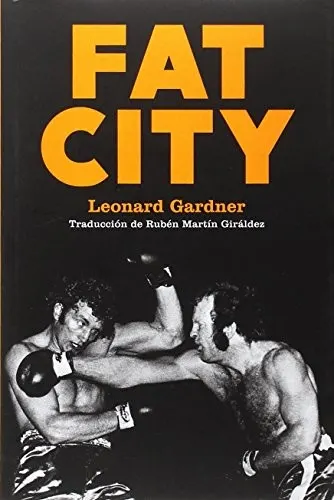
Gardner’s lean, unsentimental novel follows aging boxer Billy Tully and young hopeful Ernie Munger after they meet in a Stockton gym. Its deepest kinship with Hemingway is not boxing but its understanding that bodily skill can be beautiful even when it fails to rescue the person who possesses it.
Gardner writes training, fatigue, hunger, and disappointment with ruthless precision, yet never condescends to his battered characters. Like Santiago, they are measured by how they meet pain, not by the verdict announced afterward. Gardner’s only novel became an enduring cult classic—and the basis of John Huston’s admired film—because it finds poetry where lesser books would manufacture triumph. Few novels make defeat feel so intimate, physical, and honorable.
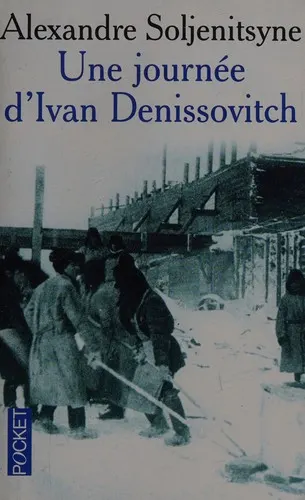
Ivan Denisovich Shukhov wakes in a Soviet labor camp facing cold, hunger, surveillance, and exhausting work. His world has been reduced to tiny calculations: protect a ration of bread, avoid needless punishment, do a job properly, preserve some fragment of self-command.
That concentration on one ordinary day gives the novel the ritual force of Santiago’s voyage. Both men survive through practiced intelligence and an almost sacred respect for good work. Solzhenitsyn’s plain prose refuses melodrama; a warm moment, a useful tool, or a wall laid straight can carry immense moral weight. Its 1962 publication was a historic rupture in Soviet literary life and helped make Solzhenitsyn internationally famous, but the novel lasts because its politics are embodied in unforgettable particulars. It shows, with extraordinary economy, how dignity can occupy even the smallest remaining space.

While staying in the Austrian mountains, an unnamed woman discovers that an invisible barrier has cut her off from the rest of humanity. With animals depending on her, she must turn solitude into a life of planting, haymaking, tending, observing, and enduring.
Haushofer replaces Hemingway’s sea with a whole living landscape, but she shares his reverence for exact attention. Work is neither picturesque nor symbolic decoration: it is what keeps despair from becoming sovereign. The woman’s bonds with animals also recall Santiago’s complicated tenderness toward the natural world—a love without sentimentality, sharpened by necessity and death.
Long cherished as a feminist and ecological cult classic, The Wall has steadily acquired the stature of a modern European masterpiece. Its calm voice makes its loneliness more piercing, and its vision of survival is stranger and more haunting than conventional tales of catastrophe. Readers who loved Hemingway’s fusion of practical detail and existential force should not miss it.
If you loved For Whom the Bell Tolls
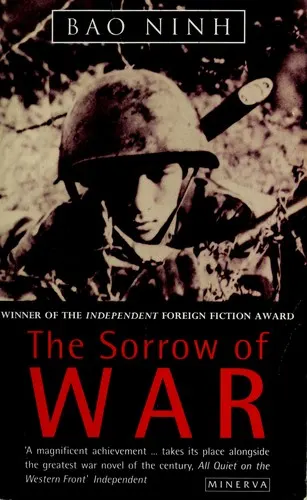
Like Hemingway, Bao Ninh writes with the authority of a combat veteran who distrusts heroic abstractions. His North Vietnamese soldier, Kien, survives the war only to find that memory has shattered chronology: comrades, forests, terror, and a lost love return with the force of present experience.
Where For Whom the Bell Tolls compresses life into a few charged days, this acclaimed modern classic shows those days echoing across a lifetime. Its prose can be hallucinatory, but its emotional discipline is severe. Few novels convey so powerfully that courage may be real even when victory cannot redeem what violence destroys.

For the reader gripped by Robert Jordan’s arguments with himself—about duty, ideology, killing, and whether one life can matter to history—Man’s Fate is essential. During the opening phase of the 1927 Shanghai uprising, Malraux moves among conspirators forced to turn political conviction into irrevocable action.
Winner of the Prix Goncourt, the novel has the heat of a thriller and the intellectual pressure of tragedy. Its characters are not symbols delivering positions; they are frightened, proud, isolated people who discover that solidarity can be both a political commitment and an answer to mortality. It captures, as Hemingway does, the strange enlargement of life when there may be almost none left.
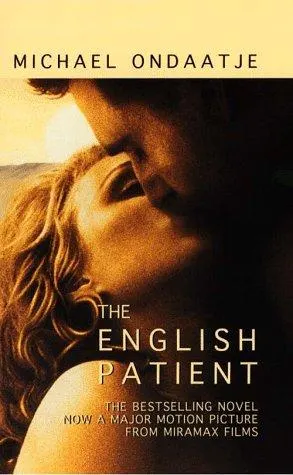
Read this for the element in Hemingway that is sometimes overshadowed by the guns: the intoxicating belief that love can create a whole private world while history closes around it. In an Italian villa near the end of the Second World War, four damaged people tend wounds, exchange stories, and cautiously enter one another’s solitude.
Ondaatje’s style is lush where Hemingway’s is spare, yet both make landscape, touch, and fleeting happiness carry enormous emotional weight. The Booker Prize–winning novel—later chosen as the Golden Man Booker by public vote—treats love neither as consolation nor escape, but as another form of danger. Its beauty has the ache of something already vanishing as you read it.
If you loved The Sun Also Rises
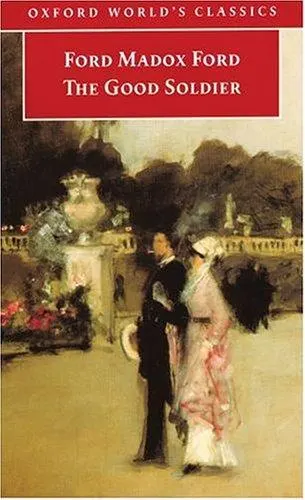
Ford’s landmark of unreliable narration also follows an elegant social circle whose civilized manners conceal sexual betrayal and emotional ruin. Its narrator promises a simple account, then circles backward, revises himself, and accidentally reveals far more than he understands.
Where Hemingway trusts omission, Ford trusts contradiction; both make the reader detect pain that the speaker cannot name. The famous opening—“This is the saddest story I have ever heard”—is not an announcement but a puzzle whose meaning keeps changing. Read it for the unnerving pleasure of discovering that casual phrases can carry the weight of entire broken lives.
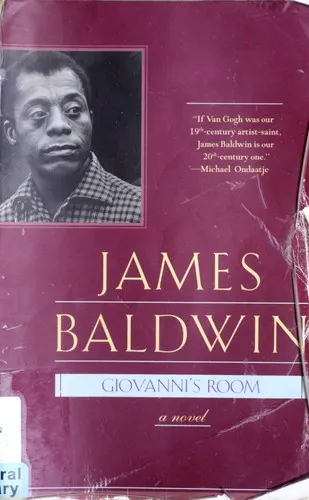
Baldwin takes the masculine fear and thwarted intimacy latent in Hemingway and brings them into devastating focus. An American in Paris tries to maintain a defensible idea of who he is while desire exposes how much of that identity is performance, cowardice, and inherited shame.
The prose is more lyrical than Hemingway’s but equally controlled: clean sentences, exact physical details, and emotion intensified by refusal. Now firmly established as an American classic, the novel has inspired generations of readers because it offers no comfortable distance from its narrator’s self-deception. It is brief, beautiful, and likely to leave the silence after its final page feeling charged.
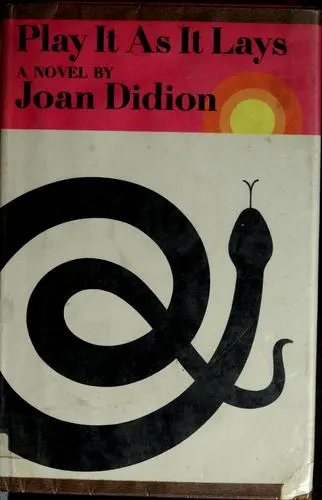
If what you loved was the hard surface over psychic collapse, Didion’s cult classic is indispensable. Maria Wyeth moves through Hollywood, freeways, parties, and strained conversations with a composure that looks increasingly like a survival mechanism. Didion strips scenes to gestures and fragments, making what is absent feel almost physically present.
Her short chapters have Hemingway’s velocity but a colder, hallucinatory rhythm; dialogue arrives like thrown glass. The novel refuses consolation without becoming merely bleak, finding a fierce dignity in continuing when explanations have failed. Few books make emptiness this tense, stylish, or difficult to look away from.
If you loved A Farewell to Arms
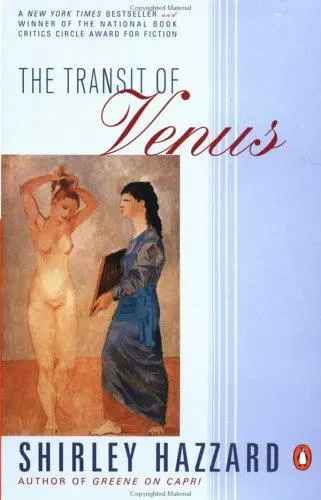
Hazzard’s 1980 National Book Critics Circle Award winner seems far removed from Hemingway: its sentences are intricate, its world socially sophisticated, and its central figures are two Australian sisters navigating England and Europe. Yet it shares A Farewell to Arms’s deepest structure. Love offers startling clarity inside a world governed by accident, timing, and irreversible choices—but clarity is not protection.
Hazzard writes with extraordinary control, planting emotional charges in casual remarks and small gestures. Her elaborate prose achieves something akin to Hemingway’s restraint: both authors leave the reader to feel the full force of what their characters cannot say. This is a novel people reread because apparently minor sentences change meaning as the design emerges. If Hemingway’s mingling of romantic exaltation and pitiless fatalism stayed with you, The Transit of Venus is indispensable.

Maurice Bendrix begins with hatred: encountering the husband of the woman with whom he once had an affair, he is pulled back into jealousy, memory, and the mystery of why she abruptly left him. Greene turns that premise into one of the twentieth century’s most fiercely intelligent novels about love—possessive, humiliating, ecstatic, and never safely private.
Like Hemingway, Greene understands that lovers may construct a refuge for two while history and mortality press against its walls. His prose is clean and swift, but Bendrix’s wounded narration keeps revealing more than he intends. The novel’s religious dimension does not soften its anguish; it enlarges the antagonist from another man to the universe itself. Often regarded as one of Greene’s supreme achievements, it has the rare intensity of a book that feels both ruthlessly argued and painfully confessed.