
Books like Man's Fate
You are drawn to novels in which political ideas become matters of nerve, loyalty, loneliness, and death—where history is not a backdrop but a pressure exerted on every human choice.
If you liked Man's Fate, you’ll love these
Not lookalikes — kindred books. Each one shares something essential with Man's Fate, and we tell you exactly what.
A senior Soviet official is assassinated, and the state’s search for culprits spreads through an extraordinary panorama of interrogators, prisoners, loyalists, and doubters. Like Malraux, Serge moves among radically different consciousnesses without turning anyone into a mere ideological exhibit.
Serge had been a revolutionary, prisoner, and exile; he knew both the exaltation of collective purpose and its mutation into machinery. Often considered his masterpiece, this novel matches Man’s Fate in its tragic intelligence and compassion for people trying to preserve a private moral core inside a vast historical disaster. It is the rare political novel whose victims and functionaries alike remain unsettlingly alive.
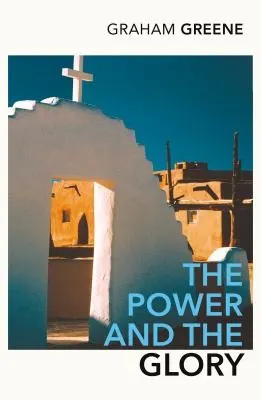
Greene’s hunted “whisky priest”—frightened, compromised, and painfully aware of his failures—could hardly be further from a conventional hero. Yet that is precisely why his courage matters. Pursued through an anti-clerical Mexican state by a fiercely principled lieutenant, he must discover what remains of conviction when dignity, certainty, and safety have all been stripped away.
The kinship with Malraux lies in the physical testing of belief: heat, exhaustion, fear, alcohol, and imminent capture turn abstract commitments into bodily facts. Widely regarded as Greene’s masterpiece, The Power and the Glory has the same severe tenderness toward flawed people who act despite knowing that action may not redeem them.
If Man’s Fate left you wanting an even larger novel capable of holding history and individual consciousness in the same frame, read Grossman. Around Stalingrad, soldiers, scientists, prisoners, officials, and families confront systems determined to explain—and possess—every part of them. Grossman’s great subject is the stubborn remainder that no doctrine can absorb: an uncalculated kindness, an inward refusal, a moment of truth between two people.
The KGB confiscated the manuscript, but a concealed copy survived and reached the West; the novel is now recognized as one of the twentieth century’s monumental achievements. Its scale is immense, yet its moral force comes from the same place as Malraux’s: the conviction that history becomes meaningful only through singular, endangered human beings.